IITian Success Potential Calculator
How successful could you be in the US?
Assess your potential based on the key traits of top IITians who succeeded in the US.
Rate yourself (1-5) on these success factors:
More than 10,000 students clear the IIT JEE every year. But only a fraction of them end up in the US-and even fewer become household names. Yet, the ones who did? They didn’t just land jobs. They built companies, changed industries, and reshaped how the world uses technology.
What Makes an IITian Stand Out in the US?
The IIT JEE is one of the toughest entrance exams on the planet. Getting in means you’ve beaten out over a million candidates. But that’s just the start. In the US, what matters isn’t just your degree-it’s how you use it. The best IITians didn’t wait for permission. They saw problems, built solutions, and moved fast.
Unlike many international students who chase stable corporate roles, the standout IITians in the US took risks. They joined startups before they were cool. They left Google to launch their own AI tools. They turned campus projects into billion-dollar products.
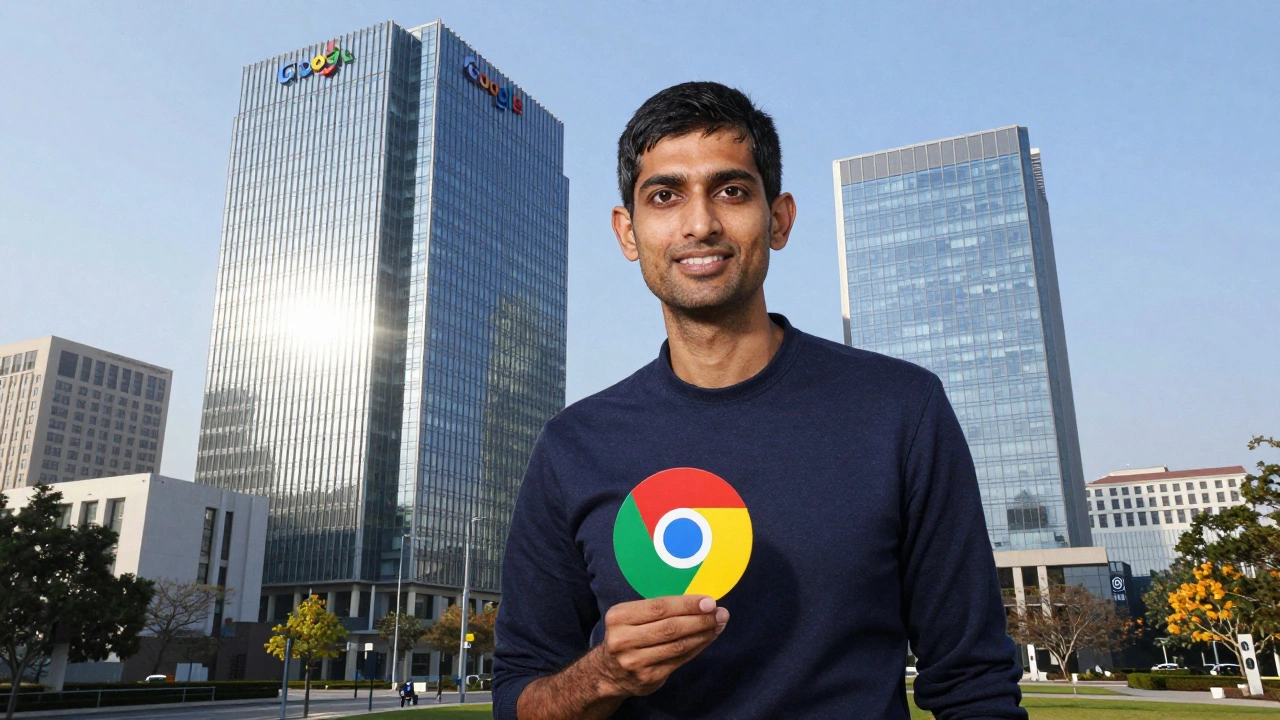
Sundar Pichai: From IIT Kharagpur to CEO of Google
Sundar Pichai is the most visible face of an IITian in the US. He graduated from IIT Kharagpur with a B.Tech in Metallurgical Engineering in 1993. He didn’t study computer science. He didn’t even plan to work in tech. But after moving to the US for his MS at Stanford, he joined Applied Materials, then Google in 2004.
He led the Chrome browser team from day one. When Google needed someone to unify its products, he was the guy. By 2015, he became CEO of Google. In 2019, he took over Alphabet, Google’s parent company. He now runs a $1.7 trillion empire built on search, ads, Android, and AI.
Pichai’s story isn’t about being the smartest engineer. It’s about being the most consistent. He didn’t chase titles. He solved real problems-slowly, quietly, and with deep focus.
Shiv Nadar: Building HCL and Giving Back
Shiv Nadar graduated from IIT Delhi in 1965 with a B.Tech in Electrical Engineering. He didn’t stay in the US long, but his impact echoes there. He founded HCL Technologies in 1976 in India, but HCL’s US operations now employ over 25,000 people. HCL serves Fortune 500 companies like Microsoft, Dell, and Cisco.
Nadar also built the Shiv Nadar Foundation, which funds education in India and the US. His $1 billion donation helped create the Shiv Nadar University and supported research at Stanford and MIT. He’s proof that IITians don’t need to stay in Silicon Valley to change it.
Indra Nooyi: The IITian Who Ran PepsiCo
Indra Nooyi studied Physics at IIT Madras before moving to the US for her MBA at Yale. She didn’t go into tech. She went into business. And she became one of the most powerful CEOs in the world.
As CEO of PepsiCo from 2006 to 2018, she transformed the company’s product line. She pushed for healthier snacks, reduced sugar, and sustainability. Under her, PepsiCo’s revenue grew from $35 billion to $63 billion.
Nooyi didn’t just manage a brand. She changed how global corporations think about health, culture, and responsibility. She’s also one of the few women of color to lead a Fortune 500 company. Her story shows that IITians don’t need to code to dominate.

Neeraj Arora: The Startup Whisperer
Neeraj Arora, an IIT Delhi graduate in Electrical Engineering, moved to the US in the late 1990s. He didn’t found a company. He became the secret weapon behind some of the biggest ones.
He was the first employee at Google, hired before the company had a product. He ran Google’s sales team in its early days. He helped turn search ads into a $100 billion business.
After Google, he joined LinkedIn as its first VP of Sales. He built their entire revenue engine from scratch. Later, he became an investor and advisor to over 50 startups, including Airbnb, Dropbox, and Stripe. He doesn’t own the companies-he builds the systems that make them scale.
Fei-Fei Li: The AI Pioneer Who Redefined Machine Learning
Fei-Fei Li earned her PhD in Electrical Engineering from Princeton, but her foundation was IIT Kanpur, where she completed her undergraduate degree. She didn’t just study AI-she gave it a face.
In 2009, she created ImageNet, a dataset with over 14 million labeled images. It became the backbone of modern computer vision. Before ImageNet, AI couldn’t recognize cats or cars reliably. After? Everything changed.
She led AI research at Google Cloud and later became the director of Stanford’s AI Lab. She’s now one of the most cited researchers in the world. Her work powers everything from self-driving cars to medical imaging tools.
Why These IITians Succeeded in the US
There’s no single formula. But common threads show up:
- They solved real problems, not just academic ones. Pichai didn’t build Chrome because it was trendy-he built it because people hated slow browsers.
- They moved fast. Nooyi didn’t wait for permission to change PepsiCo’s recipe. She pushed it through.
- They stayed curious. Fei-Fei Li didn’t stop at one breakthrough. She kept asking, “What’s next?”
- They didn’t wait for the perfect moment. Arora joined Google when it was just two guys in a garage.
The IIT JEE tests your ability to solve problems under pressure. But the US rewards those who solve problems with patience, persistence, and purpose.
What They Didn’t Do
These people didn’t:
- Wait for a visa to be approved before starting something.
- Ask if their idea was “big enough.”
- Compare themselves to others in their cohort.
- Think their IIT degree was the end goal.
They used their IIT training as a launchpad-not a trophy.
Where Are the Next Generation of IITians in the US?
Today’s IIT grads are still pouring into the US. But they’re not just going to Google or Microsoft. They’re founding AI startups in Austin, building climate tech in Boston, and creating fintech tools in Chicago.
Look at the founders of:
- Anduril Industries-a defense AI company with IITians in leadership.
- Scale AI-a data labeling platform that trains AI models, co-founded by an IIT Madras grad.
- Instacart-the grocery delivery giant, with early engineers from IIT Delhi and IIT Bombay.
The next wave isn’t about titles. It’s about impact. They’re not trying to be the next Pichai. They’re trying to solve the next big problem-whether it’s energy, healthcare, or education.
What You Can Learn From Them
If you’re preparing for IIT JEE, don’t think of it as a gate to a job. Think of it as a gate to possibility. The US doesn’t care where you studied. It cares what you build.
Here’s what to do now:
- Start building things-even small ones. Code a tool. Write a blog. Build a spreadsheet that automates something you hate.
- Don’t wait for college to start thinking like a founder. Ask: “What’s broken? How can I fix it?”
- Learn to communicate. The best engineers in the US aren’t the ones who know the most code-they’re the ones who can explain their ideas clearly.
- Follow the stories of these IITians-not to copy them, but to understand what’s possible.
The IIT JEE is hard. But the real test comes after. The US isn’t waiting for perfect resumes. It’s waiting for people who refuse to accept the status quo.
Are IITians more successful in the US than other international students?
IITians often stand out because of their rigorous training and problem-solving skills, but success isn’t guaranteed. Many international students from other countries thrive in the US too. What separates top IITians is their willingness to take risks, build early, and focus on impact-not just grades or job titles.
Do I need to go to the US to be successful after IIT?
No. Many IITians build massive companies and influence in India and other countries. Shiv Nadar and Satya Nadella (Microsoft CEO) built global impact from outside the US. The key isn’t location-it’s the mindset: solving real problems with persistence.
What skills do IITians lack when they move to the US?
Many IITians are strong in technical skills but weaker in communication, storytelling, and navigating corporate culture. The US values clarity, collaboration, and initiative. Learning to explain your ideas simply and confidently matters as much as coding ability.
Is the IIT JEE still worth it if I want to work in the US?
Yes-if you use it as a springboard, not an endpoint. The IIT JEE trains you to think under pressure, solve complex problems, and work hard. These traits are universal. But your success in the US will depend on what you do after you get in-not just that you got in.
Can I still make it in the US if I didn’t get into IIT?
Absolutely. Many of the most successful tech leaders in the US never went to IIT. What matters is your ability to learn, adapt, and build. The IIT JEE is one path, but not the only one. Focus on skills, projects, and persistence-not prestige.