CBSE Stream Finder
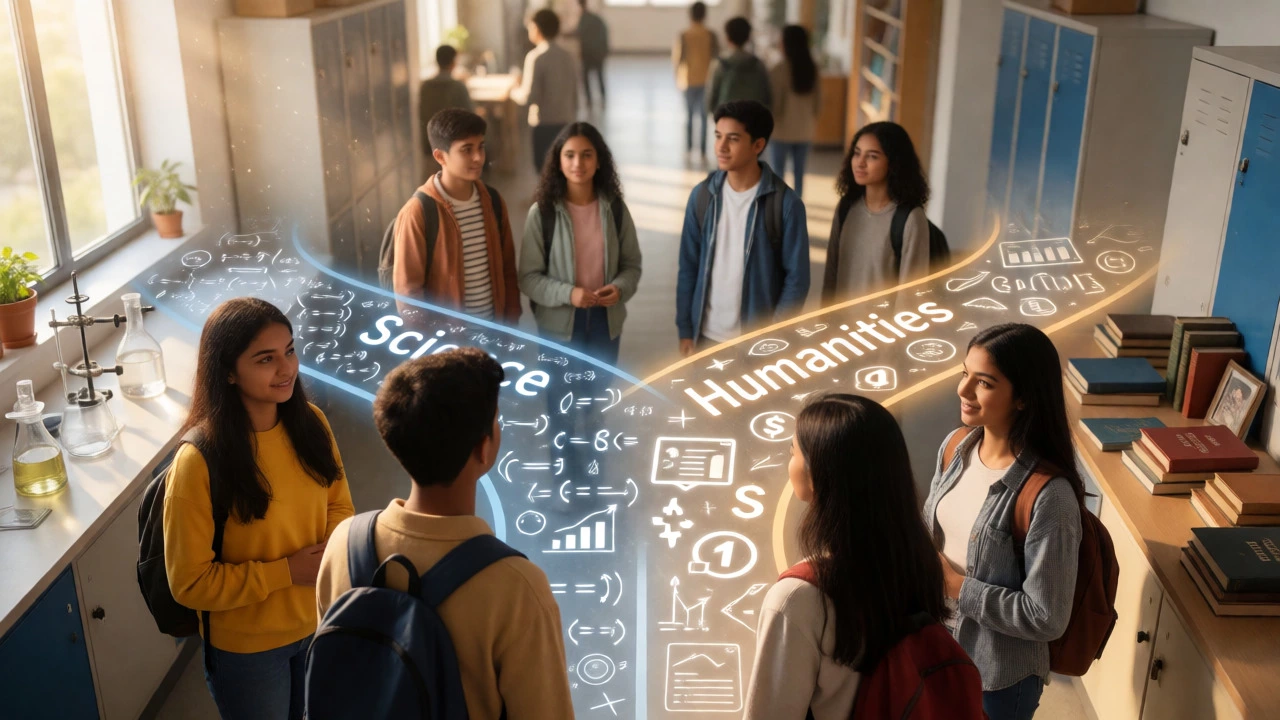
Not sure which stream fits you best? Answer these 5 quick questions to find your ideal path for Classes 11 & 12.
Your Recommended Stream
Why this fit?
Common Career Paths
You’ve probably heard the panic in your parents’ voices or felt that knot in your stomach when someone mentions "stream selection." It’s a big deal. But here is the truth nobody tells you upfront: there is no single "best" CBSE syllabus. There is only the right syllabus for you, based on what you actually enjoy and where your brain naturally clicks. Choosing the wrong path can make two years of high school feel like an eternity, while choosing the right one makes learning feel less like a chore and more like curiosity satisfied.
Let’s cut through the noise. You don’t need a generic list of subjects. You need a strategy. Whether you are aiming for engineering, medicine, humanities, or something entirely new, understanding how the Central Board of Secondary Education structures its curriculum is the first step to owning your academic journey. This guide breaks down the options, the hidden traps, and the smart moves for students in 2026.
Understanding the Core Structure of the CBSE Curriculum
Before you pick a subject, you need to know the game board. The Central Board of Secondary Education (CBSE) is a national level board of education in India for public and private schools, controlled and managed by the Union Government of India. Unlike state boards, which vary wildly from region to region, CBSE offers a standardized framework. This consistency is why it’s favored by families who move cities frequently or those targeting national-level entrance exams like JEE and NEET.
The syllabus is divided into three distinct stages, each with a different philosophy:
- Primary (Classes I-V): Focuses on foundational literacy and numeracy. No pressure, just building blocks.
- Middle & Secondary (Classes VI-X): Introduces broader subjects like History, Geography, and basic Sciences. Class 10 is often seen as a gateway, but it’s really about time management skills.
- Senior Secondary (Classes XI-XII): This is where the "syllabus choice" question actually matters. You choose streams: Science, Commerce, or Humanities.
Most students obsess over Classes 11 and 12 because that’s when specialization happens. But remember, your foundation in Class 9 and 10 determines how easily you handle the jump. If you hate math in Class 10, forcing yourself into Pure Math in Class 11 will be painful.
Decoding the Streams: Which One Fits Your Brain?
When people ask "which syllabus is best," they usually mean "which stream has the best career prospects?" That’s a flawed question. A better question is: "Which syllabus aligns with my strengths?" Let’s look at the three main pillars of the Senior Secondary CBSE curriculum.
| Stream | Core Subjects | Best For Students Who... | Common Career Paths |
|---|---|---|---|
| Science (PCM) | Physics, Chemistry, Maths | Love logic, problem-solving, and abstract concepts. | Engineering, Architecture, Data Science, Aviation. |
| Science (PCB) | Physics, Chemistry, Biology | Are fascinated by life sciences and memorization-heavy content. | Medicine, Biotechnology, Pharmacy, Nursing. |
| Commerce | Accountancy, Business Studies, Economics | Enjoy numbers, financial systems, and market trends. | Chartered Accountancy, Finance, Marketing, Law. |
| Humanities | History, Pol. Science, Psychology, Sociology | Like reading, debating, writing, and understanding society. | Civil Services, Journalism, Design, Teaching, HR. |
Notice something? None of these are inherently "harder" than the others. They just require different cognitive muscles. PCM requires intense logical deduction. PCB requires massive retention capacity. Commerce demands analytical thinking applied to money. Humanities needs critical analysis and expressive writing. Pick the muscle group you want to train.
The Hidden Gems: Electives That Boost Your Profile
Here is where most students play it safe-and lose out. CBSE allows you to pick electives alongside your core stream. Many students ignore these, treating them as filler subjects. Big mistake. These electives can define your niche.
For instance, if you are in Science, taking Computer Science is an elective subject that teaches programming fundamentals, data structures, and web technologies. It’s not just about coding; it’s about computational thinking. Even if you become a doctor, knowing Python helps in bioinformatics. If you are in Humanities, picking up Psychology gives you a scientific lens on human behavior, which pairs beautifully with law or management.
Consider these under-rated electives:
- Physical Education: Great for stress relief and keeps your body active during exam season.
- Home Science: Often dismissed, but covers nutrition and child development-highly relevant for future parenting or health careers.
- Entrepreneurship: Teaches you how businesses start. Useful even if you plan to get a job later.
- AI and Machine Learning: Newer additions to some CBSE schools, offering a futuristic edge.
Don’t just pick the easiest elective. Pick the one that adds a unique flavor to your resume.
Navigating the Internal Assessment Trap
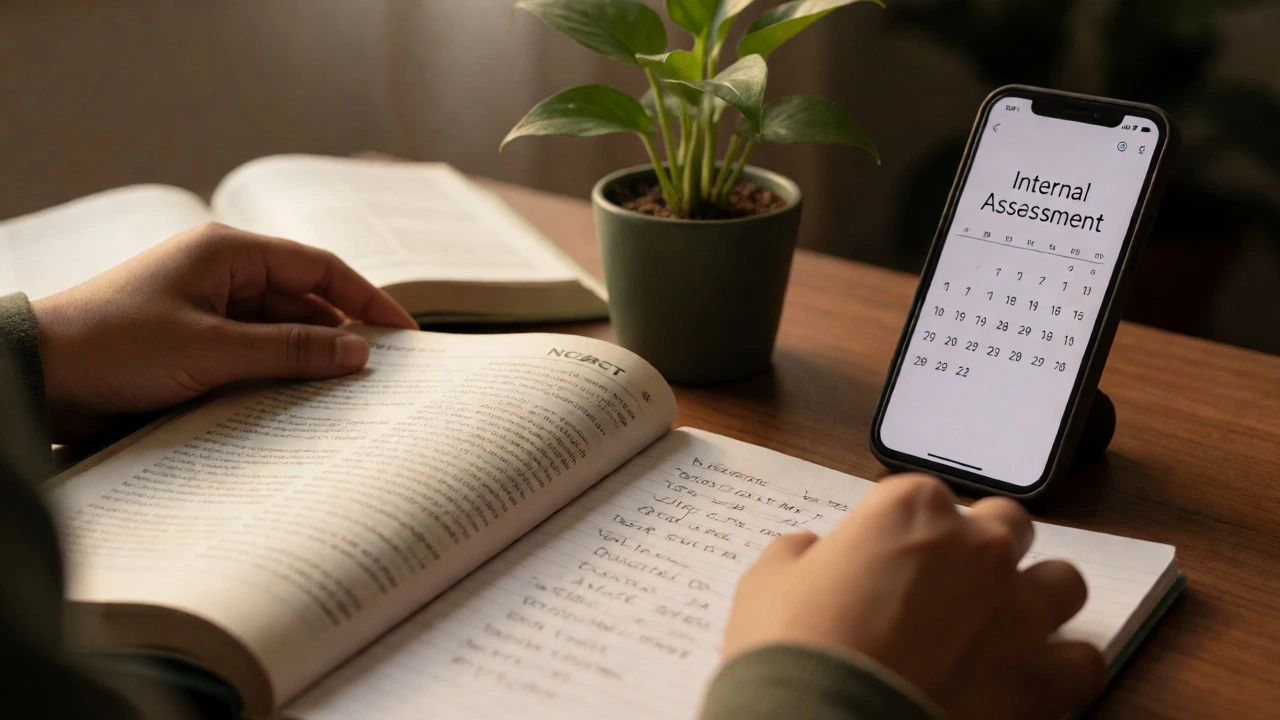
A lot of anxiety comes from misunderstanding how marks are calculated. The CBSE syllabus isn’t just about the final exam paper. It includes Internal Assessment, which accounts for 20-30% of your total grade depending on the subject and class level. This includes practical work, projects, and periodic tests.
Many students neglect this until the last minute. Don’t. If you score full marks in the theory paper but fail the practical component in Physics, your overall grade suffers. Here’s how to manage it:
- Start Projects Early: In Class 11, begin your science lab records immediately. Don’t copy-paste from seniors’ books. Teachers notice.
- Document Everything: Keep photos of your experiments or field visits. Evidence matters.
- Speak Up: If you struggle with a practical concept, ask your teacher before the assessment date. Most teachers appreciate proactive students.
Treat internal assessments as a safety net. A strong internal score buffers you against a bad day in the final exam.
How to Choose Based on Future Goals
Let’s get practical. What do you want to do after school? Your syllabus choice should reverse-engineer from your goal.
If you want to join the Indian Administrative Service (IAS), the Humanities stream is the most direct preparatory path as it covers history, geography, and political science extensively. You aren’t just studying for exams; you’re building a knowledge base for UPSC Prelims and Mains.
If you aim for CA (Chartered Accountancy), the Commerce stream provides the necessary foundation in accounting principles and economic theory required for the CA Foundation exam. Trying to learn accountancy from scratch after Class 12 is twice as hard.
If you are unsure, stay flexible. Science with Computer Science keeps many doors open. You can pivot to tech, design, or even business analytics later. Avoid locking yourself into a narrow path too early unless you are 100% certain.
Common Mistakes to Avoid
I’ve seen brilliant students crash because of simple errors in syllabus navigation. Here are the top pitfalls:
1. Following the Crowd: Just because all your friends are taking Science doesn’t mean you should. If you hate physics, you’ll spend two years struggling. Passion beats peer pressure every time.
2. Ignoring Language Papers: English is mandatory. Hindi or Sanskrit is often optional but highly recommended. Scoring well in languages boosts your percentage significantly. Don’t treat them as "free marks"-study them.
3. Underestimating Changes: CBSE updates its syllabus occasionally. In recent years, they have removed rote-learning heavy chapters and added competency-based questions. Always check the latest NCERT textbooks since they are the primary source material for CBSE examinations. Relying on old reference books can lead to studying deleted topics.
4. Neglecting Mental Health: The syllabus is vast. Burnout is real. Schedule breaks. Your brain needs downtime to consolidate information.
Final Verdict: There Is No "Best," Only "Right"
So, which syllabus is best for CBSE? The answer is boring but true: the one you can sustain. The CBSE curriculum is designed to be challenging but fair. It rewards consistency over cramming. If you love solving puzzles, go for Science. If you love stories and societies, go for Humanities. If you love money and markets, go for Commerce.
Remember, your school grades are just one chapter. Skills matter more. Use the syllabus to build discipline, critical thinking, and resilience. Those traits will serve you long after you forget the formula for quadratic equations.
Is CBSE syllabus harder than ICSE?
Generally, ICSE is considered more detailed and voluminous, especially in English and Literature. CBSE is more concise and focused on conceptual clarity, making it easier to manage alongside competitive exam preparations like JEE or NEET.
Can I change my stream after Class 11?
Yes, CBSE allows students to switch streams between Class 11 and 12, provided they clear any pending backlog subjects from the previous stream. However, this requires catching up on the missed syllabus quickly.
Which subject is easiest in CBSE Class 12?
This is subjective. Many students find Physical Education, Fine Arts, or Home Science easier due to their practical nature. However, scoring high in these subjects still requires consistent practice and project work.
Do NCERT books cover the entire CBSE syllabus?
Yes, NCERT textbooks are the core resource for CBSE. For Science and Math, they are sufficient for board exams. For competitive exams like JEE Advanced, additional reference books are usually needed, but NCERT remains the foundation.
Is AI part of the CBSE syllabus now?
Artificial Intelligence has been introduced as an elective subject in classes 8, 9, and 10 in select schools. It is not yet a compulsory core subject for all students but is gaining traction as a valuable skill-based addition.