
Affordable College Credit Cost Estimator
Estimate your college credit costs
Compare different affordable pathways to earn college credits
Community College
Online courses for $80-$150 per credit
CLEP/DSST Exams
$93 per exam for 3-12 credits
MOOC Audit
Free with optional $49 certificate
Tuition-Free University
$120 assessment fee per course
Enter your details to see cost estimates
Traditional University
$0
$1,500-$4,000 per course
Your Estimated Cost
$0
Savings
$0
Compared to traditional university
When you’re trying to get a college credential without breaking the bank, the question isn’t just cheapest college course-it’s which one actually counts? Many people assume online courses are cheap because they’re online. But not all are. Some cost as much as traditional classes. Others? You can finish them for under $50-or even for free.
Free college courses that give you real credit
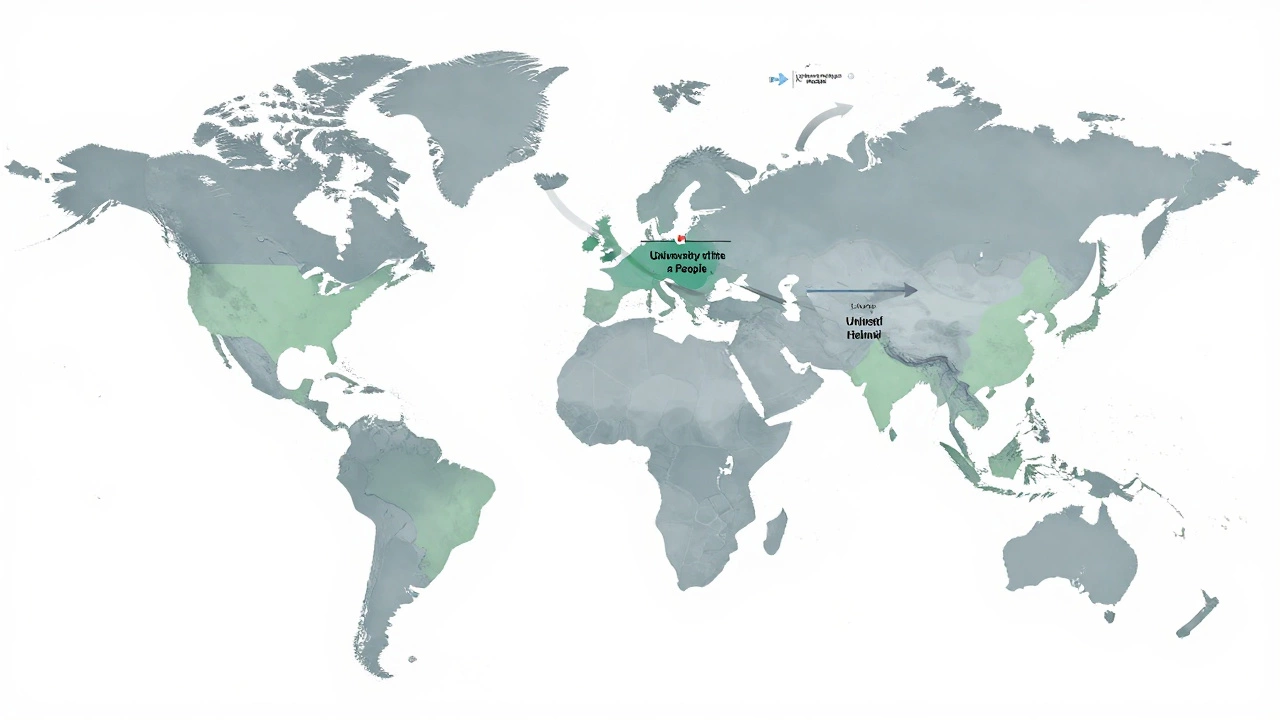
Not all free courses are just for fun. Some universities let you audit classes for free and still earn transferable credits if you pay a small fee to take the final exam. The University of the People (UoPeople) is one of the few accredited, tuition-free universities in the world. It offers associate and bachelor’s degrees in business administration, computer science, and health science. You don’t pay tuition, but you do pay a $120 assessment fee per course. That’s less than the price of a textbook at most schools.Another option: California State University’s CSU Open Courseware. You can access full syllabi, lectures, and assignments from actual CSU classes. While you don’t get official credit unless you enroll, many students use these materials to prepare for CLEP or DSST exams-standardized tests that let you earn college credit by passing a single exam. A CLEP exam costs $93, and you can study for it using free materials from Modern States or Khan Academy.
Community college courses online for under $100
If you live in the U.S., your local community college is often the cheapest path to real college credits. Online courses at community colleges typically cost between $80 and $150 per credit hour. A 3-credit course? That’s $240-$450 total. Compare that to a four-year university, where the same course might cost $1,500-$4,000.Some community colleges offer discounts for non-residents or even waive fees for online-only students. For example, Eastern Iowa Community Colleges lets out-of-state students take online courses at in-state tuition rates. In 2025, their online course fee is $105 per credit hour. A 3-credit psychology class? $315. That includes textbooks-most are digital and free through the college library.
And if you’re outside the U.S.? Look into public universities in countries like Germany, Norway, or Finland. Many offer free or low-cost online courses to international students. The University of Helsinki, for example, offers free Massive Open Online Courses (MOOCs) in subjects like data science and sustainability. While these don’t always count toward a degree, they’re a great way to build skills without spending a penny.
MOOCs that cost less than a coffee
Massive Open Online Courses (MOOCs) from platforms like Coursera, edX, and FutureLearn are everywhere. But here’s the catch: most of them cost money if you want a certificate. The good news? You can audit most of them for free.On Coursera, you can enroll in over 10,000 courses without paying a cent. You get access to all the videos, readings, and quizzes. You just won’t get graded feedback or a certificate. But if you’re learning for personal growth or to prep for a job interview, that’s often enough. For example, you can take Introduction to Psychology from Yale University for free. The same course on edX from MIT costs nothing to audit.
Some platforms offer financial aid if you can’t afford the certificate. On Coursera, you can apply for aid with a short form-no proof of income needed. Most people get approved within a week. The certificate costs $49, but if you’re just trying to learn, skip it. The knowledge is free.
College credits from high school equivalency exams
If you don’t have a high school diploma, you can still earn college credits by passing exams like the GED or HiSET. But here’s the twist: some colleges let you convert those scores into credits. For example, Excelsior College accepts GED scores and awards up to 12 credits toward an associate degree. That’s equivalent to four college courses-for free.Then there’s the DSST and CLEP exams. Both are standardized tests that cover subjects like college algebra, sociology, and U.S. history. Passing one gives you college credit at over 2,900 institutions. Each exam costs $93. You can study for them using free resources like Peterson’s or the College Board’s official prep guides. If you pass five DSST exams, you’ve earned 15 credits-roughly half a semester’s worth-for under $500.
What to avoid: the “too good to be true” traps
Not every cheap course is worth your time. Watch out for these red flags:- Companies that promise “full degrees for $100” - if it’s not accredited, employers won’t recognize it.
- Platforms that require monthly subscriptions just to access one course - better to pay $50 once than $15/month for six months.
- “Certification” programs that don’t link to any recognized institution - they’re just marketing.
- Unaccredited online colleges that look professional but aren’t listed on the U.S. Department of Education’s database.
Always check accreditation. In the U.S., look for regional accreditation (like NECHE or WASC). Globally, check if the institution is recognized by the Ministry of Education in its country. A course that costs $10 but gives you nothing but a PDF? Not worth it.
How to stack cheap courses into a real degree
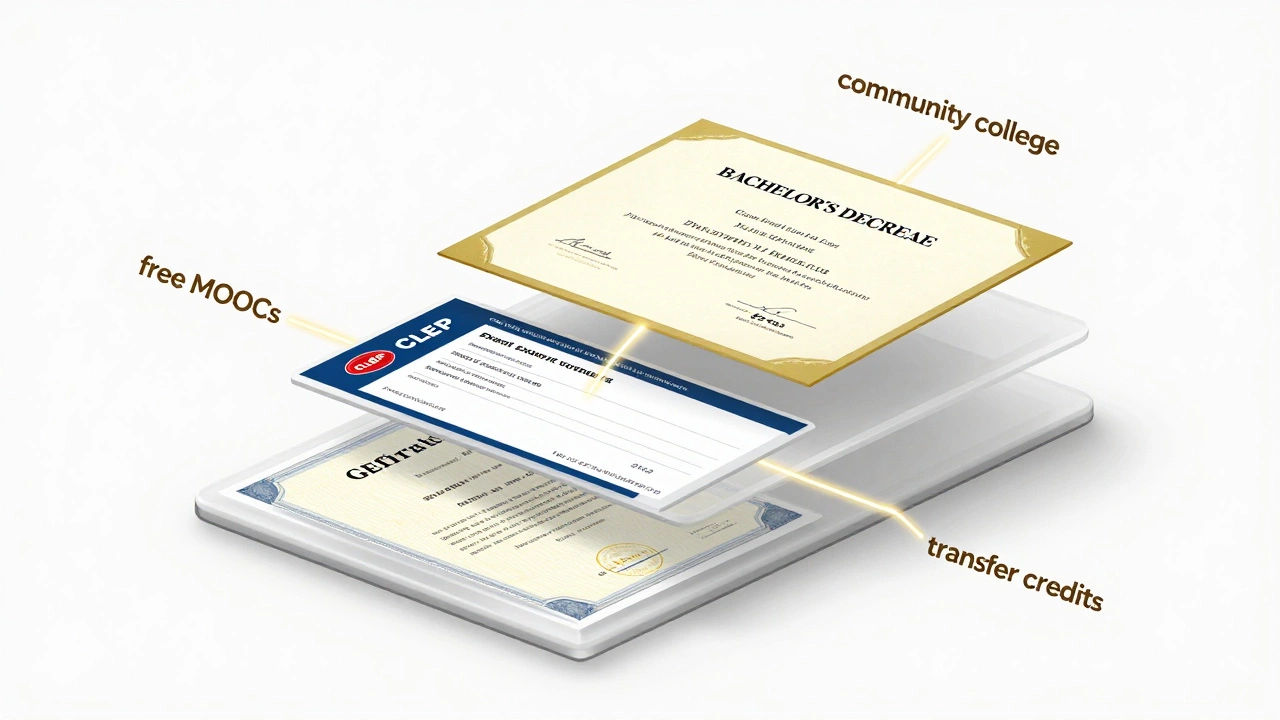
The smartest way to make the cheapest college course pay off is to build a degree piece by piece. Start with free or low-cost credits, then transfer them.Here’s a real path someone took in 2024:
- Took a free Coursera course in business communication (no certificate).
- Passed the CLEP exam for College Composition ($93) and earned 6 credits.
- Enrolled in a $105/credit online course at a community college for Intro to Sociology (3 credits, $315).
- Used free textbooks from OpenStax to save $200.
- Transferred all 12 credits to an online bachelor’s program at Southern New Hampshire University, which accepts transfer credits from accredited sources.
Total cost? Under $500 for a full semester’s worth of credits. That’s less than 10% of what it would’ve cost at a private university.
Who benefits the most from cheap college courses?
This approach works best for:- Working adults who need credentials to get promoted
- Parents returning to school after raising kids
- People in countries where higher education is expensive or inaccessible
- Students who want to test-drive a major before committing to a full degree
If you’re on a tight budget, don’t wait for the perfect moment. Start small. Take one course. Pass one exam. Build momentum. The cheapest college course isn’t always the one with the lowest price tag-it’s the one that moves you closer to your goal.
Can I really get college credit for free?
Yes, but not always directly. You can audit free courses from top universities, and if you pass a CLEP or DSST exam (which cost $93), you can earn official college credits accepted by over 2,900 schools. Some institutions like University of the People offer tuition-free degrees with only small assessment fees.
Are free MOOC certificates worth anything?
Most employers don’t care about the certificate itself-they care about what you learned. If you can show projects, skills, or knowledge gained from a free MOOC, that’s valuable. But if you need formal proof for a job or transfer, pay the $49 for the verified certificate. It’s still cheaper than a single credit at most universities.
What’s the cheapest way to earn a full college degree?
The cheapest path is: start with CLEP/DSST exams for credit, take low-cost community college courses online, use free textbooks from OpenStax, and transfer everything to an affordable online university like Southern New Hampshire or Western Governors University. Many students complete a bachelor’s degree for under $5,000 total.
Do online courses count as real college credits?
Yes-if they come from an accredited institution. Community colleges, public universities, and accredited MOOC providers like Coursera (through partner schools) offer credits that transfer. Avoid for-profit schools that aren’t regionally accredited. Always check the school’s accreditation status before enrolling.
Can international students take cheap U.S. college courses?
Absolutely. Most online community college courses and MOOCs are open to international students. You don’t need a visa. CLEP and DSST exams can be taken at authorized testing centers abroad. Some countries, like Germany and Norway, offer free university-level courses online that you can use to build your resume or transfer later.