
Choosing the best major for your MBA isn’t about picking the most popular option-it’s about matching your skills, goals, and the real job market. In 2025, the MBA landscape has shifted. Employers don’t just want graduates with a degree. They want people who can solve problems, lead teams, and adapt fast. So what major actually gets you hired, paid well, and keeps you engaged?
Finance Still Leads, But It’s Not What You Think
Finance remains the most common MBA major, and for good reason. Companies pay top dollar for MBAs who understand financial modeling, capital allocation, and risk management. But the old image of finance-spreadsheets all day, trading floors, Wall Street-is outdated. Today’s finance MBAs work in fintech, ESG investing, corporate restructuring, and even blockchain-based asset management. If you’re good with numbers, comfortable under pressure, and want to move into roles like CFO, investment analyst, or financial controller, finance still delivers. The average starting salary for finance MBAs in the UK is £72,000, according to the Financial Times 2025 MBA survey. But don’t pick it just because it pays well. If you dread reading balance sheets, you’ll burn out fast.
Marketing Is the Quiet Powerhouse
Marketing might not sound as flashy as finance or tech, but it’s the engine behind growth for nearly every company. In 2025, marketing MBAs aren’t just running ads. They’re using AI to predict customer behavior, designing subscription models, managing brand reputation on social media, and leading product launches in global markets. Companies like Unilever, Amazon, and Spotify hire MBA marketers to turn data into strategy. If you’re creative, understand human behavior, and enjoy seeing the impact of your work, marketing is a strong fit. It’s also one of the most flexible majors-you can move into brand management, digital marketing, or even start your own business. The demand for marketing MBAs grew 22% in the last two years, according to LinkedIn’s 2025 Talent Trends report.
Tech and Analytics Are No Longer Optional
If you’re not comfortable with data, you’re at a disadvantage. The best MBA programs now require at least one analytics course. But if you go deeper, you can specialize in Business Analytics, Information Systems, or Technology Management. These majors train you to use tools like Python, SQL, Tableau, and Power BI to make smarter decisions. You’ll learn how to interpret customer data, optimize supply chains, or automate financial reporting. Companies in healthcare, logistics, retail, and even government are hiring MBA grads with tech skills. A 2025 survey by Deloitte found that 68% of hiring managers prefer candidates with analytics experience over those with traditional finance or marketing backgrounds. You don’t need to be a coder, but you do need to speak the language of data.
Operations and Supply Chain Are Underestimated
After the pandemic, no company can ignore how things get made, shipped, and delivered. Operations and Supply Chain Management is one of the fastest-growing MBA majors. It’s not about warehouse management-it’s about designing resilient systems, reducing waste, negotiating with global suppliers, and using AI to forecast demand. If you like solving real-world puzzles, managing complexity, and working across teams, this is your path. Graduates often land roles in logistics, procurement, or manufacturing leadership. Salaries for operations MBAs in the UK average £68,000, with top roles in pharmaceuticals and aerospace paying over £90,000. It’s a major that doesn’t get much attention-but it’s one of the most stable.
Entrepreneurship Is for Doers, Not Dreamers
Many students pick entrepreneurship because they want to start a business. But an MBA in entrepreneurship isn’t a magic ticket to success. It’s a crash course in building a viable company: validating ideas, pitching to investors, managing cash flow, hiring your first team. If you already have a business idea, this major gives you the tools to scale it. If you don’t, you’ll still learn how to think like an owner-not an employee. Top programs like those at London Business School and Imperial College offer incubators, funding access, and mentorship from founders who’ve been there. The reality? Only 15% of entrepreneurship MBAs launch a startup within three years. But 85% end up in leadership roles at startups or scale-ups because they know how to build things from scratch.
Human Resources Is Changing Fast
HR used to be about payroll and vacation requests. Now it’s about culture, diversity, mental health, AI-driven hiring, and workforce planning. An MBA in HR prepares you to lead talent strategy in a world where remote work, gig workers, and automation are reshaping teams. Companies like Microsoft, Google, and even the NHS are hiring HR MBAs to design fairer systems and retain top talent. If you’re good at listening, understand psychology, and care about fairness, this major can lead to roles like Head of Talent, Chief People Officer, or HR Director. The average salary is £65,000, but the real value is influence-you shape how people work.
What Not to Do
Don’t pick a major because your friend did. Don’t chase the ‘hottest’ trend if it doesn’t excite you. Don’t assume you’ll switch majors later-most programs lock you in after the first term. And don’t ignore the job market. Look at LinkedIn job postings in your target industry. See what skills they ask for. Talk to alumni from your target school. Ask them: ‘What did you actually do after graduation?’

How to Decide
Ask yourself three questions:
- What kind of work do you look forward to doing every day?
- What industries or companies do you want to work for? (Check their leadership team-what degrees do they have?)
- Where do you see yourself in five years? (Not in a job title-in a lifestyle.)
If you’re still stuck, try this: take a free online course in each of the top three majors you’re considering. Try Google’s free analytics course, or MIT’s intro to finance on edX. See which one keeps you engaged. Your interest is the best predictor of success.
Final Thought: The Best Major Is the One That Fits You
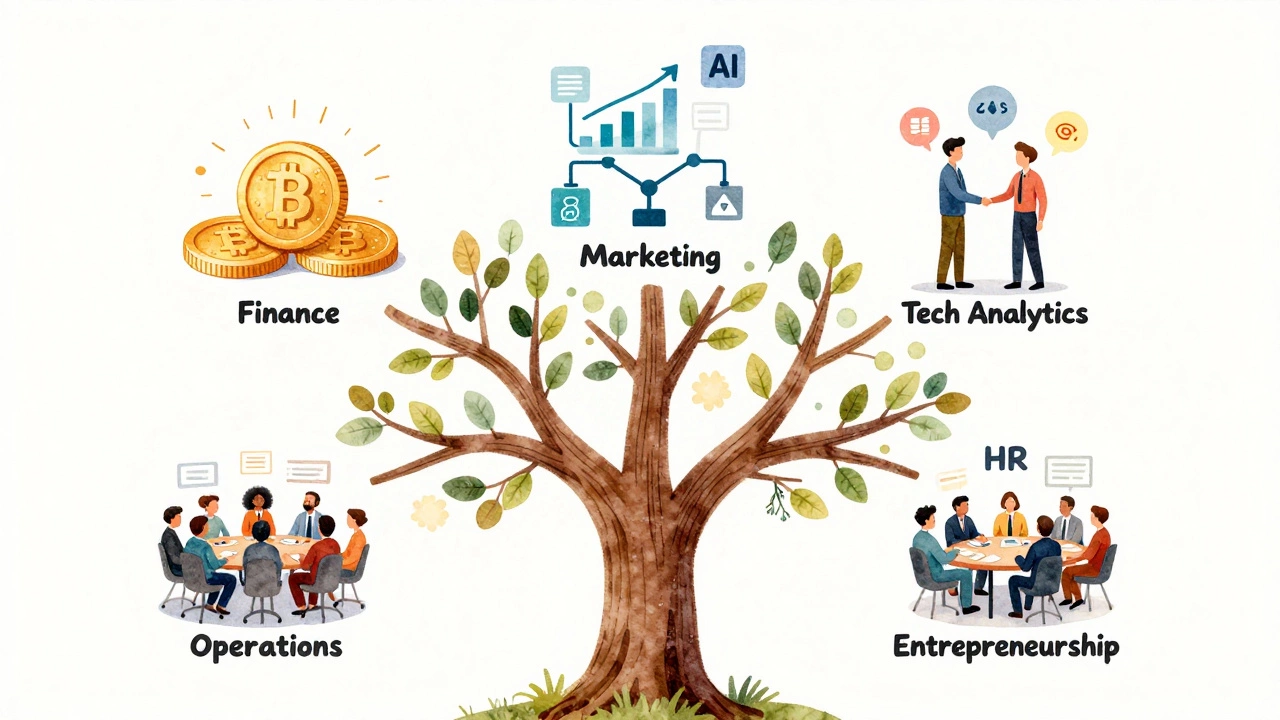
There’s no single ‘best’ MBA major. The best one is the one that matches your strengths, your passions, and the real needs of employers today. Finance pays well. Marketing is growing. Tech is essential. Operations is stable. Entrepreneurship is risky but rewarding. HR is powerful. Pick the one that makes you want to get up in the morning-not the one that looks good on paper.
Is finance still the best MBA major in 2025?
Finance remains one of the highest-paying MBA majors, with average starting salaries around £72,000 in the UK. But it’s no longer just about Wall Street or banking. Modern finance MBAs work in fintech, ESG investing, and corporate strategy. It’s a strong choice if you enjoy numbers, analysis, and decision-making under pressure-but only if you genuinely like the work. If you dread financial modeling, you’ll struggle.
Can I switch my MBA major after starting the program?
Most MBA programs let you adjust your focus during the first term, but formal major changes are rare after that. Electives let you explore other areas, but your official major is usually locked in early. That’s why it’s critical to research your options before enrolling. Take free online courses, talk to current students, and shadow professionals in fields you’re considering.
Do I need a tech background to do an MBA in Business Analytics?
No. You don’t need to be a programmer. Business Analytics MBAs teach you how to use tools like Excel, Power BI, and Tableau to interpret data-not write code. You’ll learn to ask the right questions, spot trends, and communicate insights to non-technical teams. Some programs offer optional coding modules, but the core skill is understanding data-driven decision-making, not building algorithms.
Which MBA major leads to the most global opportunities?
Marketing and Finance offer the broadest global reach. Multinational companies need marketers who understand local cultures and finance professionals who can manage cross-border investments. Operations and Supply Chain also have strong global demand, especially in manufacturing and logistics. If you want to work abroad, choose a major tied to industries that operate worldwide-like consumer goods, tech, or energy.
Is an MBA in Entrepreneurship worth it if I don’t have a business idea yet?
Yes-if you’re willing to learn by doing. Entrepreneurship MBAs teach you how to validate ideas, pitch investors, manage cash flow, and build teams. Even if you don’t launch a startup, these skills make you a stronger leader in any company. Many graduates end up joining startups or leading innovation teams because they know how to move fast, take risks, and solve problems creatively.
Next Steps
Start by listing your top three interests. Then, look at job postings on LinkedIn for roles you’d like to have in 3-5 years. Note the skills and qualifications listed. Match those to MBA majors. Talk to two alumni from your target schools-ask them what their day-to-day work actually looks like. Finally, take one free course in your top choice. If you’re still excited after 2 hours, you’re on the right track.