CBSE Education Abroad Cost Estimator
Configure Your Scenario
Standard schools typically have basic infrastructure with lower fees.
Estimated Annual Budget
Imagine packing your bags for a new life in Dubai, Singapore, or London. You’ve secured the job, found the apartment, and now comes the hardest part: schooling for your kids. If you’re an Indian family moving abroad, the question isn’t just "where will they study?" It’s specifically: "Can we keep them on the CBSE syllabus?" The short answer is yes. But the reality is a bit more complex than a simple nod.
The Central Board of Secondary Education (CBSE) is not just an exam board; it’s a massive ecosystem that extends far beyond India’s borders. For decades, Indian families living overseas have relied on this familiar curriculum to ensure their children don’t fall behind when they eventually return home. But how does it work? Which countries host these schools? And what are the hidden costs?
Where Can You Find CBSE Schools Abroad?
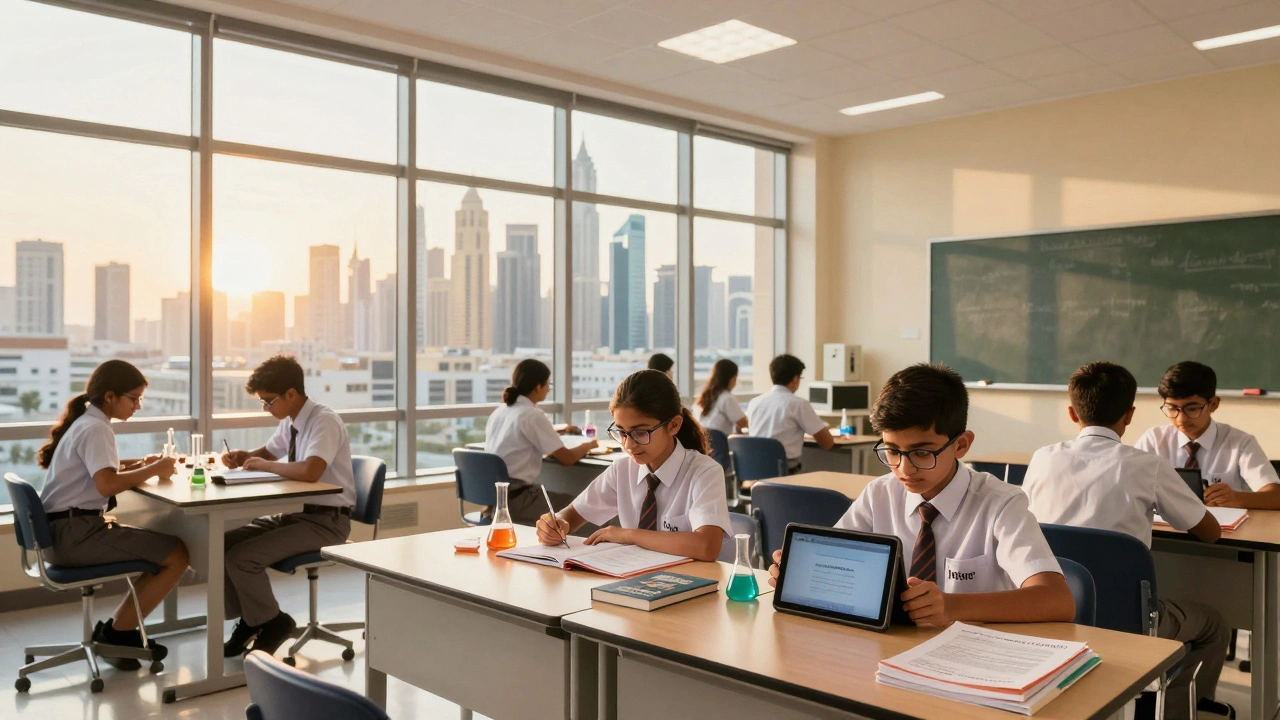
You won’t find a CBSE school on every corner of the world, but the network is surprisingly extensive. As of recent updates, there are over 1,000 schools affiliated with CBSE operating in more than 30 countries. These aren’t random private tutors; they are fully accredited institutions that follow the same syllabus, conduct the same exams, and award the same certificates as schools in Delhi or Mumbai.
The distribution is heavily skewed toward regions with large Indian diasporas. Here is where you’ll find the highest concentration of CBSE-affiliated schools:
- The Middle East: This is the undisputed hub. Countries like the UAE (Dubai and Abu Dhabi), Qatar, Oman, Saudi Arabia, and Kuwait have hundreds of CBSE schools. In fact, some cities in the Gulf have more CBSE students than many states in India.
- Southeast Asia: Singapore, Malaysia, and Thailand have established networks. Singapore, in particular, has a rigorous selection process for its few affiliated schools due to high demand.
- Africa: Mauritius and South Africa have long-standing CBSE affiliations, largely due to historical trade ties and migration patterns.
- Europe and North America: This is trickier. While there are no traditional full-time CBSE schools in the UK or USA, there are registered "CBSE Centers." These are often after-school programs or weekend classes that allow students to register for Class 10 and Class 12 board exams without attending a full-time Indian curriculum school.
If you are moving to a country like Germany or Canada, you likely won’t find a standalone CBSE school. Instead, you’ll need to look into the "Individual Candidate" route, which we’ll discuss later.
How Does Affiliation Work for Foreign Schools?
A common misconception is that any school can call itself a CBSE school if it teaches math and science. That’s not true. The affiliation process is strict. A foreign institution must apply to the CBSE headquarters in New Delhi and meet specific infrastructure, faculty, and administrative criteria.
Once approved, the school becomes an "Affiliated School." This means:
- Curriculum Alignment: They must teach the NCERT-prescribed textbooks and follow the academic calendar set by CBSE.
- Examination Conduct: The school administers the internal assessments and conducts the final board exams under the supervision of external moderators sent from India.
- Teacher Qualifications: Principals and subject teachers often need to undergo training modules provided by CBSE to ensure teaching standards match those in India.
This structure ensures that a student studying in Bahrain receives an education equivalent to one in Bangalore. However, the quality can vary. Just like in India, some international CBSE schools are premium institutions with state-of-the-art labs, while others struggle with resources. Always check the school’s past board results and infrastructure reports before enrolling.
The Challenge of Europe and North America
Living in Bristol, I see many Indian professionals navigating the UK education system. The British curriculum (GCSEs and A-Levels) is excellent, but it is fundamentally different from CBSE. If your goal is to keep your child on the Indian track-perhaps because you plan to move back to India in five years-the options in Western countries are limited.
In the UK, US, and Australia, you generally have two paths:
| Option | Description | Pros | Cons |
|---|---|---|---|
| Local Curriculum + CBSE Exams | Enroll in a local public/private school for daily education, then register as an individual candidate for CBSE Class 10/12 exams. | Better social integration; exposure to local culture. | Heavy workload; self-study required for CBSE boards; potential syllabus gaps. |
| Weekend/After-School CBSE Centers | Attend specialized coaching centers that offer CBSE classes alongside local schooling. | Structured support for board exams; peer group of Indian students. | Expensive; time-consuming; less free time for the child. |
The "Individual Candidate" scheme is a lifesaver for many expats. You can register directly with CBSE through designated centers in your country. You attend a local school for grades 1-9, but for grades 10 and 12, you sit for the CBSE boards externally. Be warned: this requires immense discipline. The child is learning the local curriculum during the day and preparing for Indian boards at night. It works for motivated students, but it can lead to burnout.
Costs and Hidden Expenses
One thing is certain: education abroad is expensive. CBSE schools in the Middle East, for instance, charge tuition fees that can range from $5,000 to $15,000 per year, depending on the city and the school’s reputation. In Singapore, expect to pay even more, often exceeding $20,000 annually.
But tuition is just the tip of the iceberg. Consider these additional costs:
- Transportation: Many international CBSE schools do not provide bus services, or they are limited. You may need to hire a driver or use taxis daily.
- Uniforms and Supplies: Specific uniforms are mandatory, and NCERT books often need to be imported or bought from specialized suppliers at a markup.
- Exam Fees: Board examination fees for international candidates are higher than those in India. For Class 10 and 12, expect to pay between $100 and $300 per exam cycle, plus administrative charges.
- Visa Requirements: In some countries, enrolling in a recognized school is a prerequisite for obtaining a dependent visa for your children. Ensure the CBSE school you choose is government-recognized in that host country.
Academic Transition: Moving Back to India
The biggest advantage of sticking with CBSE abroad is the seamless transition when you return to India. Since the syllabus is identical, your child won’t face the shock of adapting to a new teaching style or textbook series. They can join a CBSE school in India at the exact grade level they were in abroad.
However, there is a subtle difference. Schools in India often have larger class sizes and different pedagogical approaches. An expat child might find the pace faster or the competitive environment more intense. Conversely, they might bring valuable soft skills-like confidence in English communication and global awareness-that give them an edge in interviews and extracurricular activities.
If you switch from a local curriculum (like IB or Cambridge) to CBSE upon returning, the adjustment period is longer. You may need to hire a tutor for subjects like Mathematics or Science, where the conceptual approach differs significantly between boards.
Alternatives to CBSE: IB and IGCSE
While CBSE is popular, it’s not the only game in town. Many Indian parents abroad opt for the International Baccalaureate (IB) or Cambridge IGCSE. Why?
IB (International Baccalaureate) is highly regarded globally. It focuses on critical thinking, research, and holistic development rather than rote memorization. If you plan for your child to study at a university in the US, UK, or Canada, an IB diploma is often preferred over CBSE by admissions officers. It signals that the student can handle independent research and diverse perspectives.
Cambridge IGCSE/A-Levels is another strong contender, especially in the UK and Commonwealth countries. It offers subject-specific depth and is widely accepted by universities worldwide. Unlike CBSE, which is standardized across all schools, IGCSE allows for some flexibility in assessment methods.
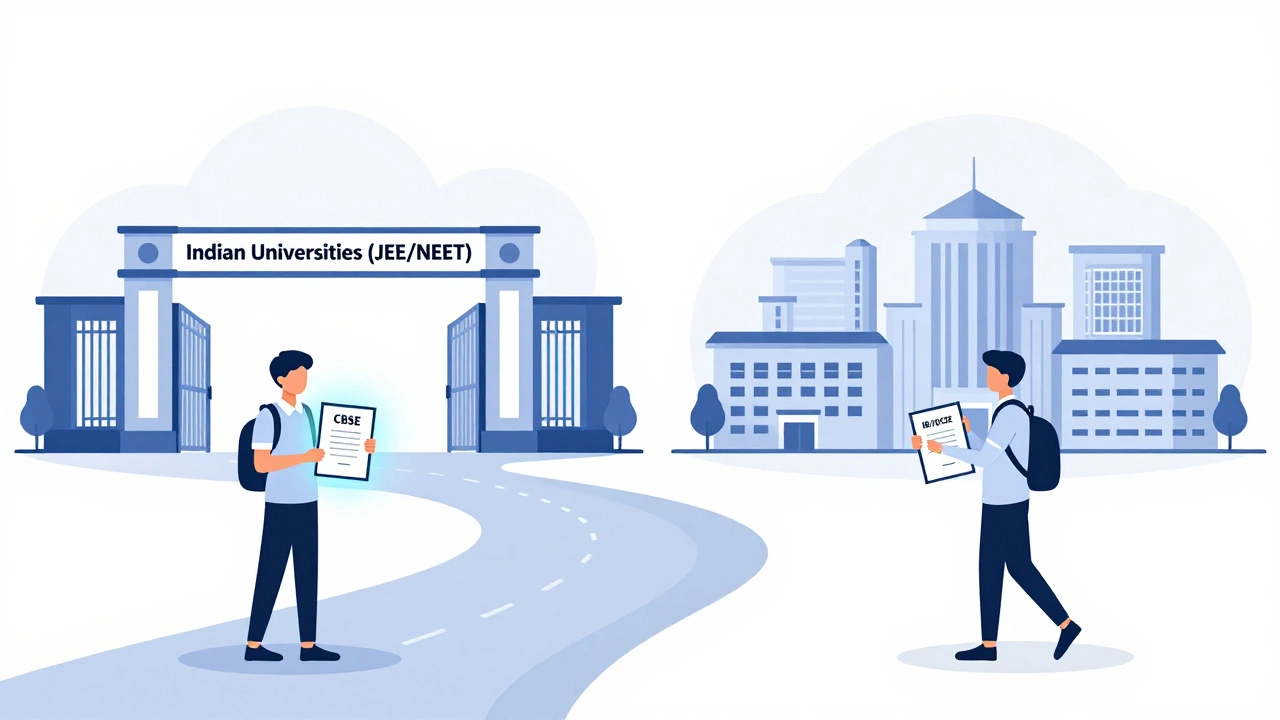
So, should you stick with CBSE? If your primary goal is to keep the door open for engineering or medical entrance exams in India (JEE, NEET), then yes, CBSE is the safest bet. The alignment with these competitive exams is tighter. If you are open to global universities, IB or IGCSE might offer a broader educational experience.
Practical Steps for Parents Moving Abroad
If you are planning a move, here is a checklist to ensure your child’s education stays on track:
- Research Early: Start looking for schools six months before your move. Admission slots in top CBSE schools in Dubai or Singapore fill up quickly.
- Verify Affiliation: Check the official CBSE website for the list of affiliated schools abroad. Do not rely solely on word-of-mouth.
- Contact Current Parents: Join Facebook groups or forums for Indians in your target city. Ask about the school’s actual performance, not just its marketing claims.
- Plan for Transfers: Keep records of your child’s report cards and transfer certificates handy. CBSE schools require detailed documentation for admission.
- Consider Hybrid Models: If a full-time CBSE school isn’t available, explore hybrid models where your child attends a local school and takes online CBSE classes or weekend coaching.
Education is a long-term investment. Choosing the right board abroad sets the foundation for your child’s future, whether they stay overseas or return to India. With careful planning, you can ensure that distance doesn’t mean a disconnect from their academic roots.
Are CBSE marks obtained abroad valid for Indian universities?
Yes, absolutely. Marks obtained from CBSE-affiliated schools abroad are treated exactly the same as those from schools within India. They are fully valid for admission to undergraduate programs in India, including competitive exams like JEE Main, NEET, and CUET.
Can I enroll my child in a CBSE school if I am not an Indian citizen?
Most CBSE schools abroad accept students regardless of nationality. However, some schools may prioritize children of Indian expatriates or require proof of residence in the host country. It is best to check the specific admission policy of the school you are interested in.
What is the cost of sending a child to a CBSE school in Dubai?
Tuition fees for CBSE schools in Dubai vary widely. Mid-range schools charge between AED 25,000 to AED 45,000 per year (approximately $6,800 to $12,200). Premium schools can charge upwards of AED 60,000 ($16,300) annually. Additional costs include registration fees, transport, and uniform expenses.
Is it possible to take CBSE board exams as an external candidate in the UK?
Yes. CBSE allows individual candidates to register for Class 10 and Class 12 board exams through designated centers in various countries, including the UK. You must apply through the CBSE portal during the specified registration window and pay the requisite fees. You will need to arrange for a venue to write the exams.
Do CBSE schools abroad follow the same academic calendar as India?
Generally, yes. Most affiliated schools align their academic sessions with the Indian calendar (April to March) to synchronize with board exam schedules. However, some schools in countries with different holiday traditions may make minor adjustments to holidays, ensuring they still cover the full syllabus by the exam date.