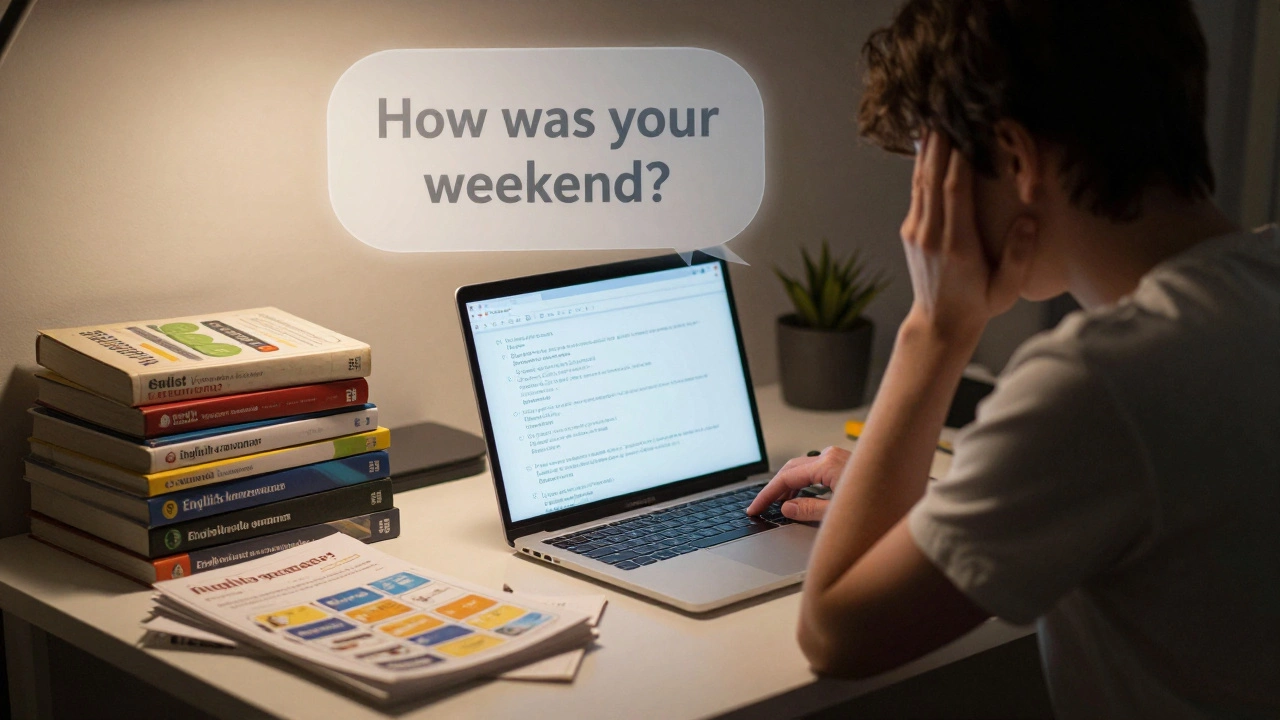
You’ve studied English for years. You know the grammar. You can write essays. You understand movies and podcasts. But when someone asks you, "How was your weekend?" - your mind goes blank. You freeze. You mumble. You switch back to your native language. Sound familiar? You’re not broken. You’re not bad at English. You’re just stuck in a common trap most learners never escape.
You’re practicing the wrong things
Most English courses focus on reading, writing, and grammar drills. That’s not how fluency works. Fluency isn’t about knowing rules - it’s about automatic response. Think of it like driving. You don’t think about shifting gears or checking mirrors every time you turn. You just do it. Speaking English the same way requires muscle memory, not textbook knowledge.
When you spend hours memorizing verb tenses but never practice answering real questions, your brain doesn’t learn how to respond in real time. You’re training for a written exam, not a conversation. That’s why you can ace a grammar test but panic when someone says, "What did you do last night?" Your brain hasn’t built the pathway to answer that quickly.
You’re waiting for perfect words
One of the biggest killers of fluency is the fear of making mistakes. You wait. You second-guess. You try to say the "right" word, the "perfect" phrase. Meanwhile, the person you’re talking to is still waiting for you to finish. That pause? It feels like an eternity to them. And it builds anxiety. The more you wait for perfection, the harder it gets to start speaking at all.
Native speakers don’t speak perfectly. They use filler words, restart sentences, say "um," and even mispronounce things. That’s normal. The goal isn’t perfection - it’s flow. If you’re thinking about grammar while speaking, you’re not speaking. You’re translating. And translation kills speed.
You’re not getting enough real input
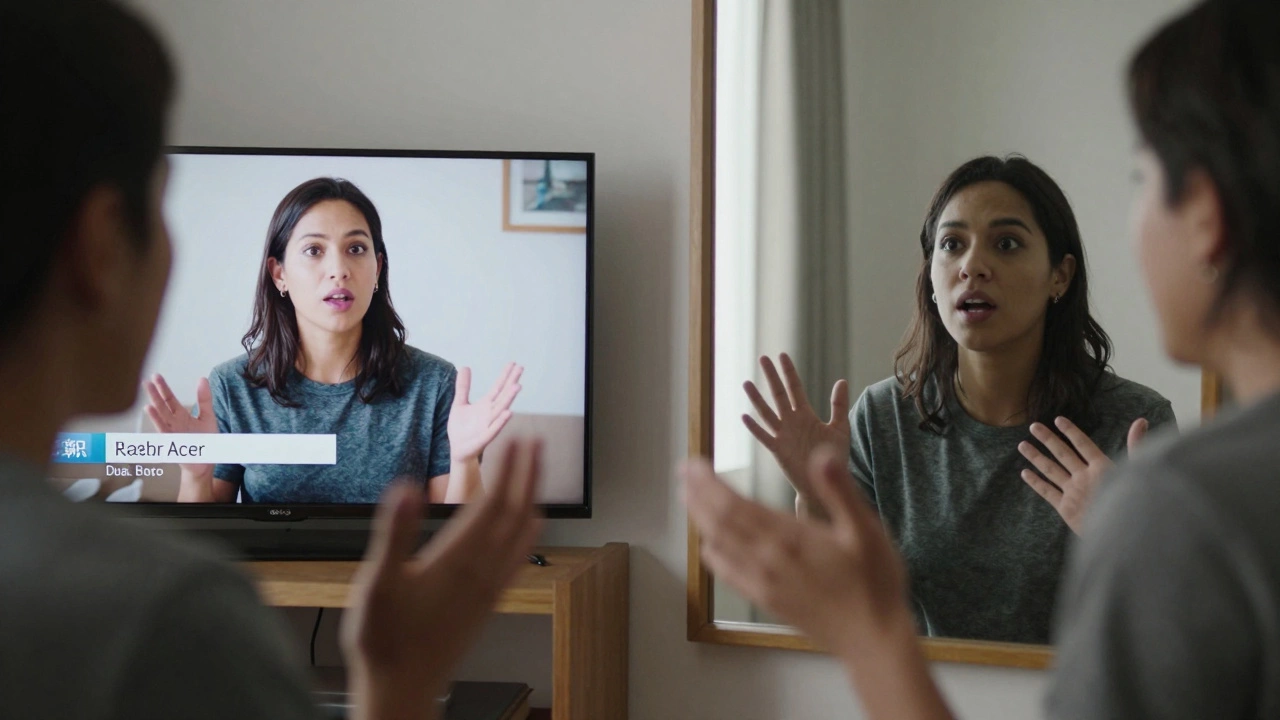
You might watch English videos, but are you really listening? Or are you just letting it play in the background while you scroll on your phone? Real listening means paying attention to how people connect ideas, how they pause, how they use tone. It means noticing that people say "gonna" instead of "going to," or "wanna" instead of "want to." These aren’t mistakes - they’re the rhythm of real English.
Studies show that learners who listen to natural conversations for at least 30 minutes a day improve their speaking speed 40% faster than those who only study grammar. But you need to listen actively. Try shadowing: play a short clip from a TV show, pause it, and repeat what the person said out loud - exactly how they said it. Copy their rhythm, their pauses, their intonation. Do this for 10 minutes a day for two weeks. You’ll start to sound more natural without even trying.
You’re speaking in isolation
If you only practice English alone - talking to yourself, recording your voice, or using apps - you’re not preparing for real conversations. Real speaking happens with another person. There’s eye contact. There’s body language. There’s pressure. There’s surprise.
Most language apps give you scripted questions. "What’s your favorite food?" "Where do you live?" Real life doesn’t work like that. Someone might ask, "Hey, did you see that crazy thing on the news?" or "How’s your cousin’s new job working out?" You need to practice unpredictable talk. Find a language partner. Join a local meetup. Use free platforms like Tandem or HelloTalk. Even 15 minutes, twice a week, with someone who will correct you - that’s more valuable than 10 hours of solo practice.

You’re not using English in daily life
Think about your native language. You don’t need to "study" it. You use it to order coffee, argue with your sibling, text your friend, or complain about the weather. You don’t need a class for that. You just do it.
But with English, you treat it like a subject you study only during class time. That’s the problem. You need to start using it in small, real ways every day. Change your phone’s language to English. Think in English while brushing your teeth. Describe what you’re doing out loud: "I’m putting on my shoes. The weather is cold today." Write your grocery list in English. Send a text in English to a friend. Don’t wait for "practice time." Make English part of your routine.
It’s not about talent - it’s about exposure
You don’t need to be a genius to speak English fluently. You just need consistent, real, messy, imperfect practice. Fluency isn’t a destination. It’s a habit. People who speak English fluently didn’t get there by studying harder. They got there by using it more.
Start small. Pick one thing from above - shadowing, speaking with a partner, thinking in English - and do it for 10 minutes every day for the next 30 days. Don’t aim for perfect. Aim for consistent. After a month, you’ll notice something: you’re not thinking about the words anymore. You’re just speaking.
Fluency isn’t about knowing more. It’s about doing more. And you’re already on the path - you’re asking the right question. Now it’s time to act.
Why can I understand English but not speak it?
Understanding English (listening and reading) and speaking it are two different skills. Your brain has built pathways for comprehension, but not for production. You need to practice forming sentences out loud, not just recognizing them. Think of it like learning to ride a bike: you can watch someone else ride, but you still have to get on the bike and try.
How long does it take to become fluent in speaking English?
There’s no fixed timeline, but most people who practice speaking daily - at least 15-30 minutes - see noticeable improvement in 3 to 6 months. Fluency isn’t about memorizing vocabulary. It’s about building automatic responses. The key is consistency, not intensity. Five minutes a day, every day, beats two hours once a week.
Should I focus on accent reduction to speak fluently?
No. Fluency is about being understood, not sounding like a native speaker. Most non-native speakers with clear, confident speech are understood better than those who obsess over accent. Focus on clarity, rhythm, and word stress instead. If someone asks you to repeat something, that’s when you adjust - not before you even start talking.
Is it too late to become fluent if I started learning English late?
Never. Adults often learn faster than children because they have better focus, self-awareness, and strategies. Many people become fluent in their 30s, 40s, or even later. The biggest barrier isn’t age - it’s fear of sounding silly. Let go of that. Every fluent speaker was once a beginner.
What’s the fastest way to improve my speaking skills?
Speak with real people who correct you - even if it’s just 10 minutes a day. Combine that with daily shadowing (repeating short audio clips out loud) and thinking in English during routine tasks. That’s the most direct path. No app, course, or book replaces real conversation.