
Learning Platform Matcher
1. What is your primary goal?
2. What is your budget?
Why this fits you
Enter your learning goals above to get a personalized recommendation.
nScrolling through course catalogs can feel like wandering a supermarket with no shopping list. You see shiny badges, promising headlines, and endless options. But which one actually helps you learn? The truth is, there is no single "best" platform for everyone. Your goal dictates the tool. If you want to pivot careers, build a portfolio, or just pick up a new hobby, different platforms serve those needs better than others.
In 2026, the landscape of digital education has matured. We are past the era of simple video lectures. Today, platforms compete on interactivity, credential value, and community support. This guide breaks down the top contenders so you can stop guessing and start learning effectively.
Key Takeaways
- Career Switchers: Prioritize platforms with verified certificates and industry partnerships (e.g., Coursera, edX).
- Practical Builders: Choose interactive environments where you code or create projects immediately (e.g., Udemy, Codecademy).
- Academic Learners: Stick to university-backed content for deep theoretical knowledge (e.g., edX, FutureLearn).
- Budget Conscious: Look for free audit options or subscription models rather than paying per course upfront.
- Soft Skills: Seek platforms focusing on behavioral science and real-world simulations (e.g., LinkedIn Learning).
Defining Your Learning Goal First
Before comparing features, ask yourself: What do I need this skill for? This question filters out 80% of irrelevant options. Are you trying to get hired? Promoted? Or just curious?
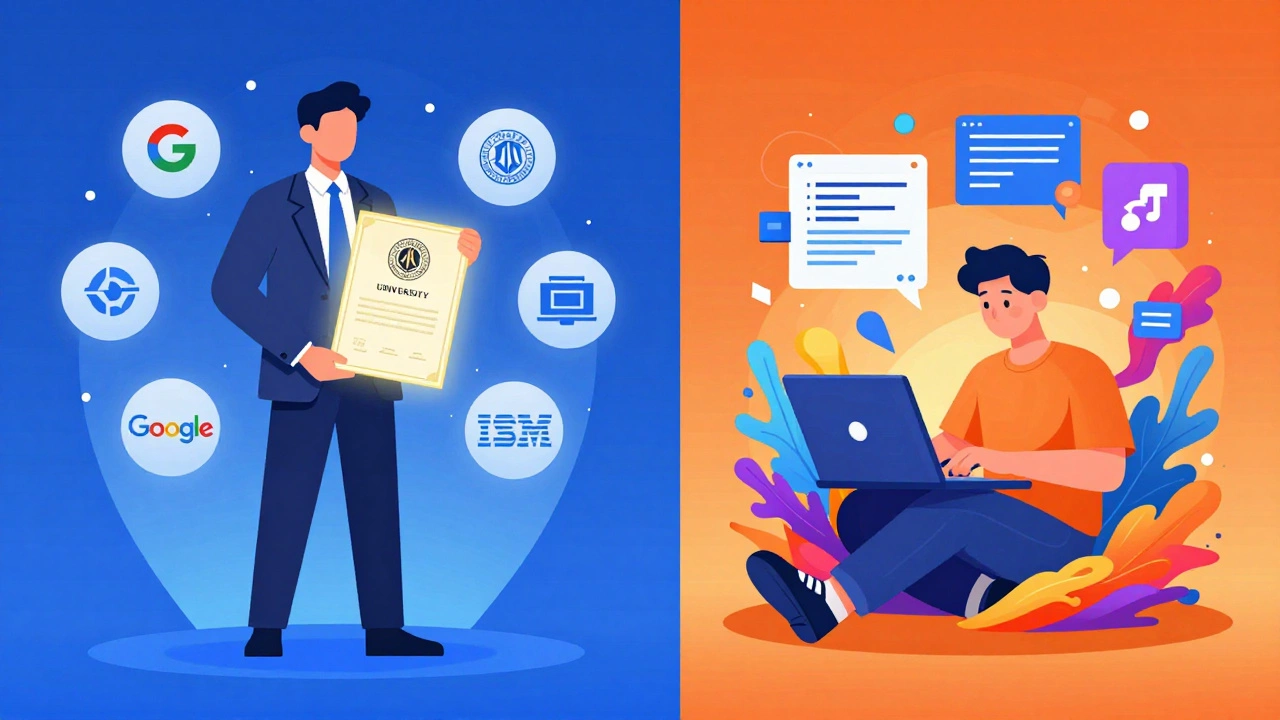
If your goal is employment, you need credentials that HR systems recognize. Here, Coursera is an online learning platform founded by Stanford professors Andrew Ng and Daphne Koller that partners with top universities and companies like Google and IBM to offer professional certificates. These certificates carry weight because they often include peer-reviewed projects and are recognized by employers globally.
On the other hand, if you want to build a website tonight, academic theory won't help. You need hands-on practice. This is where platforms like Udemy is a marketplace for online courses created by individual instructors, offering over 210,000 courses on topics ranging from programming to personal development. shine. The quality varies, but the practical, project-based approach is unbeatable for immediate application.
The Academic Powerhouses: Coursera and edX
When it comes to credibility, two names dominate: Coursera and edX. Both were founded by academics and partner with prestigious institutions. However, their vibes differ slightly.
Coursera leans heavily into professional education. Their "Specializations" bundle multiple courses into a cohesive track, often ending with a capstone project. For example, their Python for Everybody specialization is widely regarded as one of the best entry points into coding. The interface is clean, mobile-friendly, and the certificate integration with LinkedIn is seamless.
edX, created by Harvard and MIT, feels more like a traditional university experience. Their courses are rigorous, often requiring significant time commitments. If you are looking for a MicroMasters program-a graduate-level credential that can sometimes be applied toward a full degree-edX is the place. It is less about quick tips and more about deep, structured learning.
| Feature | Coursera | edX |
|---|---|---|
| Best For | Professional Certificates & Career Changers | Academic Rigor & University Credits |
| Pricing Model | Subscription or Per-Certificate | Audit (Free) or Verified Certificate ($$$) |
| Content Style | Structured, Project-Based | Lecture-Heavy, Textbook-Style |
| Top Partners | Google, IBM, Yale | Harvard, MIT, Berkeley |
The Practical Marketplaces: Udemy and Skillshare
Not every skill requires a university stamp. Sometimes you just need to know how to use Excel macros, draw in Procreate, or edit videos in Premiere Pro. This is where marketplaces excel.
Udemy operates on a freelance model. Anyone can teach, which means quality control is user-driven via reviews. The trick? Always check the last update date and read the most recent reviews. A course on React from 2022 might be obsolete in 2026 due to framework changes. Udemy frequently runs sales, dropping prices from $100 to $15. Never pay full price.
Skillshare differs by focusing on creativity and short-form lessons. Instead of hour-long lectures, you get 10-minute bites focused on specific techniques. It is ideal for designers, writers, and makers. The community aspect is strong; you can comment on student projects and get feedback. However, it lacks formal certification, making it less useful for resumes and more for portfolio building.
Tech-Specific Training: Codecademy and Pluralsight
If your goal is technical proficiency, general platforms often fall short. You need an environment where you can write code, run tests, and debug in real-time.
Codecademy is an interactive online education website that teaches web development skills through browser-based coding exercises. Its strength is the instant feedback loop. You type code, hit run, and see if it works. This reduces the friction of setting up local development environments, which often discourages beginners. For absolute novices, this gamified approach keeps motivation high.
Pluralsight, meanwhile, targets experienced developers and IT professionals. Their content is deeper, covering cloud architecture, cybersecurity, and advanced data science. They offer "Skill IQ" assessments that pinpoint your exact proficiency level and recommend paths to close gaps. It is less about learning syntax and more about mastering engineering practices.

Soft Skills and Corporate Learning: LinkedIn Learning
Technical skills get you the interview; soft skills get you the job. Leadership, communication, and emotional intelligence are harder to teach via textbooks. LinkedIn Learning is an online learning service owned by LinkedIn that offers video courses taught by industry experts on business, technology, and creative skills. integrates directly with your professional profile.
Completing a course here adds a visible badge to your LinkedIn profile, signaling continuous improvement to recruiters. The production quality is high, and the instructors are often current industry leaders rather than academics. It is particularly effective for managers needing quick updates on agile methodologies or conflict resolution.
Cost vs. Value: How to Choose Without Breaking the Bank
Price is a major factor, but it does not always correlate with quality. Here is a heuristic to help you decide:
- Try Free Audits First: Most academic platforms allow you to access course materials for free. Only pay if you need the certificate.
- Check Subscription Models: If you plan to take more than two courses a month, subscriptions (like Coursera Plus or LinkedIn Learning) save money compared to per-course fees.
- Employer Sponsorship: Many companies offer tuition reimbursement. Check your HR portal before spending your own cash.
- Financial Aid: Coursera and edX offer financial aid for learners in low-income countries or those facing financial hardship. The application process is straightforward but takes a few weeks.
The Verdict: Matching Platform to Persona
To simplify your decision, match your primary identity to the recommended platform:
- The Career Pivoter: Go with Coursera. Focus on Professional Certificates from recognized brands like Google or Meta.
- The Hobbyist: Choose Skillshare or Udemy. Pick specific, niche topics that interest you without long-term commitment.
- The Aspiring Developer: Start with Codecademy for basics, then move to Pluralsight or Udemy for advanced frameworks.
- The Academic Mind: Stick to edX or Khan Academy (for foundational math/science). Enjoy the depth of university-level content.
- The Manager: Use LinkedIn Learning to sharpen leadership and communication skills while boosting your network visibility.
Remember, the best platform is the one you actually finish. Consistency beats prestige. Pick a course that aligns with your immediate goals, commit to a schedule, and focus on applying what you learn. The platform is just the vehicle; your effort drives the results.
Is Coursera better than Udemy?
It depends on your goal. Coursera is better for career-oriented learning with verified certificates from universities and companies. Udemy is better for practical, specific skills like software tutorials or hobbies, often at a lower cost. Coursera focuses on structure and credibility; Udemy focuses on variety and affordability.
Are online certificates worth it in 2026?
Yes, especially if they come from reputable providers like Coursera, edX, or industry leaders like Google. Employers increasingly value demonstrable skills over traditional degrees alone. However, the certificate should complement a portfolio of work, not replace it. Show what you built, not just what you studied.
Which platform is best for beginners in coding?
Codecademy is excellent for absolute beginners due to its interactive, hands-on approach. It removes setup barriers and provides instant feedback. Alternatively, Harvard's CS50 on edX is a fantastic free introduction to computer science concepts, though it is more challenging.
Can I learn for free on these platforms?
Most platforms offer free access to course content. Coursera and edX allow you to "audit" courses for free, meaning you can watch lectures and read materials but won't get graded assignments or a certificate. Khan Academy is entirely free. Udemy has some free courses, but most require payment.
How do I choose between a subscription and buying individual courses?
If you plan to take more than two courses in a month, a subscription (like Coursera Plus or LinkedIn Learning) is usually cheaper. If you only need one specific skill right now, buying an individual course on Udemy or edX may be more cost-effective. Assess your learning pace and goals before committing.