Competitive Exam Personality Quiz
Discover Your Competitive Personality Type
Based on research from the University of Cambridge and National Institute of Educational Psychology
Take this 60-second quiz to identify your competitive personality type. Your results will reveal your strengths and areas to develop for exam success.
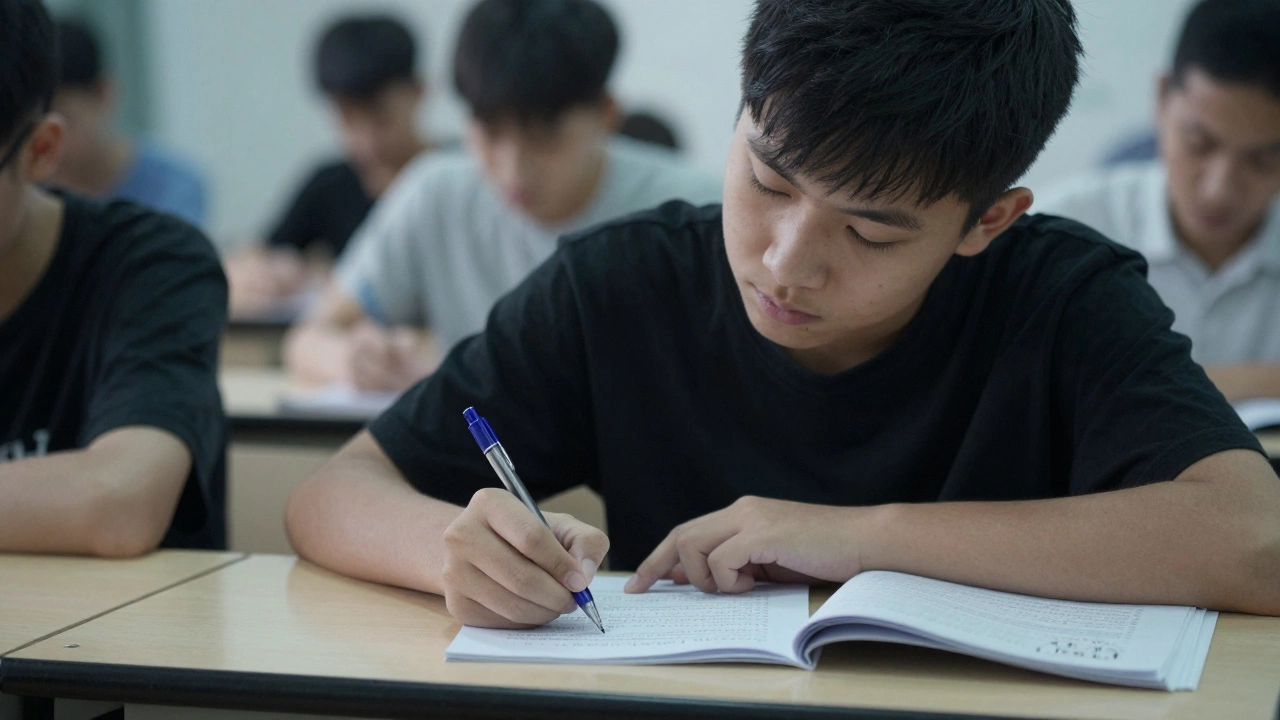
When you walk into a crowded exam hall for something like the UPSC, NEET, or IIT-JEE, you don’t just see students with textbooks. You see people with different mindsets. Some are calm, methodical, quiet. Others are wired for pressure, hungry to win, always pushing harder. The question isn’t just who studies the most-it’s who has the personality that turns pressure into power. And the answer isn’t what most people think.
The Myth of the Overachiever
People assume the most competitive personality is the one who studies 16 hours a day, skips meals, and sleeps with notes under their pillow. But that’s burnout waiting to happen. I’ve seen students like that crash by month three. They start strong, but their drive isn’t sustainable. It’s fueled by fear, not focus. Real competitiveness isn’t about volume-it’s about consistency under pressure. It’s about knowing when to push and when to reset.The Type That Wins: Conscientiousness With a Side of Resilience
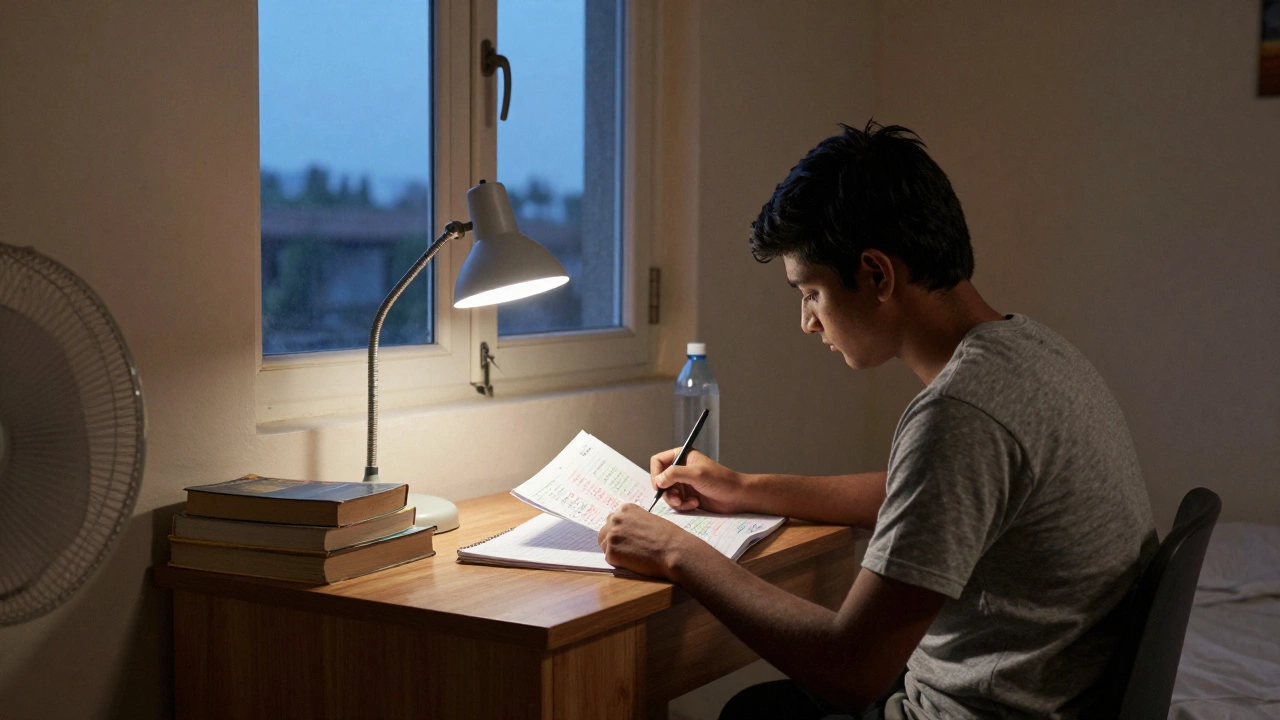
Psychology research from the University of Cambridge on high-stakes exam takers found that the most successful candidates weren’t the loudest or the most confident. They were the ones who scored high on conscientiousness-a trait defined by discipline, organization, and a strong work ethic. But here’s the twist: they also had high resilience. Not just mental toughness, but the ability to bounce back from a bad mock test, a dropped rank, or a family setback without losing momentum.Think of someone who wakes up at 5 a.m. every day, even after a 3 a.m. study session. They don’t celebrate small wins publicly. They don’t post their study schedules on Instagram. They just show up. They track their progress in a notebook, adjust their plan after every test, and never let one bad day define their journey. That’s not just hard work-it’s a personality pattern.
Why Extroverts Don’t Always Win
You’d think the outgoing, talkative, charismatic type would dominate in group prep sessions or mock interviews. But in reality, many extroverts burn out faster. Why? They feed off external validation-praise from teachers, applause from peers, likes on social media. When the feedback dries up, so does their energy. Competitive exams are a long, lonely road. You spend months with no one to cheer you on. The person who thrives here doesn’t need an audience. They need a system.One student I worked with, Arvind, was a top performer in his coaching center. He was quiet, rarely spoke in group discussions, and never asked for help. But every week, he submitted his test analysis with color-coded errors and a plan to fix each one. He didn’t talk about his goals-he just reached them. By the time he cleared the IAS mains, no one outside his family even knew how close he was to the top rank.
The Hidden Danger: Narcissism Masquerading as Confidence
There’s another personality type that looks competitive but is actually a liability: the one who believes they’re already better than everyone else. They skip practice tests because “they already know it.” They dismiss feedback as “not relevant to them.” They blame the exam pattern, the examiner, the syllabus when they fail.This isn’t confidence. It’s fragility dressed up as arrogance. Real competitors don’t need to prove they’re the best. They just want to be better than they were yesterday. A 2024 study by the National Institute of Educational Psychology tracked over 12,000 aspirants across 18 major exams. The group with the highest success rate had the lowest self-reported “I’m the best” scores. The winners were humble, self-aware, and brutally honest about their weaknesses.
What About the “Underdog” Type?
Don’t underestimate the person who starts last. The one who didn’t get into a top school, whose parents didn’t support them, who had to work part-time while studying. These people often develop a different kind of grit. They don’t have the luxury of failure. Every hour counts. Every rupee matters. Their motivation isn’t about prestige-it’s about survival.That’s why many top scorers in government exams come from small towns or low-income families. Their competitiveness isn’t born from ambition-it’s born from necessity. They don’t compare themselves to others. They compare themselves to their own starting point. And that’s a more powerful engine than any trophy or title.

What Doesn’t Work: The Comparison Trap
Social media is full of “Topper Stories.” 14-hour study days. 98% in class 12. 500+ hours of coaching. But here’s the truth: those aren’t the benchmarks you should follow. They’re highlights, not the full movie. The person posting that video might have had a tutor, a private room, parents who quit their jobs to support them. You don’t see the breakdowns, the panic attacks, the moments they wanted to quit.Comparing yourself to others doesn’t make you more competitive. It makes you distracted. The most successful candidates focus on their own progress curve. They measure improvement by how many mistakes they cut from one test to the next-not by where they rank on a list.
How to Build a Competitive Personality
You can’t change your DNA, but you can train your mindset. Here’s what actually works:- Start tracking your progress daily-not just scores, but focus time, error patterns, and emotional state.
- Build a routine that’s repeatable, not extreme. 6 hours of deep work beats 12 hours of distraction.
- Embrace failure as data. Every wrong answer is a clue, not a condemnation.
- Limit exposure to comparison triggers. Unfollow top scorers on Instagram. Stop checking rank lists daily.
- Find one person who’s been through it and ask them: “What did you do when you felt like giving up?”
Competitiveness isn’t a trait you’re born with. It’s a skill you build through small, daily choices. The person who wins isn’t the loudest or the smartest. It’s the one who shows up, even when no one’s watching.
Final Thought: The Quiet Winner
The most competitive personality in exam prep isn’t loud. It’s not flashy. It doesn’t need applause. It’s the one who opens their notebook at 5 a.m., fixes the same mistake for the third time, and doesn’t tell anyone about it. They don’t need to prove anything to the world. They just need to prove it to themselves.Is a competitive personality the same as being aggressive?
No. Aggression is about overpowering others. Competitiveness is about improving yourself. The most successful exam takers are calm, focused, and self-directed. They don’t see others as enemies-they see them as part of the environment. Their competition is with their own past performance, not someone else’s score.
Can introverts be competitive in exams?
Absolutely. Many top performers in competitive exams are introverted. They thrive in solitude, focus deeply without distractions, and don’t waste energy on social validation. Introversion isn’t a weakness-it’s a strategic advantage in long-term, self-paced preparation.
Does being competitive mean studying all the time?
No. In fact, overstudying leads to diminishing returns. Competitive people know when to rest. They schedule breaks, sleep well, and take walks. Their strength isn’t in hours logged-it’s in focused, intentional work. One hour of deep concentration is worth three hours of half-attention.
What if I’m not naturally competitive?
You don’t need to be naturally competitive to succeed. You need to be committed. Start by setting small, measurable goals. Celebrate progress, not perfection. Build systems, not motivation. Competitiveness grows through action, not personality traits. The first step is showing up-even if you don’t feel like it.
How do I know if I’m truly competitive or just stressed?
Stress makes you reactive. Competitiveness makes you proactive. If you’re constantly anxious about rankings, fearing failure, or blaming others, you’re stressed. If you’re analyzing your mistakes, adjusting your plan, and improving steadily-even when no one’s watching-you’re competitive. Stress drains you. Competitiveness fuels you.