Board Selection Quiz
Find Your Perfect Board Match
Answer these questions to see which board aligns with your family's situation.
This quick assessment analyzes factors like career goals, geographic stability, and learning style to recommend a board.
Your Recommended Board Profile
Calculating...
Based on your answers, we have analyzed the fit for CBSE, ICSE, State Boards, and International options.
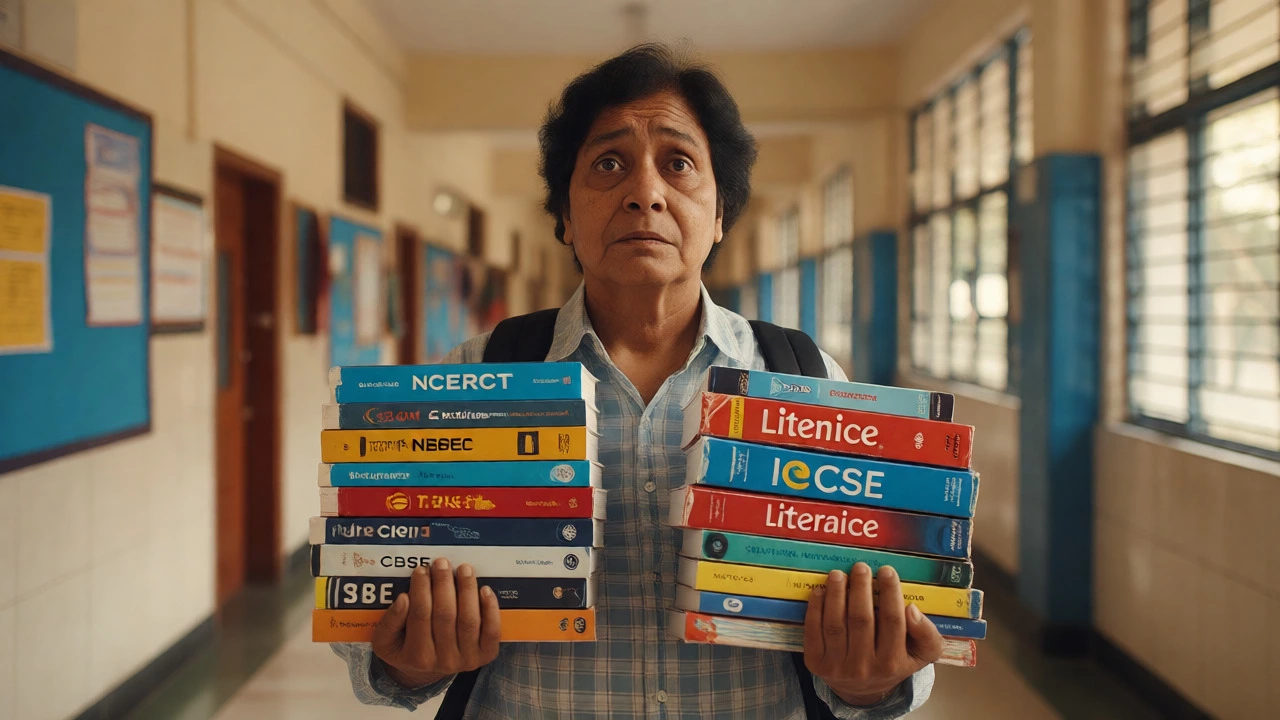
Choosing the right school board feels like picking a life path for your child before they’ve even learned to tie their own shoelaces. Parents panic because the stakes feel impossibly high. Will this choice lock them out of engineering colleges? Will it make moving cities a nightmare? The truth is simpler than the anxiety suggests. There is no single "best" board for every child in India. The right answer depends entirely on what you value: flexibility, depth, or local relevance.
If you want a quick snapshot to save you time scrolling through endless forums, here are the key takeaways:
- CBSE is the default choice for families who move frequently or plan for national competitive exams like JEE and NEET due to its standardized, NCERT-based curriculum.
- ICSE offers a deeper, more comprehensive English language foundation and detailed subject coverage, ideal for students aiming for humanities, law, or studying abroad.
- State Boards are cost-effective and locally relevant, often providing better preparation for state-level government jobs and local university admissions.
- IB/Cambridge focuses on critical thinking and global recognition but comes with higher costs and less alignment with Indian entrance exam patterns.
- The "best" board aligns with your child’s learning style, your family’s geographic stability, and long-term career goals, not just peer pressure.
The Big Three: Understanding the Landscape
When people ask which board is best, they are usually comparing three main contenders. Let’s break down what each one actually delivers, stripped of the marketing fluff.
Central Board of Secondary Education (CBSE) is the most widely followed educational board in India, affiliated with over 27,000 schools. It operates under the Ministry of Education and bases its curriculum on the National Council of Educational Research and Training (NCERT). This standardization is its superpower. If you live in Delhi today and move to Bangalore next year, your child’s syllabus remains identical. This continuity reduces academic shock during transfers.
Council for the Indian School Certificate Examinations (CISCE), commonly known as ICSE, is a private board known for its rigorous, literature-heavy curriculum and strong emphasis on English proficiency. Unlike CBSE, ICSE does not rely solely on NCERT books. It requires students to engage with a wider range of texts and reference materials. This approach builds stronger analytical writing skills but demands significantly more study hours.
State Boards refer to education systems managed by individual state governments, such as the Maharashtra State Board or Tamil Nadu State Board. These curricula are tailored to regional languages, history, and culture. While quality varies wildly from state to state, modern reforms have brought many state boards closer to national standards, especially in STEM subjects.
Why CBSE Dominates Competitive Exam Prep
If your child dreams of becoming a doctor or engineer, look at the data. Major national entrance exams like JEE Main and NEET-UG are based primarily on the NCERT syllabus. Since CBSE follows NCERT almost verbatim, students don’t need to bridge gaps between their school textbooks and exam prep materials. They can focus on problem-solving rather than learning new concepts outside their school scope.
Consider Arjun, a student from Jaipur. He attended a CBSE school. When he started coaching for JEE, his teachers didn’t waste time teaching him basic physics formulas again. His school had already covered them in the exact sequence required for the entrance test. Contrast this with Priya, an ICSE student. She had to spend extra months unlearning some complex derivations that weren’t part of the JEE pattern and re-learning simplified versions. For science-oriented careers, CBSE offers a streamlined pathway.
Furthermore, CBSE’s assessment pattern has shifted toward competency-based questions. Recent updates include case-study-based questions and assertion-reasoning types. This mimics the format of competitive exams more closely than the traditional rote-learning models of the past. If you want your child to be exam-ready by Class 12 without burning out, CBSE is the pragmatic choice.
Where ICSE Excels: Depth and Language Skills
So, why do so many parents still choose ICSE despite the workload? Because it produces articulate, well-read individuals. The ICSE syllabus treats English not just as a subject but as a medium of inquiry. Students read Shakespeare alongside Indian authors. They analyze poetry, write essays, and debate literature. This rigor pays dividends in fields where communication is king: law, journalism, civil services, and international business.
Let’s look at a real-world scenario. A student applying for a Master’s degree in Humanities in the UK or USA often faces scrutiny regarding their English proficiency. An ICSE background, with its heavy emphasis on literary analysis and precise writing, provides a solid foundation. Admissions officers recognize the rigour of the CISCE curriculum. In contrast, while CBSE students are excellent at facts, they sometimes struggle with nuanced argumentation in early university years unless they actively work on those soft skills.
However, there is a trade-off. ICSE is demanding. The sheer volume of reading and the complexity of scientific concepts can overwhelm students who prefer concise, fact-based learning. If your child gets stressed easily or struggles with time management, the ICSE grind might lead to burnout before they even reach college.
The Underrated Value of State Boards
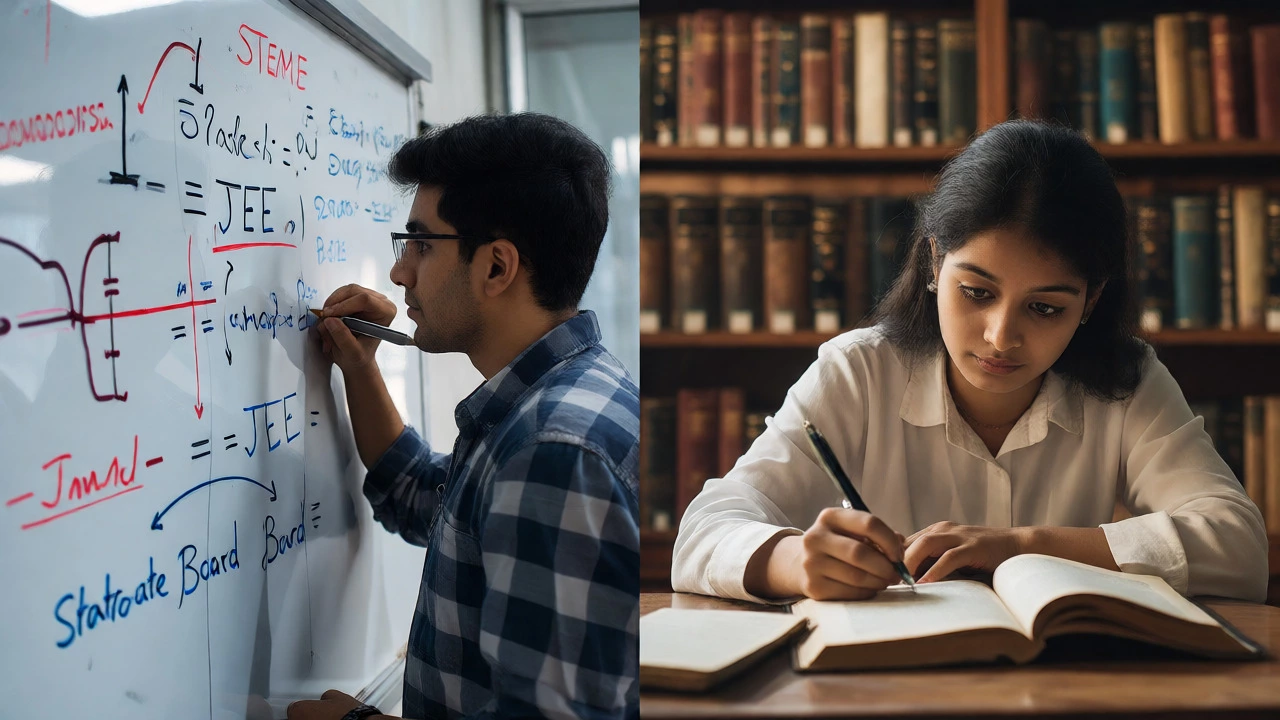
State boards get a bad rap, often dismissed as "inferior." That’s outdated thinking. In states like Kerala, Karnataka, and Andhra Pradesh, the education system is robust. The biggest advantage? Relevance. State boards integrate local history, geography, and languages into the core curriculum. This fosters a deeper connection to one’s roots.
Moreover, if you plan for your child to enter state-level public service commissions (like UPSC State PSCs) or local engineering colleges, state board preparation is directly aligned. Many state universities reserve seats for students from their respective boards. The competition within these pools can sometimes be less fierce than the national rat race. Plus, the fees are generally lower. For families on a tight budget, a good state board school offers exceptional value without compromising on basic education quality.
Don’t underestimate the psychological comfort too. Studying in a familiar cultural context, with teachers who understand local nuances, can boost confidence. For younger children, this familiarity creates a safer learning environment compared to the impersonal nature of large, standardized CBSE schools.
International Boards: IB and Cambridge
For expats or globally-minded families, International Baccalaureate (IB) and Cambridge International (IGCSE/A-Levels) are popular. These aren't "Indian" boards, but they operate in India. They focus on holistic development, research projects, and critical thinking rather than memorization.
The catch? They don’t align with JEE/NEET. An IB student wanting to do Engineering in India must prepare separately for entrance exams, often starting as early as Class 9. This dual burden is heavy. However, if the goal is direct admission to foreign universities or liberal arts colleges in India (like Ashoka University or FLAME), IB/Cambridge is superior. Their grading systems are recognized worldwide, eliminating the need for credential evaluations.

Comparison Table: Making the Decision Easier
Here is a side-by-side look at how these boards stack up against common parental concerns.
| Feature | CBSE | ICSE | State Boards | IB/Cambridge |
|---|---|---|---|---|
| Primary Focus | Standardized Science & Math | Literature & Comprehensive Knowledge | Regional Relevance & Basics | Critical Thinking & Global Outlook |
| Best For | JEE/NEET Aspirants, Frequent Movers | Humanities, Law, Study Abroad | State Govt Jobs, Budget-Conscious Families | Liberal Arts, Foreign Universities |
| English Proficiency | Moderate | High | Variable (Language Medium) | Very High |
| Exam Difficulty | Moderate | High | Low to Moderate | High (Continuous Assessment) |
| Cost of Coaching | Lower (Aligned with School) | Higher (Gap Bridging Needed) | Low | Very High (Separate Prep) |
| Portability | Excellent (Pan-India) | Good | Poor (State-Specific) | Global |
How to Choose: A Practical Framework
Stop asking "which is best?" Start asking "what fits us?" Use this simple checklist to filter your options.
- Assess Geographic Stability: Do you transfer jobs often? If yes, CBSE is non-negotiable. State board transfers are administrative nightmares involving certificate equivalency issues.
- Identify Career Inclinations Early: Does your child love coding and physics? Lean towards CBSE. Do they love writing, debating, and history? Look at ICSE or IB.
- Evaluate Financial Capacity: Can you afford separate coaching for entrance exams if the school doesn’t provide it? If not, stick to boards aligned with national exams (CBSE).
- Gauge Child’s Temperament: Is your child resilient and hardworking? ICSE will thrive. Are they sensitive to stress? A supportive State Board or a relaxed CBSE environment might yield better mental health outcomes.
- Check Local School Quality: A mediocre CBSE school is worse than an excellent State Board school. Teacher quality matters more than the board label. Visit classrooms. Talk to current parents.
Remember, the board is just the vehicle. The driver-your child’s effort and your support-determines the destination. Thousands of successful doctors came from ICSE schools. Thousands of brilliant lawyers graduated from CBSE. The board doesn’t define success; it only defines the route.
Frequently Asked Questions
Is CBSE easier than ICSE?
Generally, yes. CBSE is considered less voluminous and more straightforward, focusing on core concepts from NCERT textbooks. ICSE covers a broader range of topics, particularly in English Literature and Social Sciences, requiring more extensive reading and analytical writing, which many students find more challenging.
Can I switch from ICSE to CBSE in Class 11?
Yes, it is possible, but it requires careful planning. You must ensure the new school accepts the transfer and that your child prepares for the gap in syllabus coverage, especially in Science and Mathematics. Most students make this switch specifically to align with JEE/NEET preparation, as CBSE’s Class 11 and 12 syllabi are perfectly synchronized with these entrance exams.
Are State Boards inferior for higher education?
No, not inherently. Top universities in India accept students from all boards. The perception of inferiority stems from inconsistent teaching quality in some rural government schools. However, reputable private schools affiliated with State Boards offer education comparable to CBSE. For state-specific professions and local university admissions, State Boards are often advantageous due to reservation policies and localized syllabus relevance.
Which board is better for studying abroad?
IB and Cambridge (IGCSE/A-Level) are preferred by foreign universities due to their global recognition and focus on critical thinking. ICSE is also respected, especially for its English proficiency. CBSE is accepted but may require additional proof of English proficiency (like IELTS) and sometimes bridging courses, as its grading scale differs from international standards.
Does the board affect job opportunities after graduation?
Rarely. Employers care about your degree, internships, and skills, not your Class 12 board. Whether you did CBSE, ICSE, or State Board, once you are in college, the board distinction fades away. The only exception might be niche fields where specific foundational knowledge is prized, but even then, performance in higher education matters far more.