
Find Your Child's Best Board Match
Answer these 5 questions to get a personalized recommendation.
Why this matters?
Choosing the wrong board can lead to burnout or limit future opportunities. This tool analyzes 5 key factors to find the perfect fit.
Your Analysis Results
Picking a school board feels like betting on your child’s entire future. You want them to be competitive, happy, and ready for the world. But with so many options-CBSE syllabus, ICSE, IB, and State Boards-it is easy to freeze. The truth is, no single board guarantees success. However, each one shapes a student's mind differently.
If you are looking at the CBSE syllabus, which stands for Central Board of Secondary Education, you are likely weighing its national reach against other systems. This guide cuts through the noise. We will look at how these boards actually work, what they prioritize, and which one fits your child’s specific personality and goals.
The Heavyweight: Understanding the CBSE Syllabus
The Central Board of Secondary Education (CBSE) is the most widely followed educational board in India, known for its standardized curriculum aligned with national entrance exams. It operates under the Ministry of Education, Government of India. If you talk to parents in Delhi, Mumbai, or Bangalore, this is usually the default choice.
Why? Because it is built for mobility and competition. The CBSE curriculum is strictly structured. It focuses heavily on science and mathematics. The textbooks are concise, and the exam pattern is predictable. For students aiming for JEE (Joint Entrance Examination) for engineering or NEET (National Eligibility cum Entrance Test) for medicine, the CBSE syllabus overlaps significantly with these tests. This means less double-work during those stressful final years.
However, there is a trade-off. The pressure is real. The system rewards rote memorization and speed over deep conceptual exploration. If your child thrives on clear rules and direct feedback, CBSE works well. If they need more creative freedom, they might find it rigid.
The Academic Alternative: ICSE and Its Depth
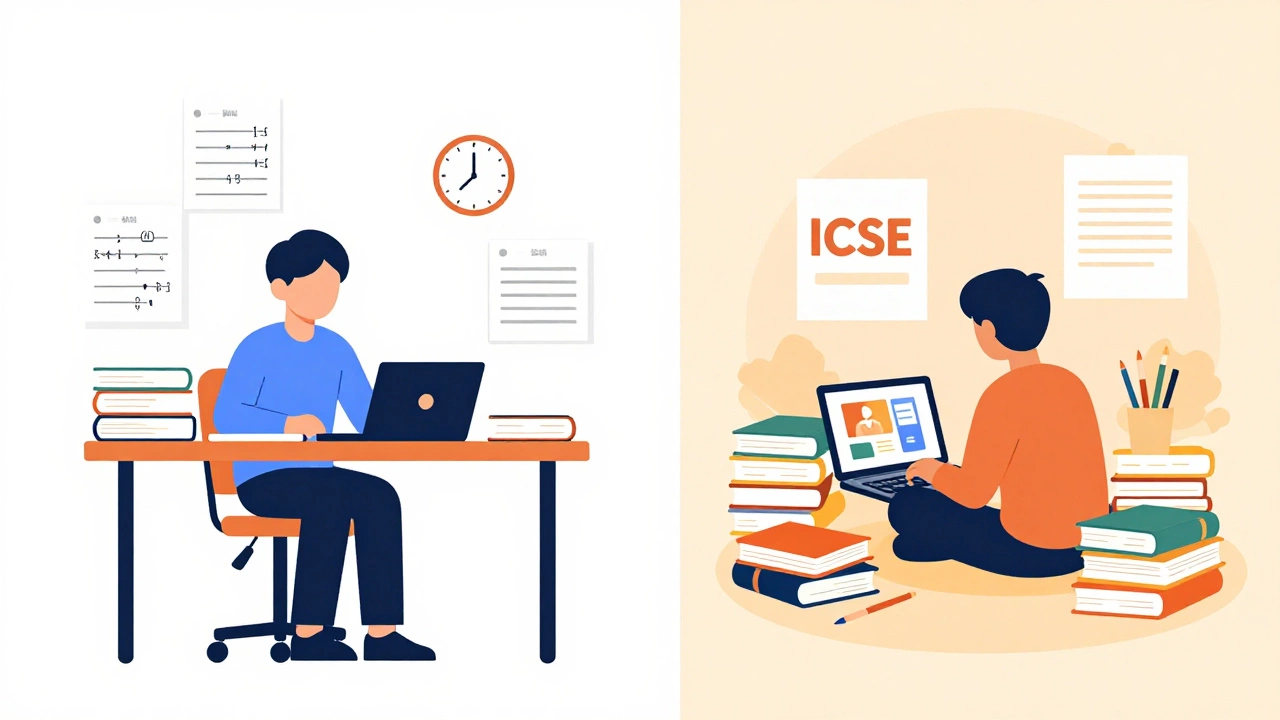
On the other side of the spectrum sits the Indian Certificate of Secondary Education (ICSE), managed by the Council for the Indian School Certificate Examinations (CISCE). Unlike CBSE, ICSE is not government-run. It has a reputation for being tougher, especially in language and literature.
The ICSE approach is holistic. It demands strong English communication skills, extensive reading, and detailed answers in exams. A typical ICSE history or geography paper requires essay-style responses, not just bullet points. This builds better writing habits and critical thinking early on.
But here is the catch: ICSE does not align as neatly with national engineering or medical entrance exams. Students often have to switch gears in Class 11 to adapt to the CBSE-style objective questions found in JEE or NEET. If your child plans to study liberal arts, humanities, or pursue higher education abroad where essay writing matters, ICSE provides a stronger foundation.
State Boards: Local Context and Accessibility
Many families overlook State Boards, assuming they are inferior. That is a dangerous assumption. State boards, like Maharashtra State Board or Tamil Nadu State Board, are designed for local accessibility. They teach in regional languages alongside English, which helps students connect with their cultural roots.
The syllabus is often simpler and less intense than CBSE or ICSE. This can reduce burnout for younger children. However, if you move cities frequently, changing schools becomes a headache because curricula differ from state to state. Also, top-tier colleges sometimes view State Board marks with skepticism unless the scores are exceptionally high, due to perceived variations in grading standards across states.
The Global Player: International Baccalaureate (IB)
For families eyeing universities outside India, the International Baccalaureate (IB) program is a globally recognized pre-university curriculum that emphasizes inquiry-based learning and international-mindedness. Schools offering IB are mostly private and expensive. The cost is a major filter.
IB doesn't just test knowledge; it tests how you think. There is no textbook to memorize. Students do projects, write extended essays, and participate in community service. It fosters independence. If your child is curious, self-motivated, and you plan to send them to the US, UK, or Canada for college, IB is highly respected. Admissions officers love IB students because they know how to research and argue a point.
Yet, IB is not for everyone. The workload is immense. Students must balance six subjects plus three core components. Without strong time management skills, a child can easily drown. It is also less useful if you plan to stay in India for engineering, as it lacks the specific drill needed for JEE.
Comparing the Boards: What Matters Most?
| Feature | CBSE | ICSE | State Board | IB |
|---|---|---|---|---|
| Focus Area | Science & Math, Exam Prep | Languages, Literature, Holistic | Local Language, Basic Curriculum | Critical Thinking, Global Perspective |
| Exam Style | Objective & Short Answer | Descriptive & Essay | Varies by State | Project-Based & Internal Assessments |
| Best For | JEE/NEET Aspirants, Defense Jobs | Arts, Humanities, Abroad (UK/Aus) | Local Colleges, Budget-Conscious Families | Top Global Universities (US/Canada) |
| Flexibility | High (Nationwide Acceptance) | Medium | Low (Region-Specific) | Very High (Global Recognition) |
| Avg. Annual Cost | Moderate to High | Moderate to High | Low to Moderate | Very High |
Matching the Board to Your Child’s Personality
You cannot choose a board in a vacuum. You must match it to who your child is. Ask yourself these questions:
- Is your child a rule-follower? If yes, CBSE’s structured path reduces anxiety. They know exactly what is expected.
- Does your child love reading and writing? If yes, ICSE will nurture those talents rather than suppress them for math drills.
- Is your child independent and curious? If yes, IB gives them space to explore interests deeply, though you must support their organization.
- Are you planning to move cities often? If yes, stick to CBSE or IB. State boards create friction when relocating.
Also, consider the school itself. A great teacher in a State Board school can outperform a mediocre teacher in an elite CBSE school. The board sets the syllabus, but the school delivers the experience. Visit classrooms. Talk to current students. Do they seem stressed or engaged?
Long-Term Impact: College and Career
Let’s talk about the end game. Where do these boards lead? If your goal is IITs or AIIMS, the CBSE syllabus is the safest bet. The alignment is seamless. Students spend less time adapting and more time practicing problems. If your goal is Oxford, Cambridge, or Ivy League universities, IB or ICSE (with strong IELTS scores) often looks better on applications. These institutions value breadth of knowledge and articulate expression, which ICSE and IB emphasize. For state-level government jobs or local university admissions, State Board marks are perfectly valid and often preferred due to quota systems and local recognition. Remember, boards matter most in the first few steps of education. Once your child enters university, the brand of their degree and their personal skills matter far more than whether they took CBSE or ICSE in high school. Soft skills like communication, teamwork, and resilience are learned in the classroom culture, not just the syllabus.
Common Mistakes Parents Make
I see the same errors repeatedly. First, parents pick the board based on prestige, not fit. Putting a creative, artistic child into a hyper-competitive CBSE science stream can crush their confidence. Second, parents ignore the commute. A two-hour daily travel time drains energy that could go into learning or play. Third, they assume “harder” is always “better.” ICSE is harder in terms of volume, but that doesn’t mean it’s better for every child. Burnout is real, and it starts early.
Another mistake is waiting until Class 9 or 10 to decide. By then, switching boards is traumatic. Decide early, around Class 5 or 6, when foundational habits are forming. Give yourself room to pivot if something isn’t working.
Final Thoughts on Choosing the Right Path
There is no magic bullet. The “best” board is the one that keeps your child curious and confident. If you want a straightforward path to engineering in India, lean toward CBSE. If you want a well-rounded scholar with strong language skills, look at ICSE. If you aim for global citizenship and have the budget, consider IB. If you value local connection and affordability, State Boards serve millions well.
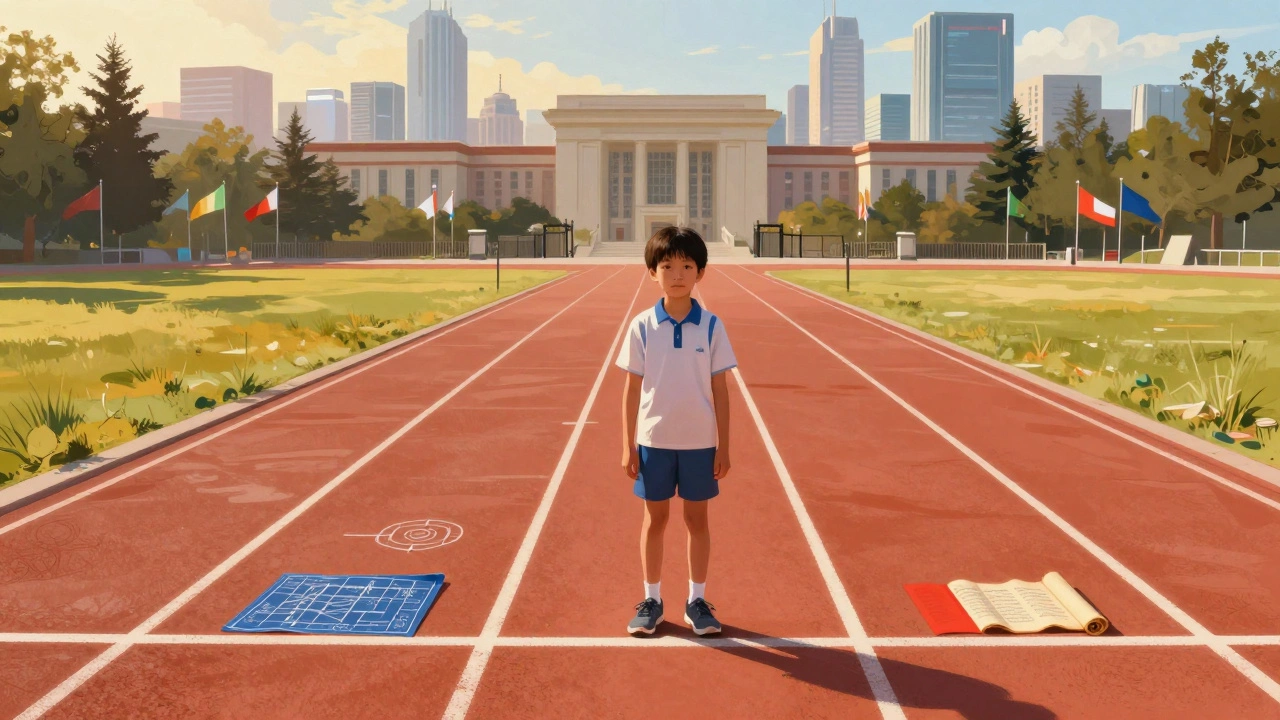
Observe your child. Support their strengths. And remember, education is a marathon, not a sprint. The board is just the track they run on. The runner is still your child.
Is CBSE better than ICSE for engineering?
Yes, generally. The CBSE syllabus aligns closely with JEE Main and Advanced patterns, focusing on objective questions and numerical problems. ICSE focuses more on descriptive answers, requiring extra preparation for engineering entrance exams.
Can I switch from CBSE to ICSE in middle school?
It is possible but challenging. The teaching methodologies differ significantly. CBSE is more direct, while ICSE requires deeper analytical writing. Switching before Class 8 is easier than after, as concepts become more specialized in higher grades.
Do top foreign universities accept CBSE certificates?
Yes, absolutely. Universities in the US, UK, and Canada accept CBSE results. However, they may require additional standardized tests like SAT, ACT, or IELTS to assess readiness, as CBSE alone doesn't highlight extracurricular depth as much as IB.
Which board is best for creative arts and design?
ICSE or IB are often better suited for creative fields. ICSE encourages expressive writing and broad knowledge, while IB’s project-based learning fosters innovation. CBSE is more rigid and science-heavy, which might limit creative exploration unless the school offers strong art electives.
How much does an IB school cost compared to CBSE?
IB schools are typically 2 to 4 times more expensive than average CBSE schools. In metro cities, annual fees for IB can range from ₹5 lakhs to over ₹15 lakhs, whereas good CBSE schools might charge between ₹1 lakh to ₹5 lakhs annually.