Trade Earnings Estimator
See how much you could earn in the quickest trades to learn. Enter your details below to get a personalized estimate.
Estimated Annual Earnings
Your earnings will vary based on location, experience, and company.
If you're looking to earn a steady income without spending years in school, you don't need a college degree-you need a trade. The fastest trades to learn can get you working in under six months, often with little to no debt. Unlike degrees that sit on shelves, these skills pay off the moment you land your first job. And the best part? Many of them can be learned online, on your schedule, with hands-on practice built right in.
Why trades beat degrees for speed and pay
Four-year degrees cost tens of thousands and often leave graduates with student loans and no clear job path. Trades? You learn by doing. You build real things. You get paid while you learn. In many cases, you can start earning within 90 days.
According to the U.S. Bureau of Labor Statistics, over 7 million skilled trade jobs go unfilled each year. Employers are desperate for people who can install solar panels, fix HVAC systems, wire homes, or operate CNC machines. These aren’t side gigs-they’re careers with benefits, overtime pay, and room to grow.
And you don’t need to be an engineer. You just need to be willing to show up, learn the steps, and practice until it clicks.
The top 5 quickest trades to learn (and how to start)
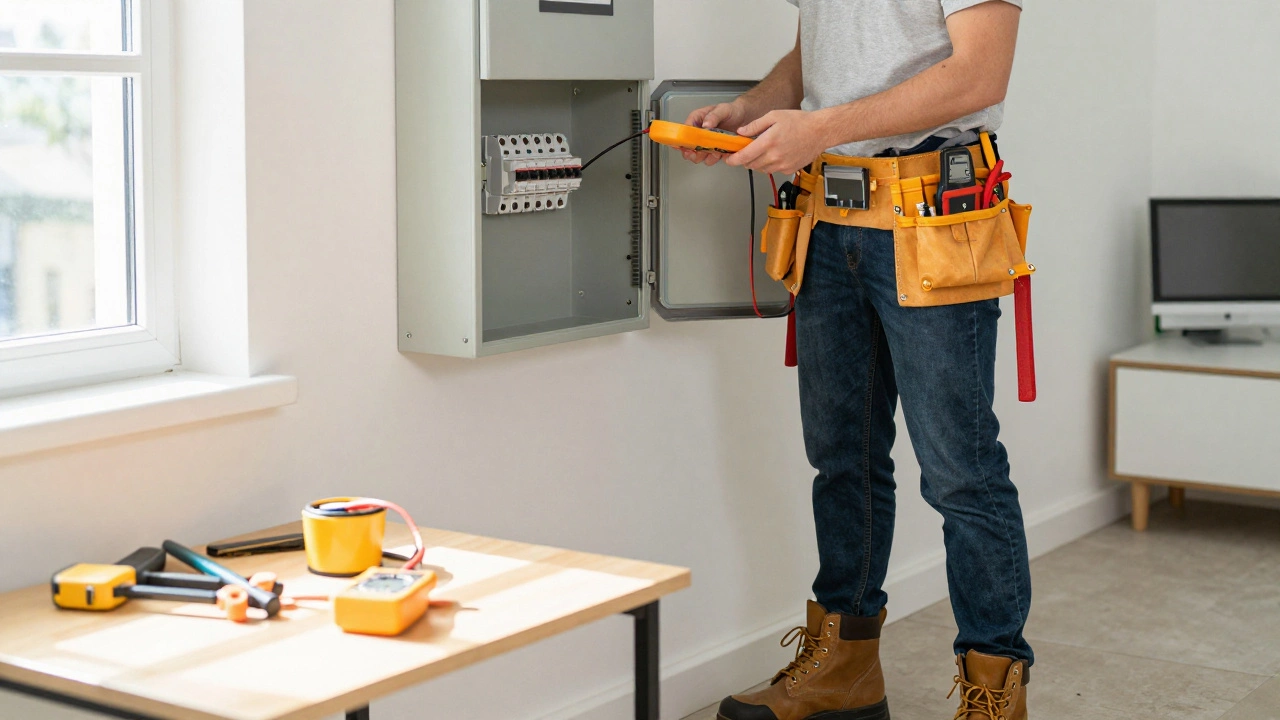
- Electrical Helper / Residential Wiring - You don’t need to be a licensed electrician right away. Many trade schools offer 8- to 12-week programs that teach basic home wiring, circuit breakers, and outlet installation. After completing the course, you can work under a licensed electrician. Average starting wage: $20-$25/hour.
- HVAC Technician (Entry Level) - Heating, ventilation, and air conditioning systems are everywhere. Online courses from providers like Penn Foster or Ashworth teach the basics of refrigerant handling, ductwork, and thermostat setup. Combine that with a 4-week apprenticeship, and you’re ready to assist on jobs. Certification exams are affordable and often included in the course. Starting pay: $18-$28/hour.
- Pharmacy Technician - If you’re detail-oriented and like working in healthcare without being a nurse, this is a solid pick. Online programs (like those from the National Healthcareer Association) cover medication names, dosage calculations, and pharmacy software. Most states require only a certification exam. You can finish in 3-4 months. Average salary: $16-$22/hour.
- Commercial Driver’s License (CDL) - Class A - Trucking companies pay you to train. Many offer paid CDL programs that last 3-6 weeks. You learn how to back up a 53-foot trailer, inspect brakes, and follow DOT regulations. After you get your license, companies like Swift, Schneider, and Werner hire you immediately. Starting pay: $60,000-$80,000/year, even as a new driver.
- Home Energy Auditor - A growing field driven by government clean energy incentives. Online courses teach you how to use blower doors, infrared cameras, and energy modeling software. You learn to spot air leaks, insulation gaps, and inefficient appliances. Certification takes 6-8 weeks. Many states offer grants to cover course costs. Pay: $20-$35/hour, often with travel pay.
What makes a trade "quick" to learn?
Not all trades are created equal when it comes to speed. The fastest ones share three traits:
- Small skill set to start - You don’t need to master everything. For example, you only need to know 10-15 common wiring patterns to help an electrician. You don’t need to design whole electrical systems.
- Clear certification path - Look for trades with a single, affordable national exam. Pharmacy tech, HVAC helper, and CDL are all certified by well-known organizations. No confusing state-by-state rules.
- On-the-job training built in - The best programs pair online learning with real work. Some even pay you while you train. Avoid courses that only give you a certificate with no job placement support.
Steer clear of trades that require 2+ years of schooling, like plumbing or welding, unless you’re planning to stick with it long-term. Those are great careers-but not quick starts.

Where to learn these trades online (no scams)
There are hundreds of online trade courses. Most are useless. Here’s where to go instead:
- Penn Foster - Offers accredited, self-paced programs in HVAC, electrical, and pharmacy tech. Includes exam prep and job placement help.
- Ashworth College - Affordable, flexible courses with industry-recognized certifications. Good for beginners.
- Udemy - Search for "CDL practice test" or "HVAC fundamentals". Look for courses with 4.5+ stars and 500+ reviews. Buy only when there’s a $10-$15 sale.
- Local community colleges - Many offer 6-week trade prep courses for under $500. Call them directly-don’t rely on their website.
- Trucking companies - If you want to drive, apply to CDL programs at Swift, CR England, or Roehl. They pay you to train.
Avoid sites that promise "get rich quick" or charge over $1,000 for a certificate with no job guarantee. Real trade training doesn’t need flashy ads.
What you’ll actually do on your first day
Let’s say you finish a 10-week HVAC helper course. Your first job? You’re not fixing the furnace. You’re:
- Carrying tools and parts to the job site
- Prepping the work area
- Watching the technician test airflow and refrigerant levels
- Cleaning up after the job
That sounds boring? It is-until you realize you’re getting paid to learn. After a few weeks, you’ll start changing air filters, checking thermostats, and tightening connections. Within six months, you’re doing half the work. Within a year, you’re running jobs on your own.
Trades don’t reward genius. They reward consistency. Show up. Pay attention. Ask questions. Do the work. That’s all it takes.
Real people, real results
Jamal, 28, worked retail for five years. He spent $300 on a Penn Foster HVAC course. Six weeks later, he got hired as a helper. Now he’s making $26/hour with overtime. He’s saving for his own HVAC license.
Marisol, 35, was a stay-at-home mom. She took a 12-week pharmacy tech course online. Passed her exam. Got hired at a local pharmacy. She works 30 hours a week, has health insurance, and gets paid for holidays.
These aren’t outliers. They’re typical. Thousands of people do this every year. You can too.

What to avoid
Don’t waste time on:
- "Become a millionaire with drone photography" courses
- YouTube tutorials that skip safety steps
- Programs that don’t offer certification
- Anything that asks for $2,000 upfront
Trades are physical. They require tools, safety gear, and real practice. If a course claims you can learn everything from your couch without touching equipment, it’s not real.
Next steps: Your 30-day plan
- Week 1 - Pick one trade from the list above. Research the certification requirements in your state.
- Week 2 - Find a reputable online course. Look for one that includes exam prep and job placement help.
- Week 3 - Enroll and start the first module. Set aside 1 hour a day, 5 days a week.
- Week 4 - Call a local contractor or company. Ask if they hire beginners. Offer to work for free for a week to learn.
By the end of 30 days, you’ll have a plan, a course started, and a real connection in the industry. That’s more than 90% of people who say they want to change careers ever achieve.
Can I learn a trade without any experience?
Yes. Most trade programs are designed for complete beginners. You don’t need to know how to use a wrench or read a blueprint. You just need to be willing to follow instructions, show up on time, and ask questions. Many people start with zero experience and become certified in under six months.
Are online trade courses legitimate?
Some are, some aren’t. Stick to accredited schools like Penn Foster, Ashworth, or community colleges. Check if the course prepares you for a nationally recognized certification (like NHA for pharmacy tech or EPA 608 for HVAC). Avoid courses that promise "guaranteed jobs" or charge more than $800 without clear outcomes.
How much does it cost to learn a trade online?
Most quality online trade courses cost between $300 and $800. Some, like CDL training through trucking companies, are free-you get paid to train. Certification exams usually cost $100-$200 extra. Compare that to $20,000+ for a two-year associate degree.
Can I do this while working another job?
Absolutely. Most online trade courses are self-paced. You can study for an hour after work or on weekends. Many people complete their training in 3-6 months while keeping their current job. The key is consistency-1 hour a day adds up fast.
Do I need a high school diploma?
Not always. Some programs require a GED or high school diploma, especially for licensed trades like HVAC or electrical. But many entry-level roles (like pharmacy tech helper or CDL apprentice) accept applicants without one. Check the specific requirements for your chosen trade.
Final thought: Your future doesn’t need a diploma
You don’t need to wait for the "right time." You don’t need to quit your job to start. You don’t need to take on debt. All you need is one decision: pick a trade, find a real course, and start today. In six months, you’ll be doing work that matters-and getting paid for it.