
Find Your Ideal eLearning Format
Not sure which type of eLearning fits your needs? Answer these three questions to get a personalized recommendation based on real-world use cases.
1. What is your primary goal?
2. Who is the learner?
3. What are your constraints?
Imagine you are sitting in a coffee shop in Bristol, laptop open, and you finish a module on data privacy laws. You pass a quiz, get instant feedback, and download a certificate. Did you just go to school? Technically, no. But you did learn something valuable using eLearning, which is any form of education delivered through electronic devices or the internet. Many people think eLearning is just watching a YouTube video or reading a blog post. That’s too narrow. eLearning is structured, interactive, and usually tracks your progress. It can happen anywhere, anytime, and it looks different depending on who is using it and why. So, what is a concrete example of eLearning? Let’s look at real-world scenarios that show how this works for students, employees, and hobbyists.
The Corporate Compliance Module: The Most Common Example
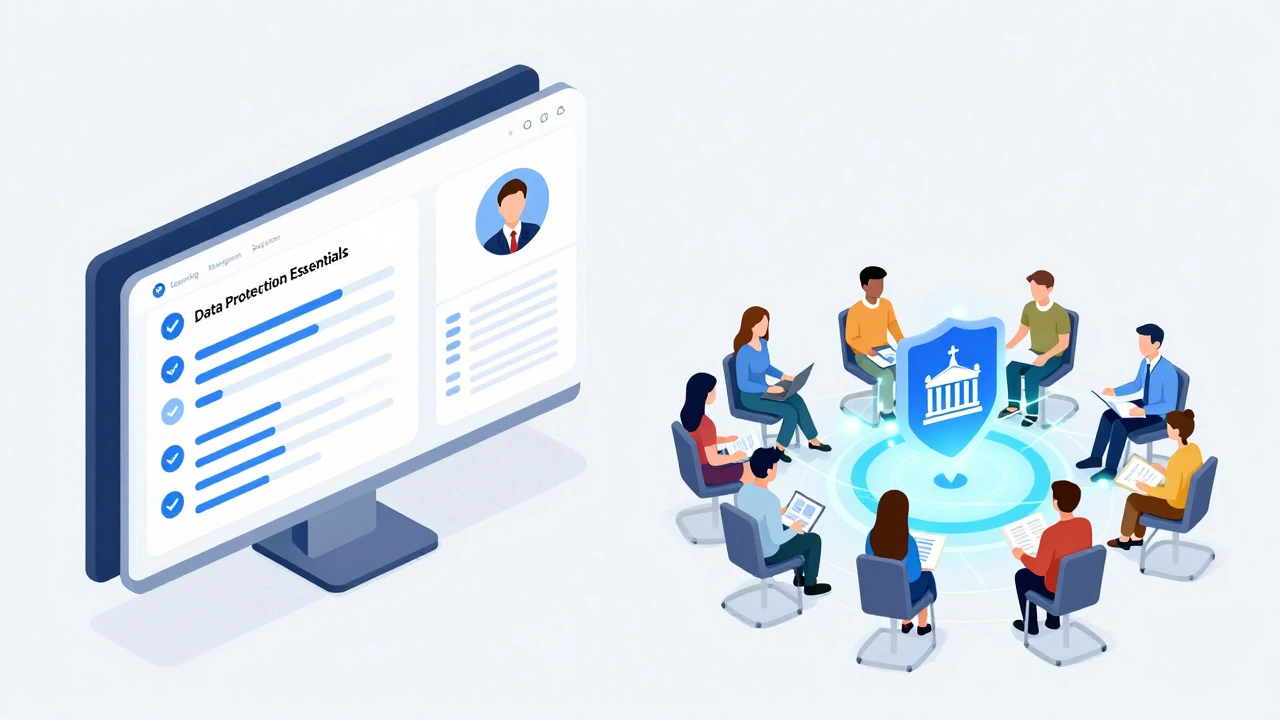
If you work in a medium-to-large company, you have likely experienced this type of eLearning. It is often mandatory. Think about the annual training on workplace harassment, cybersecurity basics, or health and safety protocols. This is a classic example of Corporate eLearning, which is structured digital training designed to meet regulatory requirements or improve employee skills. Here is how it typically works:
- You log into your company’s Learning Management System (LMS), such as Moodle, Cornerstone, or Docebo.
- You are assigned a specific course, like "Data Protection Essentials."
- You watch short videos, read policy documents, and take interactive quizzes.
- The system records your completion time and score.
- Your manager sees the report in their dashboard.
University MOOCs: Academic eLearning at Scale
Another major example comes from higher education. Massive Open Online Courses (MOOCs) allow anyone with an internet connection to take classes from top universities. Platforms like Coursera, edX, and FutureLearn host courses from institutions like Harvard, Stanford, and the University of London. Let’s say you want to learn Python programming. You sign up for a course offered by a university partner. The structure might include:
- Video lectures: Pre-recorded sessions by professors, broken into 10-minute chunks.
- Peer-reviewed assignments: You write code, submit it, and other students review your work based on a rubric.
- Discussion forums: You ask questions and debate concepts with learners from around the world.
- Certificates: If you pay for a verified track, you get a credential that can be added to your LinkedIn profile.
Microlearning: Bite-Sized Digital Training
Not all eLearning involves hour-long lectures. Microlearning is a growing trend where content is delivered in very small, focused bursts. This is popular in fast-paced industries like retail, healthcare, and sales. An example would be a nurse receiving a two-minute mobile notification about a new protocol for handling a specific medication. They tap the link, watch a quick animation, answer one question, and return to their shift. The entire interaction takes less than three minutes. Why does this work?
- Low cognitive load: Your brain isn’t overwhelmed with too much information at once.
- Just-in-time learning: You learn exactly what you need, right before you need to use it.
- Higher retention: Short, frequent exposures stick better than long, infrequent ones.
Gamified eLearning: Making Education Fun
Gamification adds game design elements to non-game contexts. In eLearning, this means using points, badges, leaderboards, and challenges to motivate learners. A prime example is Kahoot!, a platform widely used in schools and corporate workshops. Teachers or trainers create quizzes, and participants join via their phones. As questions appear on screen, players race to answer correctly. Points are awarded for speed and accuracy. A leaderboard updates in real-time, creating friendly competition. Other platforms like Classcraft turn classroom management into a role-playing game, where good behavior earns characters special powers. Gamification taps into our natural desire for achievement and recognition. It reduces the anxiety associated with testing and increases engagement, especially among younger audiences or those who find traditional lectures boring.
Blended Learning: Mixing Online and Offline
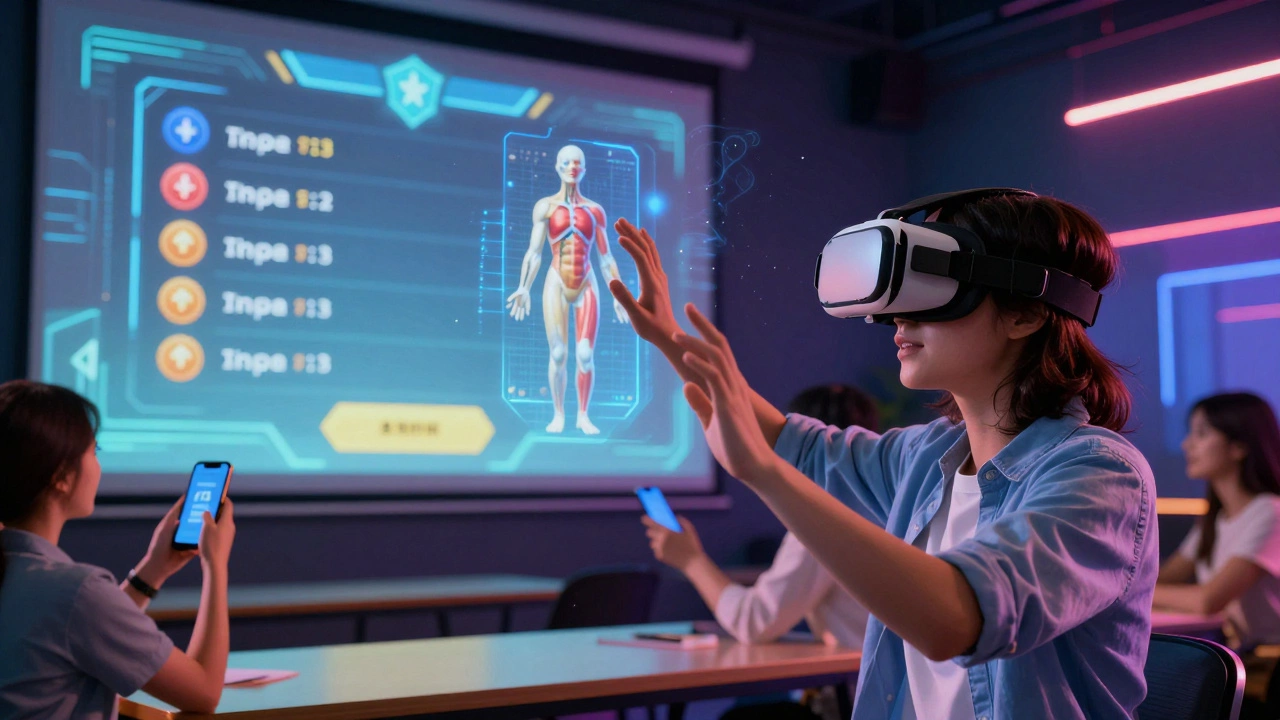
Purely online learning isn’t always the best fit. Blended learning (or hybrid learning) combines face-to-face instruction with online activities. This approach leverages the strengths of both methods. Consider a medical residency program. Residents attend weekly in-person seminars with senior doctors to discuss complex cases. Between these meetings, they complete online modules reviewing anatomy, pharmacology, and latest research papers. They might also simulate procedures using virtual reality headsets. The online portion handles the knowledge transfer (facts, definitions, protocols), freeing up the in-person time for higher-order skills like critical thinking, debate, and hands-on practice. This model is becoming standard in K-12 education as well. Students might watch a lesson video at home and then come to class to work on group projects with teacher guidance.
| Type | Primary Audience | Key Feature | Best For |
|---|---|---|---|
| Corporate Compliance | Employees | Mandatory tracking | Regulatory adherence |
| MOOCs | Students/Professionals | University-level content | Skill acquisition/Credentials |
| Microlearning | Frontline workers | Bite-sized content | Quick updates/Retention |
| Gamified | Students/New hires | Points/Badges | Engagement/Motivation |
| Blended | All levels | Hybrid delivery | Complex skill development |
Virtual Reality (VR) Simulations: Immersive Training
As technology advances, eLearning is becoming more immersive. VR simulations place learners in realistic environments where they can practice dangerous or expensive tasks without real-world consequences. For example, pilots use flight simulators-a form of specialized eLearning-to practice emergency landings. Similarly, surgeons can rehearse complex operations in a virtual operating room. Construction companies use VR to train workers on site safety protocols, allowing them to experience near-miss accidents safely. This type of learning engages multiple senses and creates strong muscle memory. It is particularly effective for procedural skills where repetition and precision are critical.
Self-Paced Professional Development
Finally, consider the freelance graphic designer who wants to master Adobe Illustrator. They purchase a subscription to a platform like Skillshare or LinkedIn Learning. They browse hundreds of courses, pick one titled "Advanced Vector Design," and start watching. They can pause, rewind, and skip sections they already know. They complete project-based assignments, uploading their designs for critique. There is no deadline, no instructor checking attendance, and no fixed schedule. This autonomy is a hallmark of modern eLearning. It empowers individuals to take control of their career development. You learn at your own speed, focusing on gaps in your knowledge rather than following a rigid curriculum.
Is watching a YouTube tutorial considered eLearning?
It depends on the structure. Casual viewing is informal learning. If the video is part of a structured course with assessments, certificates, and tracked progress, it qualifies as formal eLearning. Pure entertainment or unstructured tutorials lack the pedagogical framework typical of eLearning.
What is the difference between eLearning and distance learning?
Distance learning refers to any education where teacher and student are separated by distance, which historically included correspondence courses via mail. eLearning specifically uses electronic media and the internet. All eLearning is distance learning, but not all distance learning is eLearning.
Which eLearning format is most effective for retaining information?
Research suggests that active learning methods, such as gamified quizzes, peer discussions, and practical simulations, lead to higher retention than passive video watching. Microlearning also boosts retention by spacing out content over time, leveraging the psychological spacing effect.
Can eLearning replace traditional classroom teaching entirely?
For many subjects, yes. Technical skills, compliance training, and theoretical knowledge transfer well to digital formats. However, soft skills like leadership, empathy, and complex negotiation often benefit from face-to-face interaction. Blended learning usually offers the best balance.
What tools do I need to start creating eLearning content?
You need an authoring tool like Articulate Storyline, Adobe Captivate, or H5P to create interactive modules. You also need an LMS to host and deliver the content. For simpler needs, PowerPoint with embedded quizzes or basic video editing software may suffice.