
Healthy vs. Toxic Competitiveness Quiz
Question text goes here
Your Assessment Result
Your Mindset Type
Result Title
Description goes here.
You sit down to study for your competitive exams, and instead of just wanting to learn the material, you feel a burning need to beat everyone else. You check your mock test scores not to see what you missed, but to see where you rank. Is this normal? Or is it a sign that something is off with your mindset? Being competitive isn't inherently bad, especially when you are navigating high-stakes testing environments. In fact, that drive can be the fuel that gets you through long nights of revision. But like any powerful engine, if it’s not tuned correctly, it can overheat.
Understanding what it means to be competitive requires looking past the surface-level desire to win. It involves examining how you handle pressure, how you view failure, and whether your motivation comes from within or from external validation. For students preparing for rigorous assessments, distinguishing between healthy ambition and toxic rivalry is crucial for long-term success and mental well-being.
The Psychology Behind the Drive
At its core, competitiveness is a psychological trait characterized by a strong desire to achieve success, often measured against others. When you ask, "what does it mean if I'm competitive?" you are really asking about your relationship with achievement. Psychologists often categorize this into two types: approach-oriented and avoidance-oriented competitiveness.
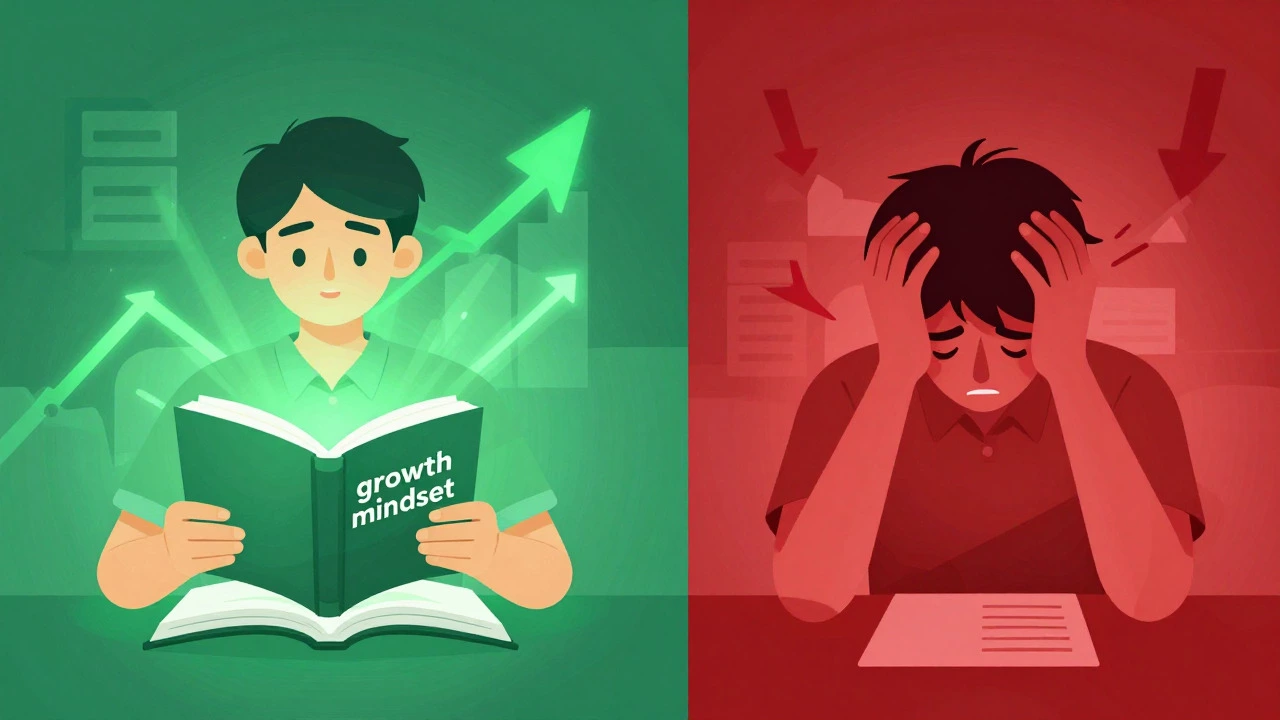
Approach-oriented competitiveness is driven by the joy of mastery and the satisfaction of reaching a personal best. You study hard because you want to understand complex concepts deeply. The ranking is a byproduct, not the sole goal. This type of competitiveness is sustainable. It aligns with what researchers call "growth mindset," where challenges are seen as opportunities to improve rather than threats to your ego.
Avoidance-oriented competitiveness, on the other hand, is fueled by fear. You study hard because you are terrified of being last, of letting your parents down, or of being labeled a failure. This form of competition is exhausting. It leads to anxiety, burnout, and a fragile sense of self-worth that depends entirely on your performance relative to peers. If your stomach drops every time you see someone else’s score, you might be leaning too heavily into this negative side.
| Trait | Healthy (Approach-Oriented) | Unhealthy (Avoidance-Oriented) |
|---|---|---|
| Motivation Source | Intrinsic desire to master content | Fear of failure or judgment |
| Reaction to Mistakes | Curiosity: "What did I miss?" | Shame: "I am stupid." |
| View of Peers | Collaborators or benchmarks | Enemies or obstacles |
| Long-term Effect | Sustained resilience | Burnout and anxiety |
How Competitiveness Impacts Study Habits
Your level of competitiveness directly shapes how you prepare for exams. A highly competitive student might spend hours creating color-coded notes and memorizing formulas, which sounds productive. However, the quality of that productivity matters. If you are studying only to outsmart the test-taker next to you, you might focus on trick questions rather than foundational knowledge. This is a risky strategy. Exams change; fundamentals do not.
Consider the concept of active recall. This is a learning technique where you actively stimulate your memory during the learning process. Competitive students often excel at active recall because they treat practice tests like battles. They push themselves until they get the answer right. This is good. But if that same student refuses to discuss difficult topics with study groups because they don’t want to reveal their weaknesses, they lose out on collaborative learning. Collaboration often reveals gaps in understanding that solitary grinding misses.
Furthermore, excessive competitiveness can lead to procrastination disguised as perfectionism. You might delay starting a tough subject because you’re afraid you won’t ace it immediately. This paralysis-by-analysis is a common trap. The goal should be progress, not perfection. Remember, the exam board doesn’t care if you solved the problem faster than your friend; they care if you solved it correctly according to the rubric.
The Role of Social Comparison
We live in an era of constant comparison. With social media and online leaderboards, it’s easy to fall into the trap of measuring your worth by your rank. When you prepare for government jobs or university entrance exams, you are part of a large cohort. Seeing thousands of applicants can make the individual feel small and insignificant. This is where social comparison theory comes into play.
Festinger’s social comparison theory suggests that individuals determine their own social and personal worth based on how they stack up against others. In the context of exam preparation, this can be dangerous. If you compare your behind-the-scenes struggles with someone else’s highlight reel of achievements, you will feel inadequate. You might see a peer posting about scoring 95% on a mock test and assume they have it all figured out, while you are struggling with basic concepts. In reality, that peer might be stressed about different topics or using shortcuts that aren’t sustainable.
To mitigate this, try to limit your exposure to comparative metrics during the early stages of preparation. Focus on your own trajectory. Are you improving week over week? If yes, you are on the right path. Use others as inspiration, not as a yardstick for your self-esteem.
Turning Competition Into Collaboration
One of the most effective ways to harness your competitive nature without succumbing to its downsides is to shift from a zero-sum game mentality to a collaborative one. Instead of viewing your classmates as rivals for a single seat, view them as potential partners in survival. Forming a study group can transform your competitive energy into mutual accountability.
When you teach a concept to a peer, you reinforce your own understanding. This is known as the protégé effect. By helping others, you solidify your own knowledge base. Plus, having a support system reduces the isolation that often accompanies intense exam prep. You can share resources, discuss doubts, and normalize the stress. Knowing that others are also struggling with certain topics can be incredibly relieving.
If you find yourself hoarding information or feeling resentful when others succeed, pause and reflect. Ask yourself: "Who benefits from my secrecy?" Usually, no one. The exam syllabus is fixed. Helping someone else understand a topic doesn’t take away from your own grasp of it. In many cases, explaining it clearly exposes flaws in your own logic, allowing you to correct them.

Managing Burnout and Mental Health
High achievers are often prone to burnout. Because your identity is tied to your performance, any setback feels like a personal attack. This emotional volatility can drain your cognitive resources. You need mental stamina to crack competitive exams, and that stamina comes from balance, not just brute force.
Incorporate mindfulness practices into your routine. Meditation, deep breathing exercises, or even simple walks without your phone can help reset your nervous system. These activities lower cortisol levels, which improves memory retention and focus. Think of your brain as a muscle. It needs rest days to grow stronger. Studying 16 hours a day for a month is less effective than studying 8 hours a day for three months with consistent breaks.
Also, redefine what success means to you. Is it solely about getting the top rank? Or is it about doing your best given the circumstances? Shifting your focus to effort-based goals rather than outcome-based goals can reduce anxiety. You can control how hard you study; you cannot control how others perform or how the exam paper is structured.
Practical Strategies for Competitive Students
If you recognize yourself as highly competitive, here are some actionable steps to channel that energy effectively:
- Set Process Goals: Instead of aiming for "Top 10 Rank," aim for "Complete 50 practice questions daily." This puts the power back in your hands.
- Analyze, Don’t Just Score: After every mock test, spend more time analyzing errors than celebrating correct answers. Identify patterns in your mistakes.
- Diversify Your Identity: Engage in hobbies unrelated to academics. Whether it’s sports, art, or cooking, having interests outside of exams helps maintain perspective.
- Limit Social Media: Curate your feed. Mute accounts that trigger comparison anxiety. Follow educators who provide value, not just bragging rights.
- Seek Feedback: Regularly consult with mentors or teachers. An objective third party can help you gauge your progress realistically, without the bias of peer comparison.
Being competitive is a double-edged sword. It can propel you to heights you never imagined, or it can cut you down with relentless self-doubt. The key lies in awareness. By understanding your motivations, managing your comparisons, and fostering collaboration, you can turn your competitive spirit into a sustainable advantage. Remember, the goal isn’t just to beat others; it’s to become the best version of yourself.
Is being competitive good for exam preparation?
Yes, if it is approach-oriented. Healthy competitiveness drives discipline, consistency, and a desire for mastery. However, if it stems from fear or insecurity, it can lead to anxiety and burnout. The key is to focus on self-improvement rather than defeating others.
How do I know if my competitiveness is unhealthy?
Signs include constant anxiety about rankings, inability to celebrate others' successes, tying your self-worth exclusively to scores, and experiencing physical symptoms like insomnia or headaches due to stress. If you feel relieved when others fail, it may indicate toxic competitiveness.
Can I change my competitive mindset?
Absolutely. Mindsets are malleable. By practicing mindfulness, setting process-oriented goals, and engaging in collaborative learning, you can shift from a fear-based to a growth-based competitive style. Therapy or counseling can also help address underlying insecurities.
Why do I feel jealous of other students' scores?
Jealousy often arises from social comparison and perceived threats to your status. It’s a natural human emotion, but it becomes problematic when it consumes your mental energy. Try reframing others' success as proof that high achievement is possible, rather than a reflection of your inadequacy.
How can I use my competitive nature positively?
Channel your drive into structured routines. Use mock tests as personal benchmarks rather than public contests. Join study groups to foster healthy accountability. Focus on mastering the syllabus thoroughly, knowing that depth of knowledge will naturally lead to better results.