
Digital Learning Platform Matcher
Select your primary learning goal below to discover which of the four digital platform types fits your needs best.
You are probably looking at your screen right now, wondering why everyone keeps talking about "the four digital platforms" as if it’s a secret code. Here is the truth: there isn’t one single universal list of four specific brand names like Netflix or Amazon that defines all digital learning. Instead, educational technologists and industry experts categorize digital platforms into four distinct functional types based on how they deliver content and interact with users. Understanding these categories helps you choose the right tool for your needs, whether you are a student trying to pass an exam, a professional upskilling for a promotion, or a teacher managing a classroom.
If you try to force every website into a single box, you will end up confused. A platform like Coursera works differently than Duolingo, which works differently than Canvas. To make sense of this landscape, we break down the digital ecosystem into four primary pillars: Learning Management Systems (LMS), Massive Open Online Courses (MOOCs), Specialized Skill-Building Apps, and Social Learning Communities. Each serves a different job-to-be-done. Let’s unpack them one by one so you can stop guessing and start choosing wisely.
Learning Management Systems (LMS): The Classroom Backbone
Think of an LMS (software application for administration, documentation, tracking, reporting, automation, and delivery of educational courses) as the digital equivalent of a school building. It is not just about watching videos; it is about structure. Institutions like universities and corporations use LMS platforms to manage who takes what course, when assignments are due, and how grades are calculated. If you have ever logged into a university portal to submit a PDF essay or take a timed quiz, you were using an LMS.
The key feature here is control. Unlike open web browsing, an LMS restricts access. You need credentials. This makes it ideal for formal education where certification matters. Popular examples include Canvas, Moodle, and Blackboard. These systems allow instructors to upload resources, set deadlines, and provide feedback in a closed loop. For students, the benefit is clarity-you know exactly what is expected. For employers, it means compliance training is tracked accurately. If your goal is structured, accredited, or mandatory learning, an LMS-based platform is likely your first stop.
Massive Open Online Courses (MOOCs): The University in Your Pocket
MOOCs (online courses aimed at unlimited participation and open access via the Web) changed the game by breaking down the walls of traditional academia. Before MOOCs, getting a lecture from a Harvard professor required admission to Harvard. Now, anyone with an internet connection can watch those same lectures. The defining characteristic of this category is scale and openness. You don’t need to apply; you just sign up.
Platforms like Coursera, edX, and Udacity fall into this bucket. They partner with top-tier universities and companies to offer full curricula. While many courses are free to audit, earning a verified certificate usually costs money. This model appeals to self-directed learners who want depth without the debt of a traditional degree. However, completion rates are notoriously low-often under 10%-because there is no human proctor checking if you actually watched the video. Success here requires serious self-discipline. If you thrive on autonomy and want high-quality academic content, MOOCs are your best bet.
| Platform Type | Primary Goal | Cost Model | Certification Value | Best For |
|---|---|---|---|---|
| LMS (e.g., Canvas) | Administration & Tracking | Institutional License | High (Degree/Credit) | Students, Employees |
| MOOC (e.g., Coursera) | Access to Expert Content | Freemium / Subscription | Moderate (Industry Cert) | Upskillers, Career Changers |
| Skill Apps (e.g., Duolingo) | Habit Building & Practice | Subscription / Ad-Supported | Low (Gamified Progress) | Beginners, Language Learners |
| Social Learning (e.g., Discord) | Community & Peer Support | Free / Premium Servers | None (Networking) | Niche Interests, Troubleshooting |
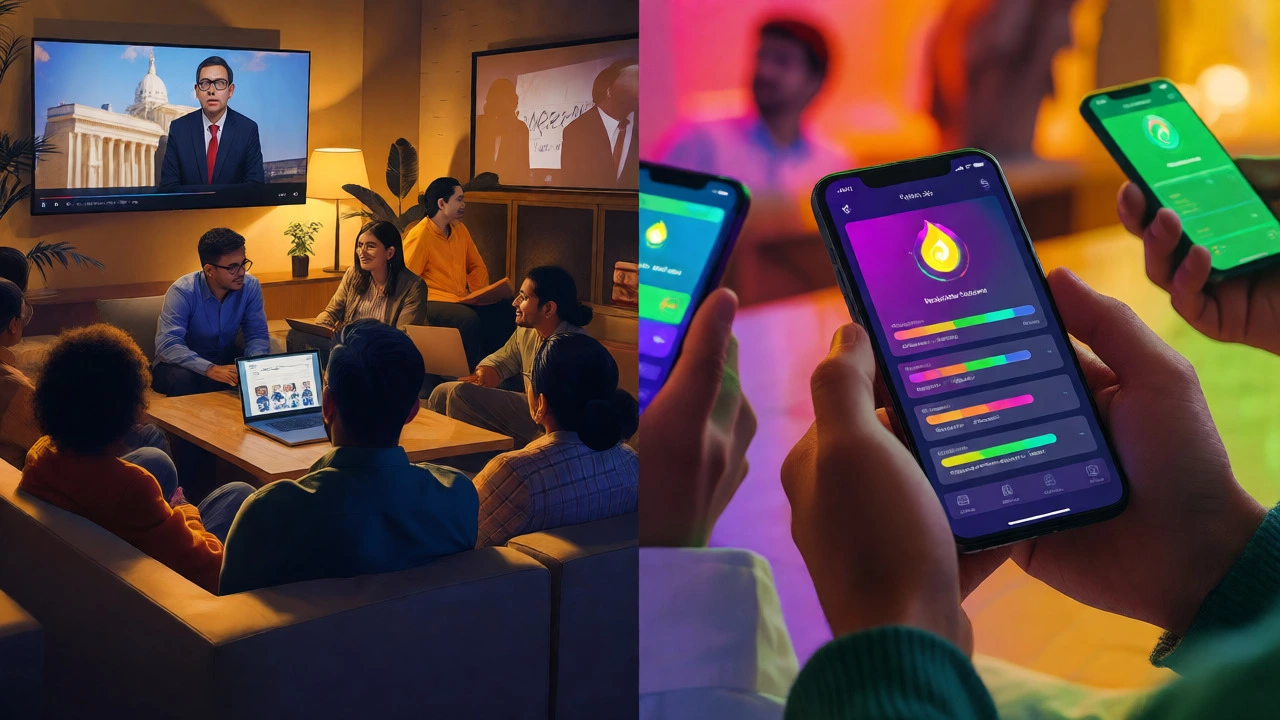
Specialized Skill-Building Apps: Gamification and Micro-Learning
Not everyone wants a three-month course on Python. Sometimes you just want to learn ten new Spanish phrases before your trip to Madrid next week. Enter specialized skill-building apps. These micro-learning platforms (mobile-first applications designed for short, interactive lessons focused on specific skills) rely heavily on gamification. Points, streaks, leaderboards, and badges keep you engaged. The content is broken into bite-sized chunks-usually five to fifteen minutes long.
Duolingo is the most famous example for languages, but the model extends to coding with Codecademy or math with Khan Academy Kids. The strength here is retention through repetition and fun. The weakness? Depth. You might feel productive because you kept your 30-day streak, but you may not be able to hold a complex conversation or build a scalable app yet. Use these platforms for habit formation and foundational knowledge. They are excellent entry points but rarely sufficient for mastery on their own.
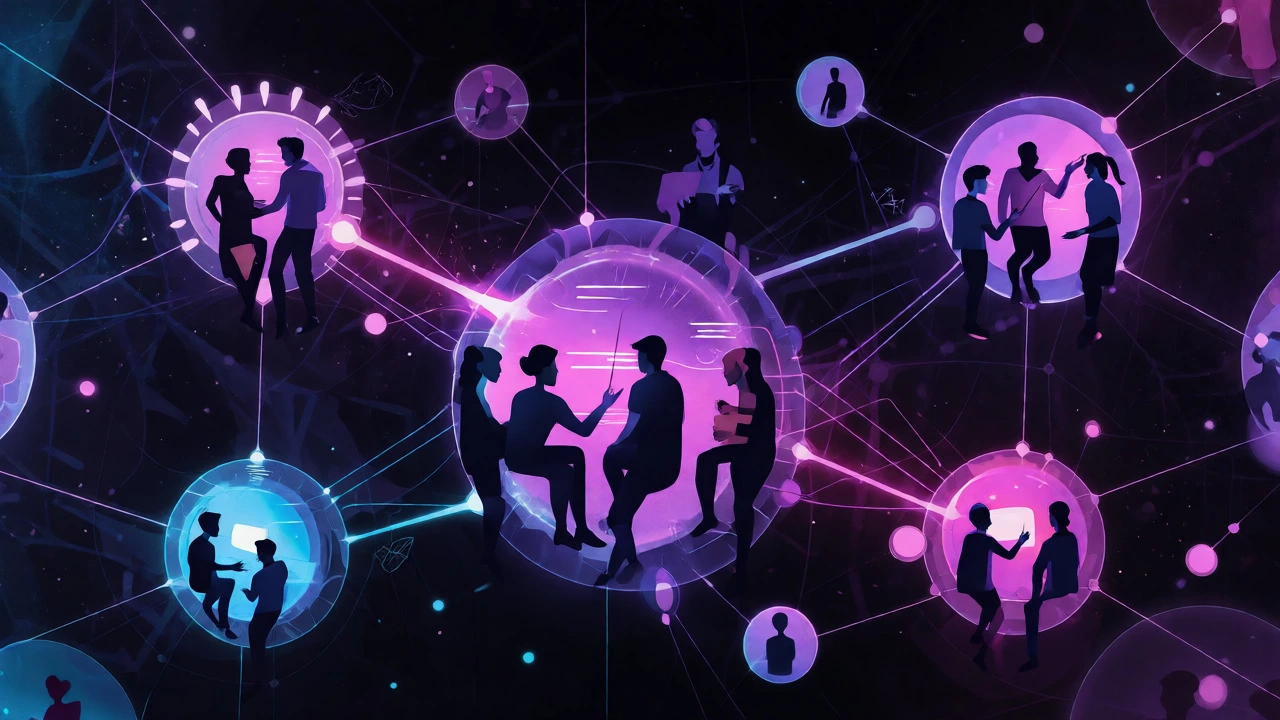
Social Learning Communities: The Human Element
We often forget that learning is inherently social. The fourth major category isn’t always a dedicated "course" site; it’s the ecosystem of social learning. This includes forums, Q&A sites, and community-driven platforms where knowledge is shared peer-to-peer rather than instructor-to-student. Think of Stack Overflow for developers, Reddit subreddits for niche hobbies, or private Discord servers for study groups.
These platforms excel at troubleshooting and real-world application. When you get stuck on a specific error message, a textbook won’t help, but a forum thread from someone who faced the exact same bug six months ago will. The value proposition here is immediacy and collective intelligence. There is no syllabus, no grade, and no certificate. But there is often more practical, up-to-date wisdom here than in any pre-recorded video. Integrating social learning into your routine prevents isolation and provides the "why" behind the "how."
How to Choose the Right Platform for Your Goals
So, which of the four digital platforms do you need? It depends entirely on your objective. Do you need a credential that HR departments respect? Go with an LMS-backed program or a reputable MOOC. Are you trying to build a daily habit? Pick a gamified app. Are you stuck on a specific technical problem? Head to a social learning community. Most successful learners mix and match. For instance, you might take a MOOC for theory, use an app for daily practice, and join a Discord server for support.
Don’t let choice paralysis stop you. Start with one platform that addresses your immediate pain point. If you are struggling with consistency, start with an app. If you lack direction, start with a MOOC. Once you establish momentum, layer in the other types. The digital landscape is vast, but categorized correctly, it becomes a manageable toolkit rather than an overwhelming noise.
Is YouTube considered one of the four digital platforms?
YouTube is technically a video hosting platform, but in the context of learning, it functions similarly to a hybrid of MOOCs and social learning. It lacks the structured assessment of an LMS and the curated curriculum of a MOOC. While it is a massive resource, it is generally categorized separately as "open video content" rather than one of the four core structural digital learning platforms defined by educational institutions.
Do MOOCs provide recognized degrees?
Generally, no. Most MOOCs offer certificates of completion or professional certificates. However, some platforms like edX and Coursera have partnered with universities to offer full online Master’s degrees. These are distinct from standard MOOCs and function more like an LMS experience with higher tuition fees. Always check if the certificate is "verified" and recognized by employers in your field.
Can I use an LMS as an individual learner?
Yes, but it is less common. Some open-source LMS options like Moodle can be hosted personally, but they require technical setup. Most individuals prefer the ease of MOOCs or apps. However, corporate LMS platforms are increasingly being opened to external users for continuing education credits, blurring the line between institutional and personal use.
Which platform is best for coding beginners?
A combination is best. Start with a specialized app like Codecademy or freeCodeCamp for interactive syntax practice. Move to a MOOC like CS50 on edX for computer science fundamentals. Finally, use Stack Overflow (social learning) when you encounter bugs. Relying on just one type often leaves gaps in either motivation or deep understanding.
Are social learning platforms safe for privacy?
It varies. Public forums like Reddit or Stack Overflow are open to search engines, so avoid sharing sensitive personal data. Private communities on Discord or Slack offer better privacy controls. Always review the platform's data policy, especially if you are discussing proprietary work information or personal educational records.