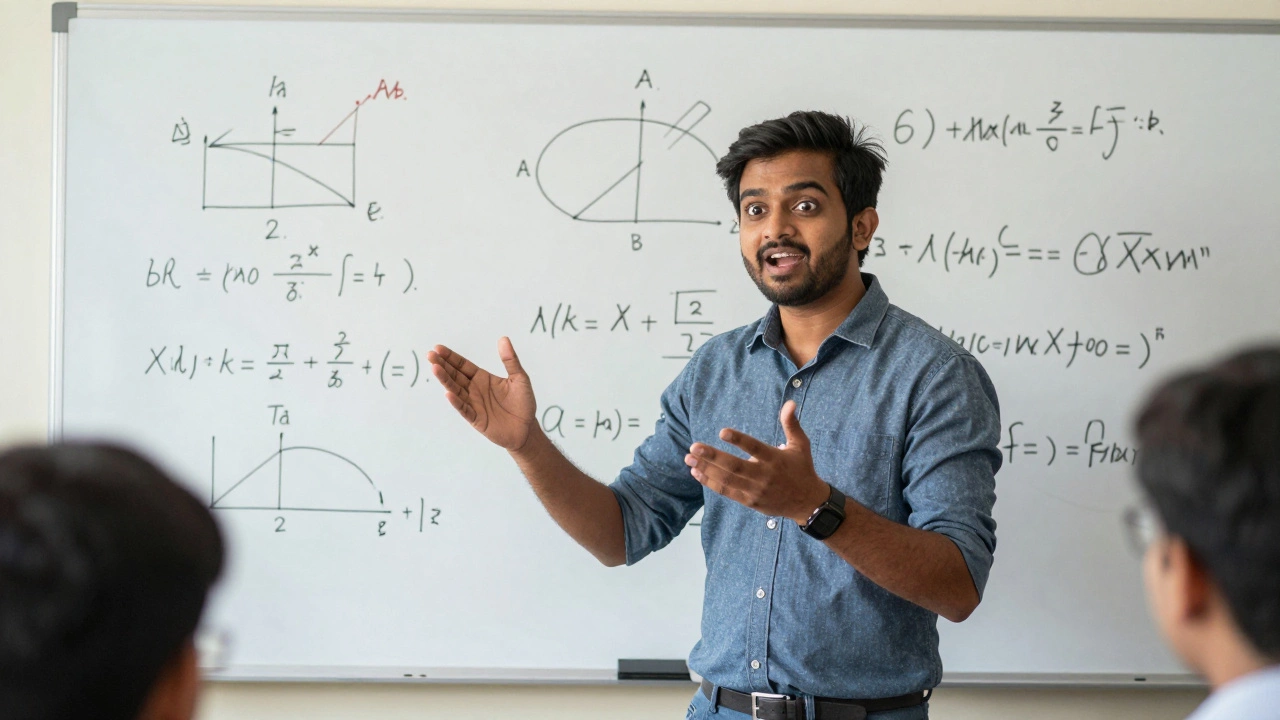
JEE Teacher Matcher: Find Your Ideal Guide
Not sure who to follow? Answer these 4 questions to find out which style of "famous" teacher fits your current stage of JEE preparation.
Your Recommended Match:
Pro Tip: Avoid the Trap!
Remember: Watching a celebrity teacher solve a problem is not the same as solving it yourself. Don't fall for the "Illusion of Competence."
Strategy: Mix & Match
You don't have to be loyal to one platform. Use a generalist for basics and a niche specialist for tough topics like Organic Chemistry.
Picking the "best" or "most famous" teacher for the IIT JEE preparation is the process of studying for the Joint Entrance Examination to enter Indian Institutes of Technology isn't like picking a favorite movie. For one student, a teacher who can simplify complex organic chemistry is a god; for another, that same teacher is too slow. But if we look at the sheer numbers-YouTube views, student enrollment in Kota, and cultural impact-a few names consistently rise to the top. Whether you are chasing a rank in the top 100 or just trying to survive Physics, the "fame" of these teachers usually comes from their ability to turn a nightmare subject into something manageable.
The Heavy Hitters of the JEE World
When people talk about the most famous teachers, they often start with Alakh Pandey. He isn't just a teacher; he's the face of Physics Wallah, an edtech giant that disrupted the Indian coaching market by offering low-cost education. Alakh's fame comes from his raw, energetic style of teaching Physics and Chemistry. He didn't start in a fancy corporate office but in a small room with a whiteboard, and that "student-first" vibe resonated with millions. If you've spent any time on YouTube looking for a shortcut to understand rotational mechanics, you've likely seen his videos.
Then there are the legends of Kota. For years, the city of Kota has been the epicenter of IIT JEE coaching. Names like VC Sir (Physics) or the star faculty at Allen Career Institute have a different kind of fame. They aren't necessarily "viral" in the social media sense, but within the community of serious aspirants, their methods are gospel. These teachers specialize in the "rank-booster" approach-teaching you the specific tricks to solve a problem in 30 seconds rather than 5 minutes.
What Makes an IIT Teacher "Famous"?
It's rarely just about the knowledge. Most of these teachers have mastered their subjects over decades. The real secret is the delivery. Think about how a top teacher handles a concept like Quantum Mechanics or Thermodynamics. They don't just read from a textbook; they use analogies that stick. A famous teacher might compare an electric field to a crowd of people at a concert to make the concept visual. This ability to bridge the gap between a complex formula and a real-world image is why some teachers can charge premiums while others are ignored.
Another factor is the "ecosystem." In the modern era, fame is tied to the platform. A teacher at Unacademy or BYJU'S reaches a global audience. The shift from physical classrooms to Online Learning has created "celebrity teachers" who have millions of followers on Instagram and Telegram, sharing not just lecture notes but motivational quotes to keep students from burning out during 14-hour study days.
| Teacher/Platform | Primary Strength | Target Audience | Delivery Method |
|---|---|---|---|
| Alakh Pandey (PW) | Concept Clarity & Empathy | Mass Market / Beginners | High-energy, conversational |
| Kota Specialists (Allen/Resonance) | Problem-Solving Speed | Top Rank Aspirants | Rigorous, technique-driven |
| Online Platform Stars | Accessibility & Visuals | Tech-savvy students | Structured, digital-first |

Choosing the Right Guide for Your Goal
While it's tempting to follow the most famous teacher, that's not always the best move. If you are starting from scratch and feel intimidated by Calculus, a teacher like Alakh Pandey is great because he builds your confidence. However, if you've already mastered the basics and need to learn how to crack the JEE Advanced-which is significantly harder than the JEE Main-you might need a teacher who focuses on deep, conceptual rigor and complex multi-concept problems.
Ask yourself: Do I need a cheerleader or a drill sergeant? Some students thrive under a teacher who pushes them to the limit with endless mock tests and strict deadlines. Others need someone who understands the mental pressure of the exam and provides emotional support alongside the physics. The "most famous" teacher is usually a generalist who appeals to the widest possible audience, but your needs are specific.
The Role of Content and Community
Fame in the IIT coaching world is also driven by the "notes" culture. Many famous teachers have created a legacy through their handwritten notes and curated question banks. These documents become legendary, passed down from senior to junior students like sacred texts. When a teacher's notes are known to cover 90% of the actual exam questions, their fame grows exponentially. This is why many students migrate to Kota-not just for the teachers, but for the curated environment and the collective knowledge of thousands of peers.
We're also seeing a rise in niche fame. There are teachers who are only famous for Organic Chemistry but are considered the absolute best in that specific sliver of the syllabus. For a student struggling with reaction mechanisms, that niche expert is more "famous" and valuable than a general physics celebrity. The fragmentation of the internet allows students to mix and match: they might take Physics from one celebrity, Math from another, and Chemistry from a specialized expert.
Common Pitfalls of Following "Celebrity" Teachers
There is a danger in the cult of personality surrounding famous teachers. The "Passive Learning Trap" is a real issue. When you watch a celebrity teacher solve a complex problem on a screen, it looks so easy that your brain tricks you into thinking you understand it. This is called the illusion of competence. You feel the rush of the teacher's energy and believe you've mastered the topic, but when you sit down with a blank piece of paper, you can't even start the first step.
Another risk is the "One Size Fits All" approach. Famous teachers often teach to the average of their million-student audience. If you are significantly ahead or behind that average, you might find their pace frustrating. Some spend too much time on basics, while others jump into advanced shortcuts without explaining the "why" behind the formula. The key is to use their fame as a filter for quality, but not as the sole reason for choosing them.
Looking Toward the Future of Coaching
As we move further into 2026, the definition of a "famous teacher" is changing. We are seeing the integration of Artificial Intelligence in education. While AI can't replace the charisma of a great teacher, it is supplementing them. The most successful educators now use data to see exactly where their students are failing in real-time, allowing them to pivot their lectures. The fame of the future will belong to those who can combine human inspiration with personalized, AI-driven precision.
Whether it's through a screen or in a crowded classroom in Rajasthan, the best teacher is ultimately the one who makes you stop fearing the subject. Fame is a great indicator of a teacher's ability to communicate, but your success in the exam depends on your ability to apply that communication to a piece of paper under intense pressure.
Is following a famous teacher enough to clear JEE?
No. A teacher provides the map and the tools, but you have to do the walking. Many students watch hours of videos from famous teachers but fail because they don't spend enough time in "deep work"-solving problems independently without the teacher's guidance. The teacher's fame helps with conceptual clarity, but self-study is what clears the exam.
Should I go to Kota to study under famous teachers?
It depends on your discipline. Kota provides an intense, competitive environment that can push you to your limits. However, the psychological pressure can be overwhelming for some. With the rise of high-quality online platforms and celebrity teachers moving their content to the web, you can now access the same "star" faculty from your own bedroom, avoiding the stress and cost of relocating.
Who is better for basics: online or offline teachers?
Online teachers, especially those with a massive following like Alakh Pandey, are often better for basics because their content is designed for the widest possible audience. They use simpler language and more visual aids. Offline teachers in premium batches often assume you already have a basic grip on the subject and move faster toward advanced problem-solving.
Can I mix teachers from different platforms?
Absolutely. In fact, it's often recommended. You might find one teacher's way of explaining Integration in Math to be superior, while another teacher's approach to Organic Chemistry is more intuitive. Don't be loyal to one platform; be loyal to your own understanding. Use the best resources available for each specific topic.
Does the cost of a teacher correlate with their fame or quality?
Not necessarily. Some of the most famous and effective teachers have built their reputation by providing free or very cheap content. While high-end coaching centers charge a premium for the "brand" and the physical infrastructure, the actual quality of the teaching can often be found in affordable online courses if you have the discipline to follow them.