U.S. Education System: How It Compares to India and What Really Matters
When people talk about the U.S. education system, a decentralized network of public, private, and charter schools that prioritize critical thinking and continuous assessment over high-stakes testing. Also known as American education, it doesn’t have one national curriculum—each state sets its own standards, and colleges make their own rules for admissions. That’s a big shift from India’s centralized system like CBSE or ICSE, where one exam can decide your future. In the U.S., your GPA, extracurriculars, essays, and even how you’ve used your time outside class all matter. It’s not about being the top scorer—it’s about being well-rounded, curious, and able to show how you think.
That’s why so many Indian students who’ve cracked JEE end up in U.S. universities. They bring strong technical skills, but they often have to adjust to a system that values participation over memorization. You won’t find 12-hour study days focused only on textbooks. Instead, you’ll see group projects, class discussions, and assignments spread out over weeks. Online education, a flexible way to learn through platforms like Coursera or edX that let students access courses from top universities without relocating. Also known as eLearning, it’s deeply woven into the U.S. system—even high schoolers take online AP classes to boost their transcripts. And when it comes to college, many students start at community colleges for under $100 a credit, then transfer to a four-year school. It’s not a backup plan—it’s a smart path.
Another big difference? Vocational training, hands-on programs that teach job-ready skills in fields like welding, IT support, or nursing without requiring a four-year degree. Also known as trade schools, it’s respected and widely used in the U.S., unlike in India where it’s still seen as a second choice. You’ll find people making $70,000 a year as certified electricians or network technicians—not because they went to Harvard, but because they learned a skill that’s in demand. Meanwhile, distance learning isn’t just for adults—it’s how millions of American high schoolers take advanced courses their local school doesn’t offer.
The U.S. system isn’t perfect. It’s expensive, uneven, and sometimes confusing. But it gives you room to grow your own path. Whether you’re an Indian student thinking about applying, a parent trying to understand college options, or someone comparing teaching styles, the real question isn’t which system is harder—it’s which one fits how you learn best. Below, you’ll find real comparisons, success stories, and practical advice from students who’ve navigated both worlds.
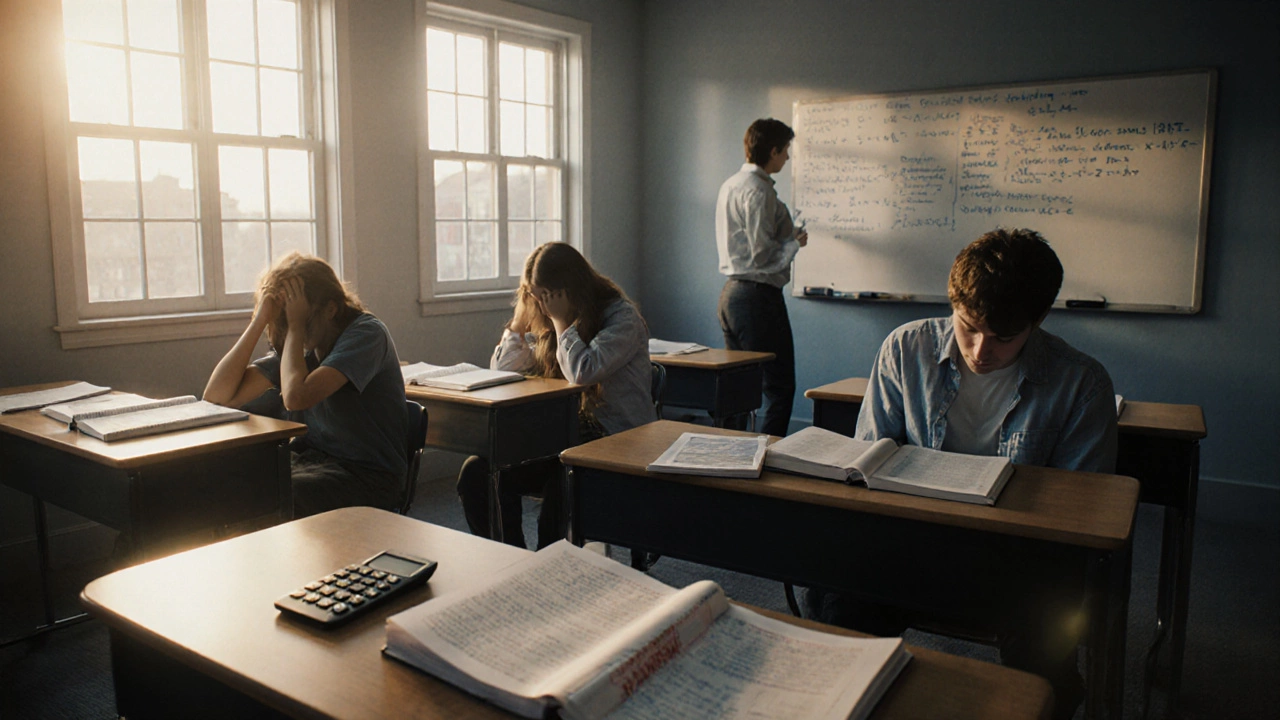
Which U.S. State Has the Best Education System for Competitive Exams?
- Arjun Rathore
- Oct, 27 2025
Massachusetts leads the U.S. in education outcomes for competitive exams due to strong curriculum standards, teacher qualifications, and early intervention. Learn why it outperforms wealthier states and how students anywhere can succeed.
Learn More