Java vs Python: Which Language Wins for Beginners, Jobs, and Speed?
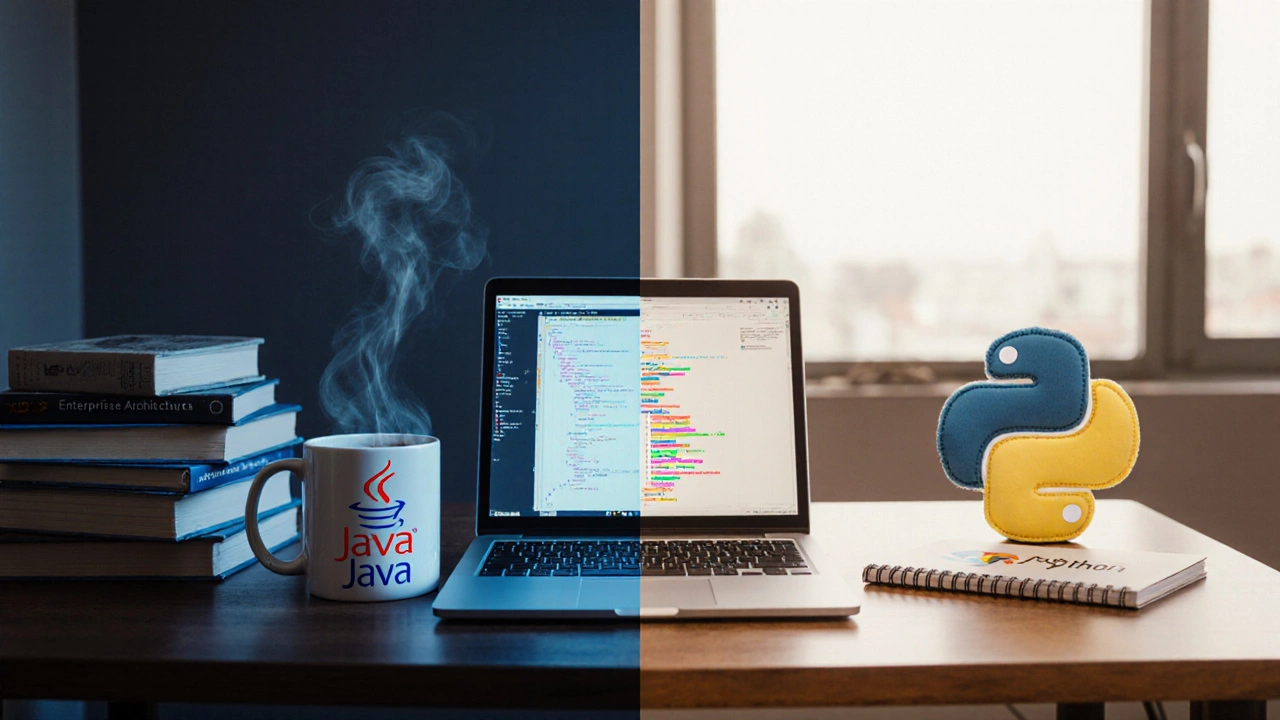
When you’re starting out in coding, Python, a high-level, readable programming language designed for simplicity and rapid development. Also known as scripting language, it’s the go-to choice for beginners, data analysts, and AI developers. Meanwhile, Java, a statically-typed, object-oriented language built for performance and large-scale enterprise systems. Also known as write once, run anywhere language, it powers Android apps, banking software, and backend systems that need to run reliably for years. The real question isn’t which is better—it’s which one fits your goals right now.
Python’s syntax looks almost like plain English. You can write a working program in five lines. That’s why it’s the top pick for students, hobbyists, and people switching careers. Want to build a simple website? Use Django. Analyze sales data? Pandas does the heavy lifting. Train a machine learning model? Scikit-learn makes it easy. Java, on the other hand, demands more structure. You need to declare types, write classes, and manage memory manually. It’s slower to start, but once you’re in, it’s rock-solid. Companies like Amazon, eBay, and banks still rely on Java because it handles millions of transactions without crashing.
Job markets tell a clear story. In India, Java still dominates backend roles—especially in IT services firms like TCS, Infosys, and Wipro. But Python is growing fast. Startups, fintechs, and AI teams are hiring Python devs faster than ever. Google, Netflix, and Flipkart use Python for data pipelines and automation. If you want to work in AI, data science, or automation, Python is non-negotiable. If you’re aiming for big corporate IT roles or Android development, Java is still the ticket. Neither is dying. But Python gives you more paths, faster.
Speed matters too. Python runs slower than Java because it’s interpreted. Java compiles to bytecode that runs on the JVM—faster execution, especially under load. But for most beginners, that difference doesn’t matter. You’re not building a stock trading platform on day one. What matters more is how quickly you can learn, build something real, and get feedback. Python lets you do that in weeks. Java takes months to feel natural.
And then there’s the learning curve. Python lets you skip the theory and start building. Java forces you to understand objects, inheritance, and interfaces before you can even print "Hello World". If you’re the kind of person who gets stuck on concepts before touching code, Python will keep you going. If you like structure and hate surprises, Java might feel more satisfying in the long run.
There’s no magic answer. But if you’re asking which language gets you results faster—whether it’s your first project, your first internship, or your first job offer—Python wins. It’s the language that turns curiosity into confidence. Java? It’s the language that turns patience into power. Pick based on where you want to go, not what’s trending. Below, you’ll find real stories, salary comparisons, and step-by-step guides from people who’ve walked both paths. No fluff. Just what works.
Java vs Python Salary Comparison 2025: Which Pays More?
- Arjun Rathore
- Oct, 22 2025
Compare Java and Python salaries in 2025, see which roles, industries, and locations pay more, and get a quick checklist to choose the higher‑earning path.
Learn More