Fashion Education: What You Really Need to Know to Succeed
When you think of fashion education, formal training in designing, producing, and marketing clothing and accessories. Also known as fashion design studies, it's not just about picking colors or stitching seams—it's about learning how to solve real problems in a fast-changing global industry. Most people assume it’s all about runway shows and celebrity stylists, but the real work happens behind the scenes: in factories, supply chains, sustainability labs, and digital design tools. If you’re considering this path, you need to know what’s actually taught—and what’s ignored.
fashion design schools, institutions that teach the technical and creative skills needed to build clothing lines vary wildly. Some focus on hand-sewing and couture techniques; others push AI-driven pattern-making and 3D virtual sampling. The best programs don’t just teach you how to make a dress—they teach you how to manage inventory, negotiate with factories, and sell directly to customers online. And it’s not just about being artistic. You need to understand textiles, cost margins, and consumer behavior. A friend of mine dropped out of a top school because she thought it was all about drawing. She came back a year later after working in a warehouse and realized she needed to know how much fabric costs per yard, not just how to drape silk.
textile design, the process of creating fabrics with specific textures, patterns, and performance traits is one of the most overlooked parts of fashion education. You can design the most beautiful outfit, but if the fabric pills after two washes or shrinks in the dryer, no one will buy it. Top brands now require designers to understand fiber science, dye chemistry, and eco-friendly production. That’s why some of the fastest-growing jobs in fashion aren’t in Paris or Milan—they’re in labs where scientists and designers work together to make biodegradable denim or recycled polyester that feels like cotton.
And then there’s the fashion industry, the global network of designers, manufacturers, retailers, and consumers that turns ideas into clothes. It’s not a single path. One person might start in a small studio in Jaipur making hand-block prints, another might work for a tech startup building virtual fitting rooms in Berlin. The skills that matter most today? Knowing how to use Canva for mood boards, understanding Shopify for direct sales, and being able to explain why your collection matters to someone scrolling on Instagram. The old model—graduating, getting hired by a big label, climbing the ladder—is fading. Today, you build your own brand, your own audience, and your own business.
What you’ll find in these articles isn’t a list of top fashion schools or which color is trending next. It’s real talk from people who’ve been in the trenches: the designer who turned a $50 sewing machine into a six-figure brand, the student who learned 3D modeling by watching YouTube, the entrepreneur who cut out middlemen and sold directly to customers in five countries. If you’re serious about fashion—not just the glam, but the grind—this collection gives you the tools to start now, not after you graduate.
Pearl Academy: Leading the Way in Fashion and Design Education
- Arjun Rathore
- Apr, 3 2010
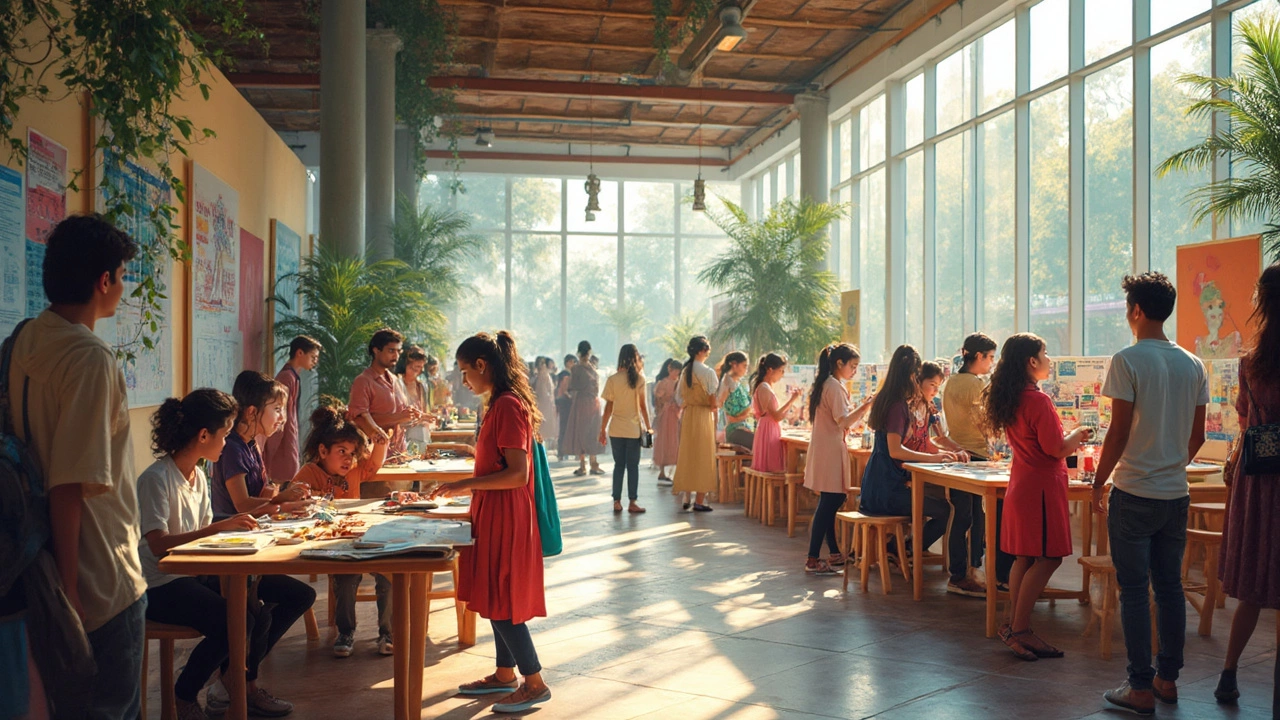
Pearl Academy, established in 1993, stands out as a top Indian institute in fashion, design, and media education. Initially collaborating with Nottingham Trent University, it transitioned to Global University Systems in 2019. The academy is renowned for industry partnerships and an emphasis on hands-on learning, operating across multiple campuses in India. Notable alumni include model Alisshaa Ohri and actress Keerthy Suresh.
Learn More