CBSE Exam Difficulty: Why It Feels Hard and What Actually Matters
When people talk about CBSE exam difficulty, the standardized testing system used by over 20,000 schools across India, designed to assess mastery of core subjects under high-pressure conditions. Also known as Central Board of Secondary Education exams, it’s not just a test—it’s a filter for higher education, scholarships, and career paths. Many students feel overwhelmed, not because the content is impossibly complex, but because the system demands precision, timing, and deep retention—all under one roof, in one go.
The real challenge isn’t the syllabus alone. It’s how CBSE syllabus, a tightly structured, NCERT-driven curriculum focused on conceptual clarity and application. Also known as Indian board curriculum, it leaves little room for guesswork. Unlike systems that spread assessment over months, CBSE piles everything into final exams. That means one mistake in a 3-mark question can cost you a grade. And with lakhs of students competing for the same top ranks, even small gaps matter. This is where exam stress, the psychological pressure caused by high-stakes testing, rigid grading, and societal expectations. Also known as board exam anxiety, it becomes the silent competitor—more dangerous than any math problem.
What makes CBSE different isn’t the difficulty of questions—it’s the expectation of perfection. A student might understand physics conceptually but lose marks because they didn’t write the formula in the exact format CBSE expects. Or they might ace chemistry but run out of time because they spent too long on one question. The system rewards those who practice not just the subject, but the exam itself. That’s why students who grind through past papers, memorize marking schemes, and train their time management often outperform those who are naturally smarter but less prepared for the format.
And it’s not just about the exams. The pressure feeds into the whole Indian education system, a structure where academic performance is tightly linked to social mobility, family honor, and future income. Also known as competitive education culture, it makes every test feel life-changing. Parents, teachers, and even peers add to the weight. But here’s the truth: the hardest part isn’t the exam paper. It’s believing you’re enough when the system tells you only the top 1% matter.
That’s why the posts here don’t just talk about study tips. They show you how to think differently—how to spot patterns in past papers, how to manage mental fatigue, how to turn stress into focus, and why some students crack CBSE without burning out. You’ll find real stories from those who’ve been there, strategies that actually work, and hard truths no one else will tell you. No fluff. No hype. Just what you need to survive—and win—on your own terms.
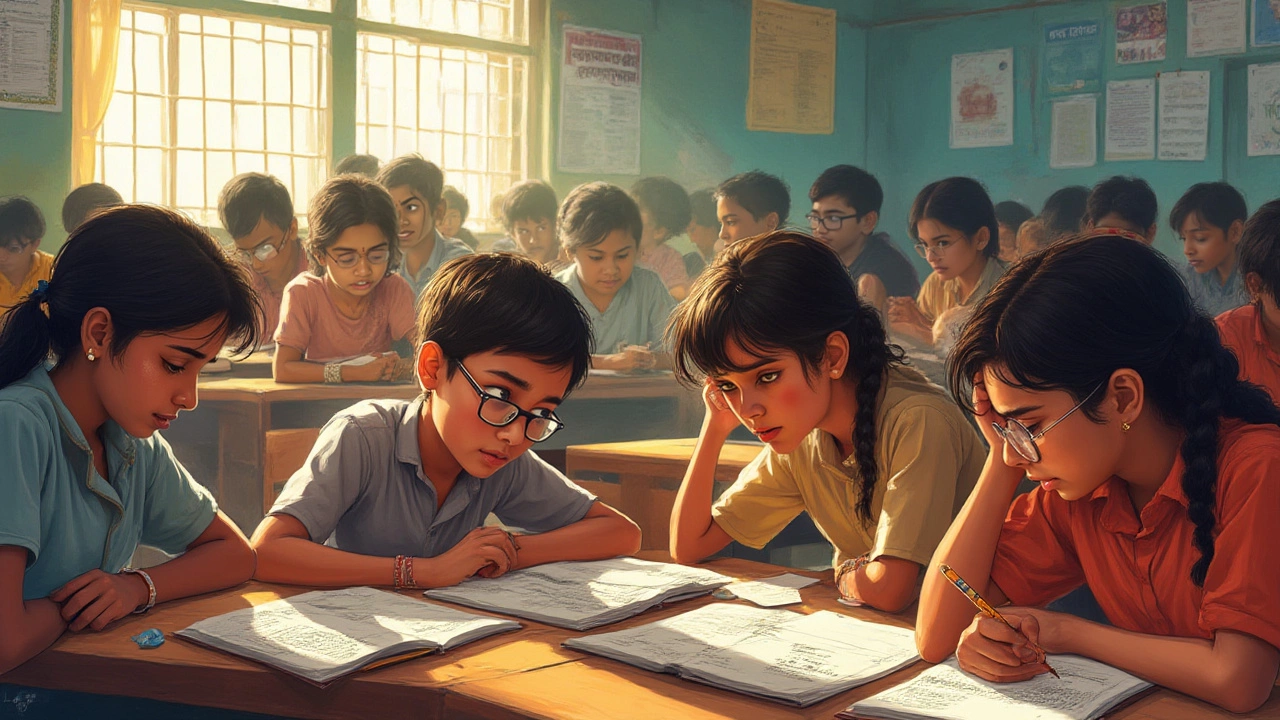
Which Subject is the Hardest in CBSE? Real Student Experiences & Tips
- Arjun Rathore
- Jul, 28 2025
What’s the toughest subject in CBSE? Dive into student stories, unexpected struggles, and survival tips to hack those notorious board exams.
Learn More