CBSE Paper Set Comparison Tool
See how CBSE's paper sets (A, B, and C) have identical content but arranged differently to prevent cheating. All sets are designed with the same difficulty level and topics.
- Explain the process of photosynthesis in plants
- Calculate the area of a circle with radius 7 cm
- What are the main causes of water pollution?
- Describe the structure of a neuron
- Calculate the area of a circle with radius 7 cm
- Explain the process of photosynthesis in plants
- Describe the structure of a neuron
- What are the main causes of water pollution?
- Calculate the area of a circle with radius 7 cm
- What are the main causes of water pollution?
- Explain the process of photosynthesis in plants
- Describe the structure of a neuron
Select an exam type and click "Verify Paper Content" to see detailed comparison of question content across all sets.
Every year, as CBSE board exams approach, parents and students whisper the same question: Is the CBSE paper the same all over India? The answer isn’t a simple yes or no - it’s layered, controlled, and designed to be fair across a country of 1.4 billion people. If you’re preparing for Class 10 or 12, understanding how this works can ease your stress and help you study smarter.
Yes, the question paper is identical nationwide
For the main CBSE board exams - Class 10 and Class 12 - the question paper is printed and distributed identically across every school in India, from Srinagar to Kanyakumari, from Mumbai to Guwahati. There is no regional variation in the paper set. The Central Board of Secondary Education prepares a single set of question papers for each subject, which are then sealed and shipped under high security to all exam centers.
This uniformity is intentional. CBSE is a national board, and its goal is to ensure equal opportunity. A student in rural Bihar and a student in urban Delhi take the exact same English paper, the same Math paper, the same Physics paper. The questions, marking scheme, and even the order of sections remain unchanged. This is why CBSE results are trusted across universities and colleges nationwide.
How does CBSE keep the paper the same?
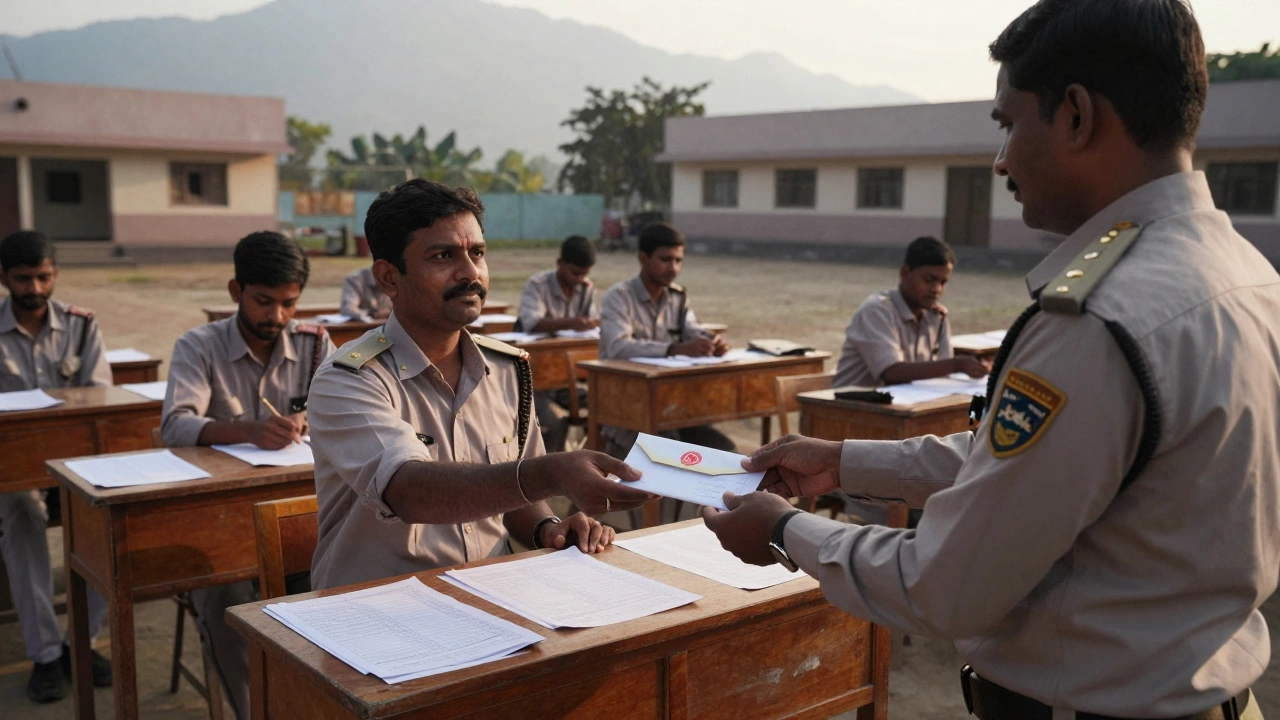
It’s not magic - it’s logistics and secrecy. The process starts months before the exam. A committee of subject experts, mostly senior CBSE-affiliated teachers and university professors, designs the paper. They follow a strict blueprint based on the official syllabus, weightage distribution, and difficulty levels. Once finalized, the paper is sent to a secure printing press under armed guard. Only a handful of people know the content until the exam day.
On the day of the exam, the sealed question papers are delivered to each center by CBSE-appointed officials. No school or teacher gets the paper early. Even the invigilators are assigned randomly from outside the school to prevent leaks. The entire process is monitored by CCTV and audited by independent observers.
What about different sets? I heard there are A, B, and C papers.
You might have heard students talking about Set A, Set B, or Set C. That’s true - but it doesn’t mean regional differences. CBSE prints multiple versions of the same paper, usually three, with questions shuffled in order or slightly reworded. For example, a long-answer question on photosynthesis might be Question 1 in Set A and Question 5 in Set B. The concepts tested, the marks allocated, and the expected answers are identical.
This is done to prevent cheating. If two students sitting next to each other have the same paper, they’re less likely to copy. But here’s the key: the difficulty level, the topics covered, and the depth of questions are calibrated to be the same across all sets. A student who studies Set A thoroughly will be just as prepared for Set B or C.
What about internal assessments and practicals?
While the written exam is standardized, internal assessments and practicals have some flexibility. For subjects like Science, Computer Science, and Physical Education, schools conduct their own practical exams under CBSE guidelines. The evaluation rubric is fixed - for example, how many marks are given for observation, viva, or record keeping - but the actual experiments or tasks may vary slightly by school.
For example, one school might do a titration experiment for Chemistry practicals, while another uses a circuit-building task. But both are chosen from the CBSE-prescribed list of experiments. The marking criteria are identical. Teachers are trained to apply the same standards. Moderation panels also review a sample of practical records to ensure fairness.
Are there any exceptions?
Yes - but only for students with special needs. CBSE provides extra time, scribes, or alternative formats for students with disabilities, learning differences, or medical conditions. These are not regional exceptions but individual accommodations. The content of the paper remains unchanged.
There’s also the option for students studying abroad to take CBSE exams at designated centers in countries like the UAE, Qatar, or the UK. Even then, they receive the exact same paper as students in India. No adjustments are made for time zones or cultural context.
Why does this matter for your preparation?
If the paper is the same everywhere, then your preparation strategy doesn’t need to change based on location. You don’t need to search for "Delhi board papers" or "South India CBSE trends" - because they don’t exist. What matters is the CBSE syllabus, previous year papers, and the official marking scheme.
Use past papers from any part of India - whether from Tamil Nadu or Punjab - because they’re all the same. Focus on understanding the pattern: how many one-mark questions appear, how often numerical problems are repeated, which chapters carry the most weight. The NCERT textbooks are your bible. CBSE papers are built directly from them.
What about the 2025-26 exam changes?
In the 2025-26 session, CBSE introduced minor adjustments to the exam pattern for Class 10 and 12, like reducing the number of multiple-choice questions and increasing application-based questions. But again, these changes apply uniformly. Every student, everywhere, faces the same format. The board doesn’t test one region harder than another.
For example, in Mathematics, the weightage for case-based questions increased to 20%. That’s true for every student in India. In English, the literature section now includes one unseen poem from the prescribed list - same for all. No region gets a "easier" version.

What if I hear rumors about different papers?
False rumors spread every year. Someone will claim, "My cousin in Rajasthan got an easier paper," or "The Delhi paper had more numericals." These are usually misunderstandings or wishful thinking. Students remember what they found hard or easy - but that doesn’t mean the paper was different. Your perception of difficulty is shaped by your preparation, not the paper’s origin.
CBSE has never changed the paper based on region, language, or school type. Even private schools and government schools receive the same paper. The board doesn’t favor urban over rural, English-medium over Hindi-medium, or elite institutions over local ones.
How to use this knowledge to your advantage
Stop wasting time searching for "regional CBSE papers." Instead:
- Download the official CBSE sample papers from cbseacademic.nic.in - they’re the real thing.
- Solve at least five years of past papers. Don’t pick only your state’s papers - use any.
- Focus on NCERT. 80% of the questions come directly from these books.
- Practice time management. Since the paper is the same everywhere, speed and accuracy matter more than guessing regional trends.
- Review the marking scheme. CBSE gives marks for steps, not just final answers - especially in Math and Science.
There’s no shortcut. But there is clarity. The CBSE paper is the same for everyone - and that’s actually good news. It means your hard work will be measured fairly, no matter where you sit for the exam.
Is the CBSE Class 10 paper the same for all students in India?
Yes, the written CBSE Class 10 board exam paper is identical for every student across India. The board prepares one set of question papers per subject, printed under strict security and distributed to all centers on exam day. Variations like Set A, Set B, or Set C are just shuffled versions of the same content to prevent cheating, not regional differences.
Do students in different states get different difficulty levels in CBSE exams?
No. CBSE ensures all question papers - regardless of region or school type - have the same difficulty level, topic weightage, and marking scheme. Even if students feel one paper was harder, that’s due to individual preparation, not paper variation. The board uses standardized blueprints and moderation to maintain consistency.
Are CBSE practical exams the same for all schools?
The evaluation criteria for practical exams are standardized, but the specific experiments or tasks may vary by school. CBSE provides a list of approved experiments, and schools choose from it. The marking rubric is fixed - for example, 3 marks for observation, 2 for viva - so fairness is maintained even if the activity differs slightly.
Can I use past papers from another state to prepare for CBSE?
Absolutely. Since the CBSE paper is the same nationwide, past papers from any state are valid for practice. Whether you’re in Kerala or Jammu, the exam pattern, syllabus, and question types are identical. Focus on solving papers from official CBSE sources for the most accurate preparation.
Does CBSE make the paper easier for rural students?
No. CBSE does not adjust paper difficulty based on geography or school type. Rural and urban students receive the exact same paper. The board’s goal is equity, not differential treatment. However, accommodations like extra time or scribes are provided for students with documented disabilities, regardless of location.
Final thought: Fairness is built into the system
The fact that a child in a small town in Odisha and a child in a private school in Bengaluru take the same exam is a quiet triumph of India’s education system. It means your effort counts - not your address. You don’t need to chase rumors or regional tips. Just stick to the syllabus, master NCERT, and practice past papers. The paper won’t change. Your preparation should.