Language Learning Progress Estimator
Based on the science-backed methods described in the article, estimate how your daily language practice affects your progress toward fluency.
Estimated Progress Timeline
Your estimated progress over time
30 days
You'll start understanding more TV shows and podcasts in the target language.
60 days
You'll catch yourself thinking in the language without translating.
90 days
You'll notice you can have basic conversations with more confidence.
According to research in the article, the key is consistency with listening and speaking. Just 15 minutes of daily listening can improve comprehension by 40% in six weeks.
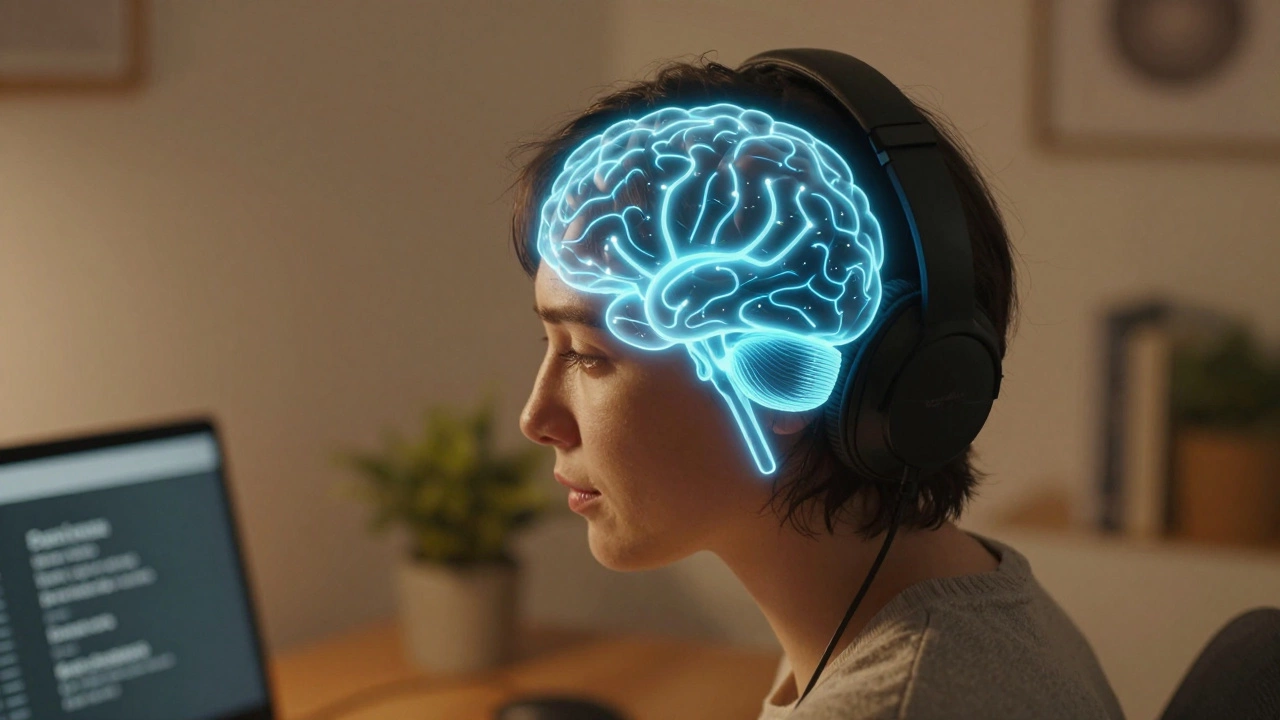
Ever sat down to learn a new language and felt like your brain just won’t cooperate? You memorize words, practice sentences, watch videos-but nothing sticks. It’s not you. It’s your brain still operating on old rules. The good news? You can rewire it. Not with magic, not with expensive apps, but with science-backed habits that change how your brain processes language. And it’s faster than you think.
Your brain isn’t broken-it’s just used to your first language
When you were a child, your brain was a sponge. Every sound, every word, every tone was absorbed without effort. That’s because your brain was building new neural pathways from scratch. Now, as an adult, those pathways are already paved with your native language. Your brain doesn’t want to build new ones-it wants to save energy. That’s why learning a language feels hard. It’s not because you’re slow. It’s because your brain is wired to resist change.
But here’s the catch: your brain never stops being plastic. Neuroscientists have proven that adults can form new neural connections, even in their 60s. The key isn’t more hours. It’s smarter input. Your brain learns language not by studying grammar rules, but by hearing and using it in meaningful, repeated patterns.
Step 1: Replace studying with listening
Most people start by opening a textbook. They write down vocabulary lists. They memorize verb conjugations. Then they panic when they can’t speak. That’s because your brain doesn’t learn language like a math problem. It learns like music.
Think about how you learned English. You didn’t start with tenses. You heard your parents say “milk,” “ball,” “bye-bye.” You repeated them. You connected sounds to objects, emotions, actions. You didn’t think about grammar-you just understood.
Do the same with your target language. Start with 15 minutes a day of passive listening. Use podcasts, YouTube channels, or audiobooks in the language you want to learn. Don’t try to understand every word. Just let the rhythm, tone, and flow sink in. Your brain will start recognizing patterns-like how questions sound different from statements, or how certain words always come before others.
Studies from the University of Edinburgh show that just 30 minutes of daily listening can improve comprehension by 40% in six weeks. You’re not studying. You’re training your ears to hear what your brain already knows how to process.
Step 2: Speak before you’re ready
Waiting until you “know enough” to speak is the biggest mistake. Your brain needs to practice output-not just input. Every time you speak, even badly, you’re strengthening the neural pathways that connect meaning to sound.
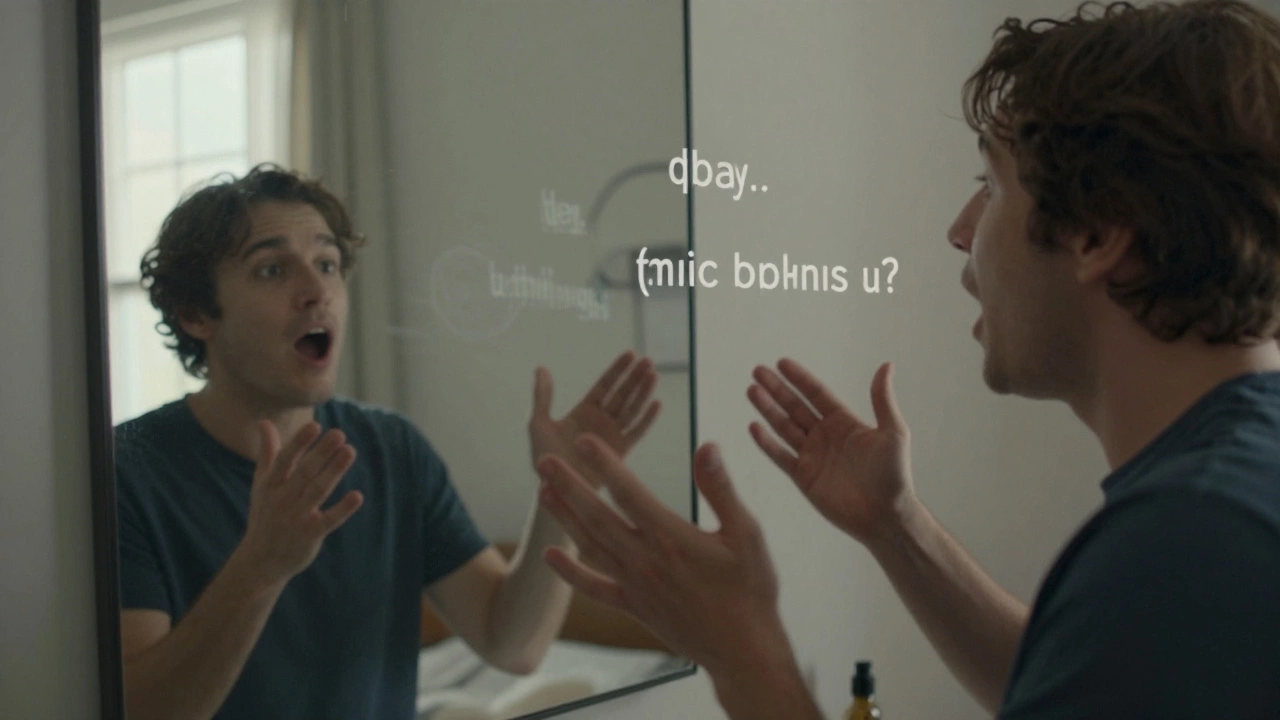
Start with shadowing. Play a short audio clip-five seconds long-and repeat it out loud right after. Don’t pause. Don’t think. Just mimic the sound. Do this five times in a row. You’ll sound robotic at first. That’s fine. Your brain is building muscle memory for pronunciation, rhythm, and intonation.
Then, move to talking to yourself. Describe what you’re doing: “I’m making coffee.” “The bus is late.” “I’m tired.” You don’t need a partner. You just need to hear your own voice producing the language. This activates Broca’s area-the part of your brain responsible for speech production. And that’s where real fluency begins.
Step 3: Use emotion to lock in memory
Memory doesn’t stick to facts. It sticks to feelings. That’s why you remember your first kiss, your worst mistake, or the smell of rain on pavement. Language learning works the same way.
Instead of memorizing “I am hungry,” say it while you’re actually hungry. Say “I love this song” while you’re listening to your favorite tune in the target language. Say “I’m frustrated” when you can’t find the right word. Tie each phrase to a real emotion, a real moment.
Research from the Max Planck Institute found that learners who associated vocabulary with personal experiences retained 70% more words after three months than those who used flashcards alone. Your brain doesn’t care about lists. It cares about stories.
Step 4: Make mistakes loudly
Every time you mess up, your brain gets a signal: “This matters. Pay attention.” Mistakes aren’t failures-they’re learning triggers.
Find a language exchange partner online. Use apps like Tandem or HelloTalk. Say something wrong on purpose. “I go yesterday to park.” Then laugh. Ask them to correct you. Don’t just nod. Say it again correctly. Do it again tomorrow. Each time, your brain tightens the neural connection between the wrong version and the right one.
Neuroscientists call this “error-driven learning.” It’s how babies learn. It’s how athletes train. And it’s how you’ll finally speak without hesitation.

Step 5: Sleep on it
You think learning happens when you’re awake. But the real rewiring happens while you sleep.
During deep sleep, your brain replays the day’s experiences-strengthening connections, pruning useless ones. If you listen to a language podcast before bed, your brain will replay those sounds while you sleep. Studies from the University of Zurich show that people who heard vocabulary recordings during sleep improved recall by 35% compared to those who didn’t.
Don’t just listen while awake. Let your brain work while you rest. Play audio softly in the background as you fall asleep. Not to memorize. Just to let it sink in.
What doesn’t work-and why
Flashcards? They help with short-term recall, not long-term fluency. You can name 500 words and still not hold a conversation.
Grammar drills? They teach you to analyze language, not use it. You wouldn’t learn to ride a bike by studying physics.
Expensive courses? They give you structure, not brain rewiring. You don’t need to pay $300/month to learn. You need consistency, emotion, and repetition.
Real progress, not perfection
You don’t need to become fluent in three months. You need to become consistent. One minute of shadowing. One sentence spoken aloud. One mistake made and corrected. That’s enough.
After 30 days, you’ll notice you understand more TV shows. After 60 days, you’ll catch yourself thinking in the language. After 90 days, you’ll laugh when you realize you didn’t need to translate in your head.
Your brain isn’t broken. It’s just waiting for the right signals. Give it sound. Give it emotion. Give it mistakes. Give it sleep. And watch it change.
Can I rewire my brain to learn a language after 40?
Yes. Brain plasticity doesn’t disappear with age. Studies show adults over 40 can learn languages just as effectively as younger people-if they use the right methods. The key isn’t age. It’s consistency. Listening daily, speaking out loud, and embracing mistakes are what matter-not how young you are.
How long does it take to rewire your brain for a new language?
You’ll start noticing changes in about 30 days. Your brain begins recognizing patterns, sounds, and rhythms. Real fluency-where you think in the language without translating-usually takes 6 to 12 months of daily practice. But the rewiring starts on day one. It’s not about speed. It’s about repetition.
Do I need to live in a country where the language is spoken?
No. Immersion doesn’t mean geography. It means exposure. You can create immersion at home: listen to podcasts during your commute, watch shows without subtitles, talk to yourself in the shower. Real immersion is about frequency and emotion-not location. People who practice daily at home often outperform those who study abroad for a month and then stop.
Is it better to learn one language at a time?
Yes, especially if you’re starting from scratch. Learning two languages at once can confuse your brain’s pattern-recognition system. Your brain needs clear, focused input to build strong neural pathways. Once you’re comfortable with one language-usually after 6-9 months-you can add another. But don’t split your attention early on.
What’s the best time of day to practice?
There’s no single best time. But two windows work best: right after waking up (when your brain is fresh) and right before sleep (when memory consolidation kicks in). Try 10 minutes in the morning and 10 minutes at night. Consistency matters more than timing.