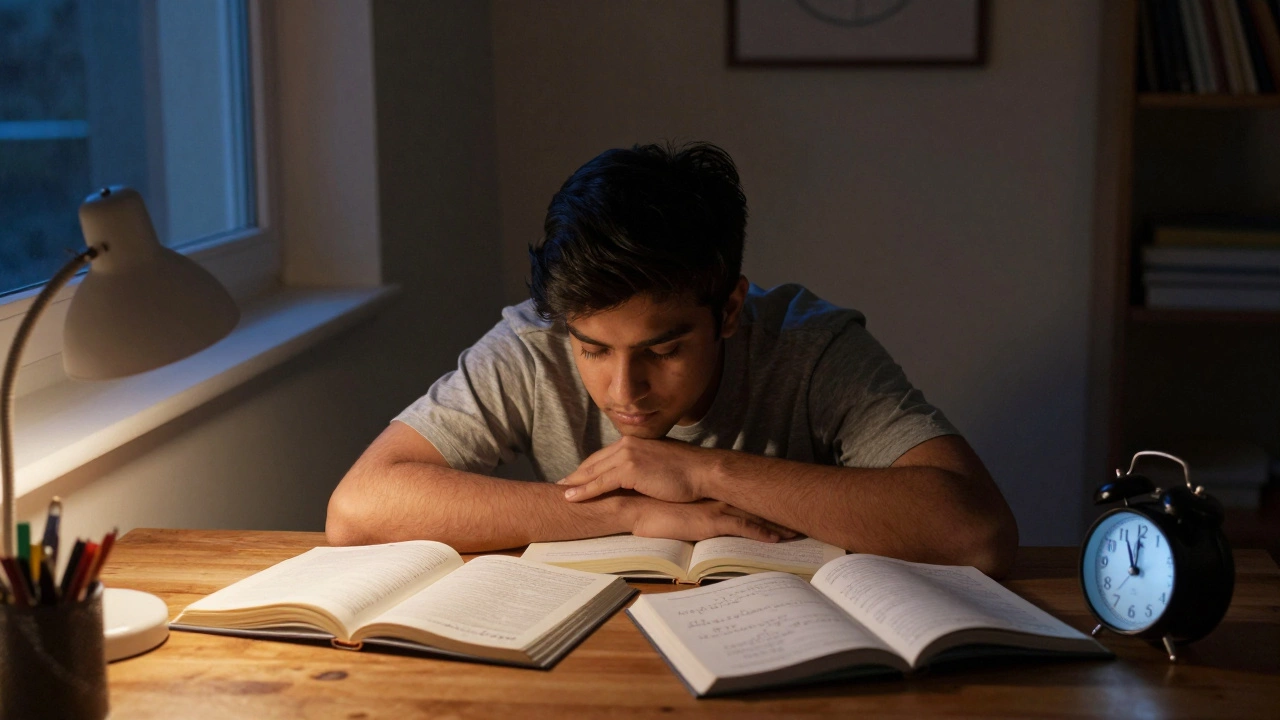
JEE Sleep Calculator
Based on research, JEE aspirants need 7-8 hours of sleep for optimal memory consolidation and performance. Enter your wake-up time to find your ideal bedtime window.
Enter your wake-up time and click "Calculate" to see your ideal bedtime window.
7-8 hours of sleep is critical for JEE aspirants. During deep sleep, your brain organizes information and transfers it to long-term memory. Without proper sleep, even your most focused study sessions can be wasted.
Remember: Consistent sleep patterns are more important than occasional extra sleep. Your brain thrives on rhythm and regularity.
Every JEE aspirant knows the pressure: endless practice papers, late-night revisions, and the constant fear of falling behind. But here’s the truth no one talks about - sleep isn’t the enemy of preparation. It’s the foundation. Skip it, and your brain starts working against you.
Why Sleep Matters More Than Extra Hours
Think you can out-study your competition by pulling three all-nighters a week? You’re not gaining an edge - you’re losing one. Research from the National Sleep Foundation shows that students who sleep fewer than six hours a night perform 20-30% worse on memory recall tasks compared to those who get seven to eight hours. That’s not a small gap. That’s the difference between solving a complex calculus problem and staring blankly at the page.
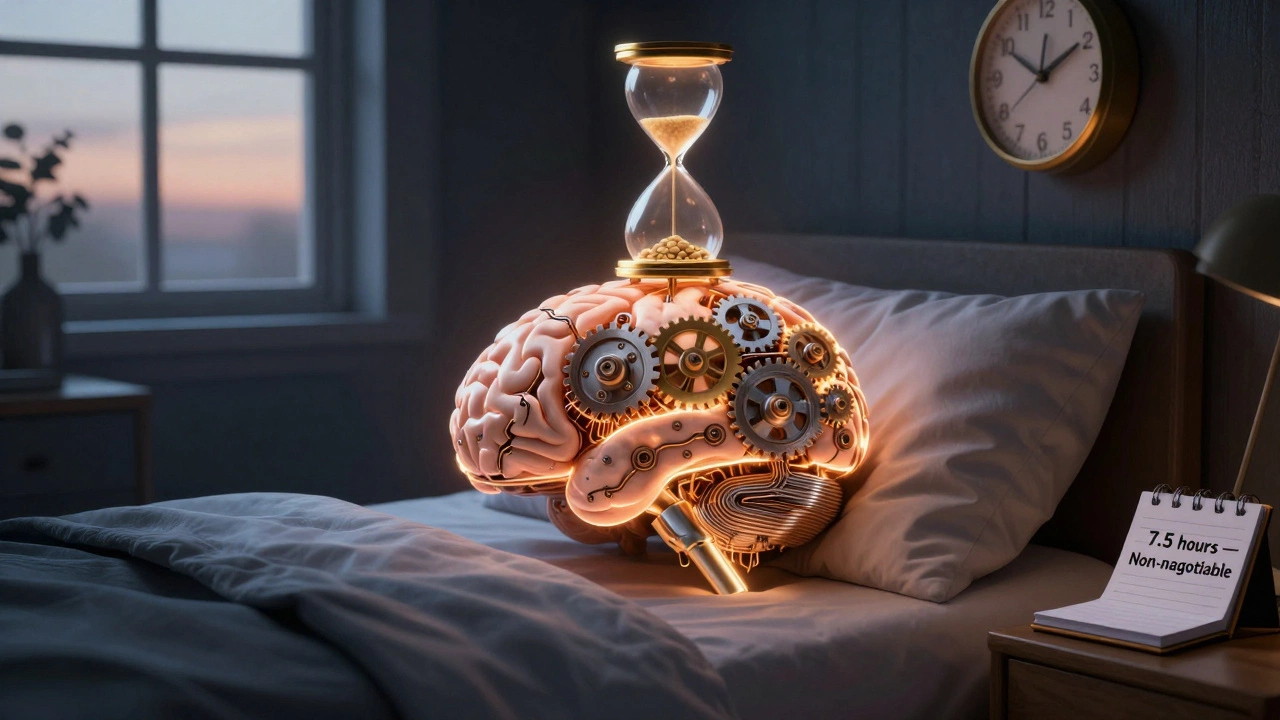
During deep sleep, your brain doesn’t just rest - it organizes. It takes everything you crammed into your head during the day and files it into long-term memory. Without this process, your hard work evaporates. You might remember a formula while studying, but by morning, it’s gone. Sleep is the glue that holds your learning together.
The Ideal Sleep Window for JEE Aspirants
There’s no magic number that fits everyone, but the sweet spot for JEE aspirants is 7 to 8 hours per night. Not six. Not nine. Seven to eight. Why? Because your brain cycles through four stages of sleep - light, deep, and REM - roughly every 90 minutes. Missing even one full cycle means your memory consolidation and problem-solving skills take a hit.
Most top performers don’t study 16 hours a day. They study 10-12 focused hours and sleep 7.5 hours. The difference? Quality. One hour of deep, uninterrupted sleep does more for retention than three hours of fragmented rest. If you’re going to bed at 1 a.m. and waking at 6 a.m., you’re cutting into critical REM cycles. That’s when your brain solves problems in the background - like how to approach a tricky physics question you struggled with the day before.
What Happens When You Sacrifice Sleep
Skip sleep for a night, and your focus drops. Miss two nights, and your reaction time slows to levels similar to someone legally drunk. By the third night, your ability to process new information plummets. You start making careless mistakes - misreading a question, flipping a sign in an equation, forgetting a formula you knew cold the day before.
And it’s not just about exams. Chronic sleep deprivation raises cortisol, the stress hormone. That means more anxiety, mood swings, and burnout. You might feel like you’re pushing harder, but you’re actually running on fumes. Many JEE aspirants hit a wall around January - not because the syllabus got harder, but because their bodies finally gave out.

How to Build a Sleep-Friendly Routine
It’s not about going to bed earlier - it’s about making sleep non-negotiable. Here’s how:
- Set a fixed bedtime and wake-up time - even on weekends. Your brain thrives on rhythm. Going to bed at 11 p.m. and waking at 6 a.m. every day trains your body to fall asleep faster and wake up naturally.
- Stop studying 90 minutes before bed. Your brain needs time to wind down. Don’t review formulas right before sleep - it keeps your mind active. Instead, read a light chapter from a non-academic book or listen to calming music.
- Keep your room cool and dark. A room temperature of 18-20°C (64-68°F) is ideal for sleep. Use blackout curtains and remove all glowing screens - phones, tablets, even LED chargers.
- Avoid caffeine after 3 p.m. Coffee, energy drinks, even dark chocolate can linger in your system for 8 hours. If you’re still wired at 11 p.m., it’s not willpower - it’s chemistry.
- Use naps wisely. A 20-minute power nap after lunch can boost alertness without disrupting nighttime sleep. Anything longer than 30 minutes can leave you groggy and mess with your sleep cycle.
Real Stories From Top Rankers
Look at the toppers - not the ones who brag about studying 18 hours a day, but the ones who actually cracked the exam with high ranks. In interviews, many mention a simple rule: "I never skipped sleep, even during mocks."
One student from Kota, who ranked in the top 500 in JEE Advanced, said: "I used to think sleeping less meant more progress. Then I failed a mock test after three nights of five-hour sleep. I realized my brain wasn’t processing anything. I started sleeping 7.5 hours. My scores went up. My stress went down. It was the best decision I made."
Another from Delhi shared: "I stopped checking my phone at night. I read a novel for 30 minutes before bed. Within two weeks, I was falling asleep in 15 minutes instead of an hour. My focus during study hours improved dramatically."
Myth vs Reality: Sleep and JEE Prep
| Myth | Reality |
|---|---|
| "More sleep = less time to study." | "More sleep = better retention = less need to re-study." |
| "Toppers sleep less because they’re more disciplined." | "Top performers sleep more because they know rest boosts efficiency." |
| "I can catch up on sleep during weekends." | "Sleep debt doesn’t vanish. It piles up and lowers cognitive performance permanently." |
| "Only 6 hours is enough if I’m used to it." | "Your body doesn’t adapt to sleep deprivation - it just stops signaling fatigue." |
When to Adjust Your Sleep Schedule
There are times when you might need to tweak your routine - like during mock exams or the final week before JEE Main. But even then, don’t drop below six hours. If you’re taking a full-length mock on Sunday, go to bed by 11 p.m. The night before, not after.
If you’re struggling to fall asleep, don’t force it. Get up, step outside for five minutes of fresh air, read a book under dim light, and return to bed. The pressure to sleep makes it harder. Let it come naturally.
Final Rule: Sleep First, Study Smart
Here’s the brutal truth: You don’t need to study more. You need to study smarter. And smarter means rested. Your brain is your most important tool. You wouldn’t run a race on an empty tank. Why treat your mind any differently?
Plan your day like a pro athlete. Train hard. Recover harder. Sleep isn’t downtime - it’s upgrade time. Seven to eight hours every night isn’t a luxury. It’s your secret weapon.
Can I survive on 5 hours of sleep during JEE prep?
Technically, yes - your body might keep you awake. But your brain won’t function properly. Memory consolidation, problem-solving, and focus drop significantly. You’ll make more mistakes, forget formulas, and feel mentally foggy. Long-term, this leads to burnout. Five hours is not sustainable - it’s self-sabotage.
Is it okay to sleep more on weekends?
A little extra sleep on weekends - like 8.5 hours instead of 7.5 - is fine. But don’t sleep past 10 a.m. or shift your bedtime by more than an hour. Large changes disrupt your circadian rhythm, making it harder to fall asleep on Sunday night and reducing Monday’s focus. Consistency matters more than total hours.
Does napping help JEE aspirants?
Yes - if done right. A 20-minute nap after lunch can restore alertness without affecting nighttime sleep. Longer naps (over 30 minutes) can cause sleep inertia - that groggy feeling - and make it harder to sleep at night. Keep naps short, early, and consistent.
Should I stop studying late at night?
Yes. Studying after 11 p.m. trains your brain to associate bedtime with stress. Your mind stays active, making it harder to fall asleep. Instead, finish your last study session 90 minutes before bed. Use that wind-down time to relax - read, stretch, or listen to calm music.
What if I have trouble falling asleep?
If you’re lying awake for more than 20 minutes, get up. Go to another room, sit in dim light, and read something boring - not a textbook. Avoid screens. Return to bed only when you feel sleepy. This breaks the cycle of anxiety around sleep. It’s not about forcing sleep - it’s about letting it come.
Next Steps
Start tonight. Set your alarm for 6 a.m. and your bedtime for 11 p.m. No exceptions. Track how you feel in three days. Are you more focused? Less irritable? Better at solving problems? If yes - you’ve already won half the battle. Sleep isn’t stealing time from your prep. It’s multiplying its value.