
IIT JEE 6-Month Preparation Feasibility Calculator
It is June 2026. The clock is ticking louder than ever for students eyeing the IIT JEE, which is India's most competitive engineering entrance examination consisting of JEE Main and JEE Advanced stages. You might be asking yourself a terrifying question: "Is it possible to crack IIT in just six months?" If you are starting from scratch, or even if you have studied before but fell short, this timeline feels impossible. The syllabus is massive. The competition is fierce. Thousands of aspirants spend three years preparing for this single shot.
However, the answer isn't a simple yes or no. It depends entirely on your current foundation, your daily hours, and your strategic precision. For some, six months is enough to secure a top rank. For others, it is a path to burnout. This guide cuts through the noise. We will look at the math behind the preparation, the specific topics that yield high marks, and the brutal honesty required to succeed in such a short window.
The Reality Check: Who Can Actually Do This?
Before we dive into schedules, let’s talk about eligibility. Not every student can clear the JEE Advanced cutoff in half a year. Success in a six-month sprint usually falls into two categories of candidates.
- The Strong Foundation Student: You completed Class 11 and 12 with good grades. You understand basic concepts in Physics, Chemistry, and Mathematics (PCM) but lack practice speed and depth. For you, six months is a revision and problem-solving marathon.
- The Drop Year Warrior: You attempted JEE last year. You know the pattern, the traps, and your weak spots. You need targeted improvement, not relearning basics.
If you are currently in Class 12 board exams and haven’t touched JEE material since Class 10, the odds are against you. The volume of content is too high. However, if you fall into the first two categories, here is how you structure your survival.
The 80/20 Rule: High-Yield Topics Only
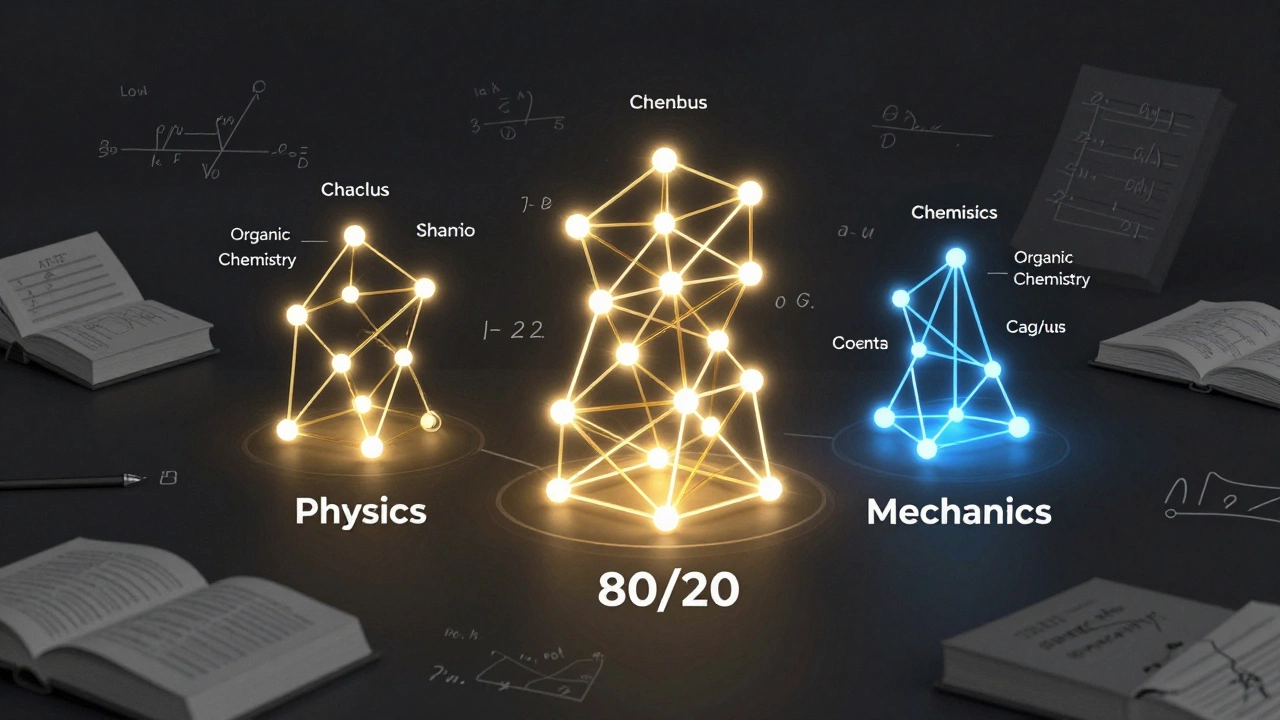
You do not have time to read every textbook cover-to-cover. In a six-month plan, you must apply Pareto’s Principle: 80% of the questions come from 20% of the syllabus. You need to identify these high-weightage chapters and master them completely.
| Subject | Must-Master Topics | Reason |
|---|---|---|
| Physics | Mechanics, Electrodynamics, Modern Physics | These units carry the highest weightage and rely on logical application rather than rote memorization. |
| Chemistry | Organic Chemistry, Physical Chemistry, Coordination Compounds | Organic mechanisms repeat often. Physical chemistry involves formula-based problems that are quick to solve. |
| Mathematics | Calculus, Algebra, Coordinate Geometry | These form the backbone of JEE Math. Mastering integration and limits opens up many other topics. |
Ignore low-yield, niche topics unless you finish the core subjects early. For example, don't spend weeks on obscure properties of matrices if your calculus is shaky. Focus on the giants first.
Month-by-Month Battle Plan
A six-month timeline is fragile. One month of distraction can derail everything. Here is a phased approach to keep you on track.
Months 1-2: Concept Building & Core Syllabus
Your goal here is coverage, not perfection. Use standard reference books like HC Verma for Concepts of Physics, a foundational text for understanding mechanics and optics for Physics and RD Sharma for Comprehensive mathematics exercises covering algebra and calculus for Math. Watch video lectures at 1.5x speed if you already know the basics. Your aim is to finish the high-yield chapters listed above. Solve basic problems to ensure you understand the 'why' behind every formula.
Months 3-4: Problem Solving & Speed
Now, switch gears. Reading solutions doesn't help; writing them does. Start solving previous years' questions (PYQs). The JEE exam has a recurring nature. Questions change, but patterns remain. Dedicate four hours daily to solving mixed-topic sets. Time yourself. If a physics problem takes you 10 minutes, it needs to take 3. This phase builds the muscle memory required for the exam hall.
Months 5-6: Mock Tests & Analysis
This is the most critical phase. Take full-length mock tests every alternate day. Simulate real exam conditions: same time, same seat, no phone, no breaks. After each test, spend twice as much time analyzing it as you did taking it. Why did you get a question wrong? Was it a conceptual gap, a calculation error, or a silly mistake? Fix the root cause, not just the answer.
Daily Routine: The 12-Hour Grind
To crack IIT in six months, you need intensity. A typical day should look like this:
- 6:00 AM - 9:00 AM: Fresh mind session. Tackle the hardest subject (usually Math or Physics Mechanics).
- 9:00 AM - 10:00 AM: Breakfast and light exercise. Mental fatigue kills retention.
- 10:00 AM - 1:00 PM: Second subject block. Chemistry requires active recall, so use flashcards for reactions and formulas.
- 1:00 PM - 2:00 PM: Lunch and power nap (20 mins max).
- 2:00 PM - 5:00 PM: Third subject block. Rotate subjects daily to avoid monotony.
- 5:00 PM - 6:00 PM: Break/Walk.
- 6:00 PM - 9:00 PM: Revision and PYQ solving. Review what you learned in the morning.
- 9:00 PM - 10:00 PM: Dinner and relaxation.
- 10:00 PM - 11:00 PM: Light review of formulas before sleep. Sleep aids memory consolidation.
Consistency beats intensity. Studying 12 hours one day and zero the next is useless. Study 10 hours every day for 180 days.
Common Pitfalls That Kill Dreams
Many students fail not because they aren't smart, but because they make strategic errors. Avoid these traps:
- Hoarding Resources: Don't buy five different books for one subject. Pick one standard book and master it. Switching resources wastes time and confuses notation styles.
- Ignoring Weaknesses: It feels good to solve easy questions. But growth happens when you struggle with hard ones. Face your weak topics head-on.
- Neglecting Health: Burnout is real. If you stop sleeping or eating properly, your brain function drops. A tired brain makes careless mistakes, which are fatal in JEE.
- Comparing Progress: Your friend might be ahead in chapters. Ignore them. Your race is against the syllabus and the cutoff, not your peers.

The Role of Technology and Tools
In 2026, you have tools your predecessors didn't. Use them wisely.
- Spaced Repetition Apps: Use apps like Anki to memorize Chemistry reactions and Math formulas. These algorithms show you cards right before you forget them, optimizing memory retention.
- Online Test Series: Platforms like Allen, FIITJEE, or Resonance offer online mocks with detailed analytics. They tell you exactly where you stand compared to national percentiles.
- Doubt Solving Bots: Use AI-driven doubt solvers for instant clarification on minor steps. However, never let them solve the whole problem for you. You must derive the solution.
What If You Don't Get IIT?
We must address the elephant in the room. Even with perfect preparation, luck plays a role. The JEE Advanced cutoff fluctuates. If you don't get an IIT, remember that NITs (National Institutes of Technology) and IIITs (Indian Institutes of Information Technology) offer excellent education and placement opportunities. Many CEOs and engineers graduated from non-IIT institutions. Your career is defined by your skills, not just your college name.
Cracking IIT in six months is a monumental task. It requires sacrifice, discipline, and smart work. It is not for everyone. But if you commit fully, follow the high-yield strategy, and maintain mental resilience, you can achieve what seems impossible. Start today. Not tomorrow. Today.
Can I crack JEE Advanced without coaching in 6 months?
Yes, it is possible. Many self-stoppers succeed by using standard textbooks, online video lectures, and rigorous mock test series. The key is self-discipline and consistent evaluation of progress. Coaching provides structure, but self-study allows for personalized pacing, which is crucial in a short timeframe.
How many hours should I study daily for JEE in 6 months?
You should aim for 10-12 hours of focused study per day. This includes concept learning, problem-solving, and revision. Quality matters more than quantity; ensure you are actively engaging with the material rather than passively reading.
Which books are best for last-minute JEE preparation?
Stick to NCERT for Chemistry basics. For Physics, HC Verma and DC Pandey are excellent. For Mathematics, RD Sharma and Cengage series provide comprehensive practice. Prioritize Previous Years' Question (PYQ) books over new theory books in the final months.
Is it better to focus on JEE Main or JEE Advanced in the first 3 months?
Focus on building a strong foundation applicable to both. JEE Main tests breadth, while JEE Advanced tests depth. Mastering core concepts helps in both. However, if you are weak in basics, prioritize JEE Main level proficiency first to secure a good percentile, then deepen your knowledge for Advanced.
How important are mock tests in the final 2 months?
Mock tests are critical. They simulate exam pressure, improve time management, and highlight weak areas. Aim to take at least one full-length mock test every alternate day in the final two months and analyze each one thoroughly to correct mistakes.